A reaction needs a collision with enough energy
Collision theory
The explanation that a reaction happens only when particles collide with enough energy, and that the rate depends on how often and how energetically they collide.
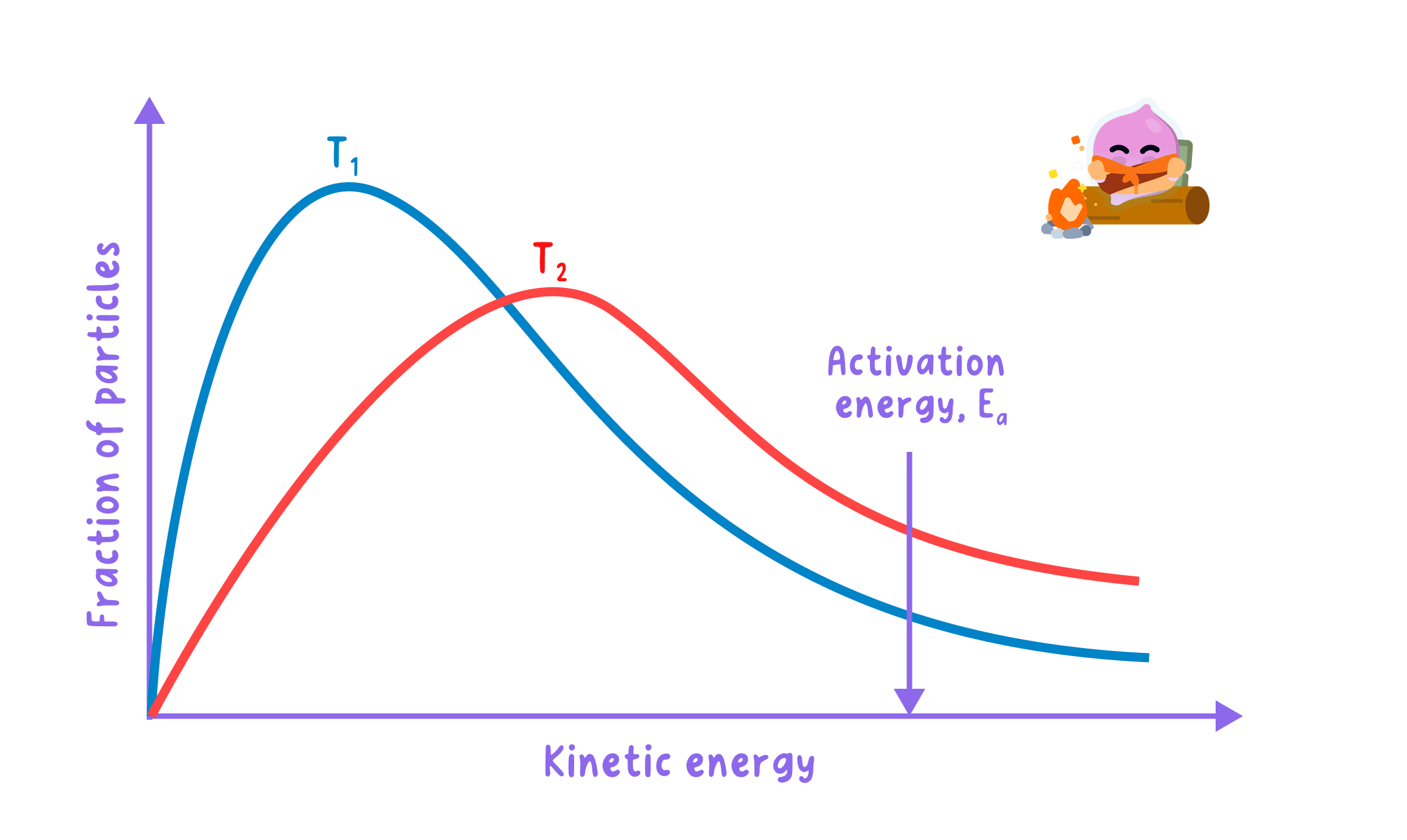
Activation energy
The minimum energy that colliding particles must have for a reaction to happen.
- Particles must collide before they can react with one another.
- Most collisions achieve nothing, because the particles simply bounce apart.
- A collision only leads to a reaction if the particles have at least the activation energy.
- A collision that does lead to a reaction is called a successful collision.
- The rate therefore depends on how often particles collide and how energetically they do so.
Anything that raises the frequency or the energy of collisions raises the rate.
Raising the temperature does both
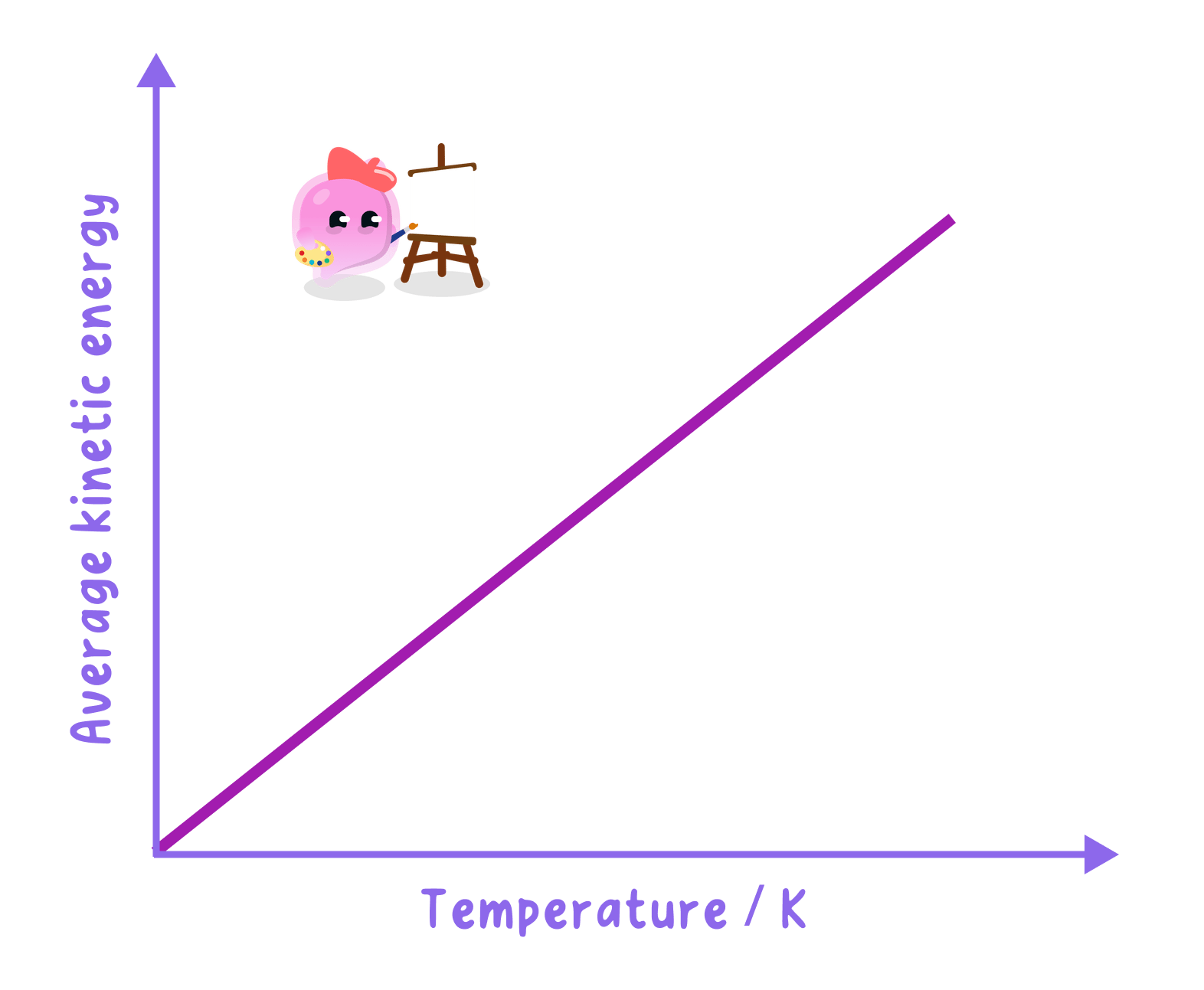
- Heating gives the particles more kinetic energy, so they move faster.
- Faster particles collide more often, which raises the frequency of collisions.
- A larger proportion of collisions also carry at least the activation energy.
- Both effects push the rate up, which is why temperature has such a large effect.
- The energy effect is the greater of the two, and is the main reason heating speeds a reaction so much.
Thiosulfate and acid: the cross disappears in half the time for a rise of about ten degrees.
Concentration and pressure pack the particles closer
Concentration
The mass or amount of a solute dissolved in a given volume of solution.
- A more concentrated solution holds more particles in the same volume.
- Particles that are closer together collide more frequently.
- Raising the pressure of a gas squeezes the same particles into a smaller volume.
- That has the same effect as raising a concentration, so collisions again become more frequent.
- Neither change alters the energy of the particles, only how often they meet.
Pressure changes the rate only for reactions involving gases, since liquids and solids barely compress.
Breaking a solid up exposes more of it
Surface area to volume ratio
The surface area of a solid compared with its volume, which increases as the solid is broken into smaller pieces.
- A reaction with a solid can only happen at the solid's surface.
- Breaking the solid into smaller pieces exposes more surface for the same mass.
- The surface area to volume ratio rises as the pieces get smaller.
- More exposed surface means more particles are in a position to collide.
- A powder therefore reacts much faster than a single lump of the same mass.
A powder reacts faster, but the same mass still gives the same amount of product in the end.
Which factor changes frequency and which changes energy
- Concentration, pressure and surface area all act on the frequency of collisions.
- Temperature acts on the frequency and on the energy, which is why its effect is largest.
- An explanation is complete only when it names which of the two has changed.
- Saying that particles collide more is not enough on its own, since the reason is what carries the point.
- Every one of these factors leaves the activation energy itself unchanged.
- An explanation runs in three steps: what changes, how it affects collisions, then the effect on rate.
- Only temperature changes the proportion of collisions with enough energy.
- Faster is not the same as more product, so the two questions are answered separately.
- What two conditions must a collision meet for a reaction to happen?
- Why does raising the temperature have a larger effect than raising the concentration?
- Why does raising the pressure speed up a reaction between gases?
- Why does a powder react faster than a lump of the same mass?
- Which of these factors changes the activation energy?
