Question 2
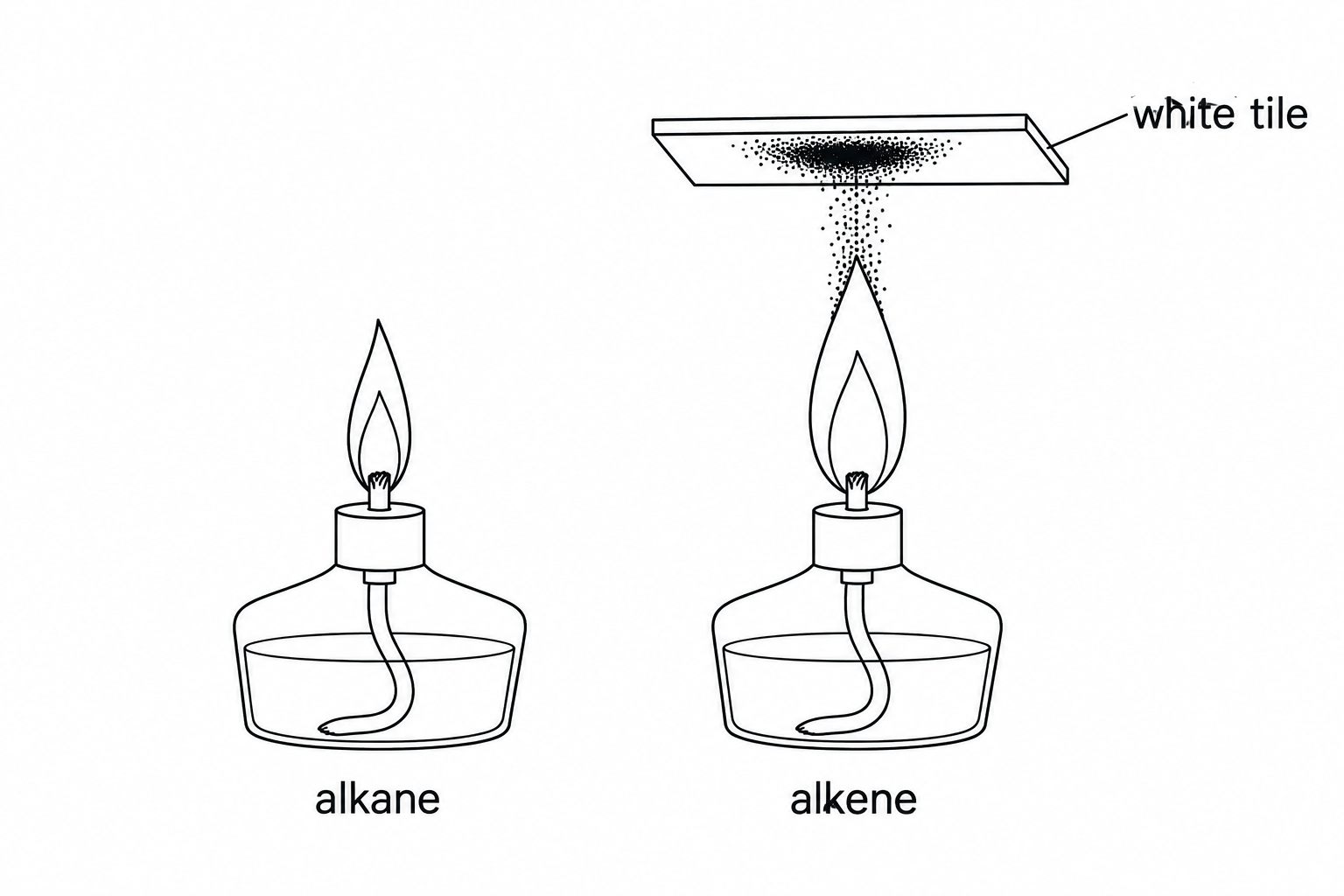
FA student burns a small sample of an alkane and a small sample of an alkene in air. Figure shows the two flames.
Figure: The flame produced by a burning alkane and the flame produced by a burning alkene
a.[1]
Use Figure to describe one difference between the two flames.
b.[2]
Explain why the alkene burns in air with a smoky flame.
c.[2]
Name the two products formed when an alkene burns completely in air.
7.2 Reactions of alkenes and alcohols Questions
40 exam-style questions on AQA GCSE Chemistry 7.2 Reactions of alkenes and alcohols, covering 7.2.1 Structure and formulae of alkenes, 7.2.2 Reactions of alkenes, 7.2.3 Alcohols, 7.2.4a Carboxylic acids, and 7.2.4b Carboxylic acids as weak acids. Each one has a worked solution and a mark scheme showing where the marks go.