Question 2
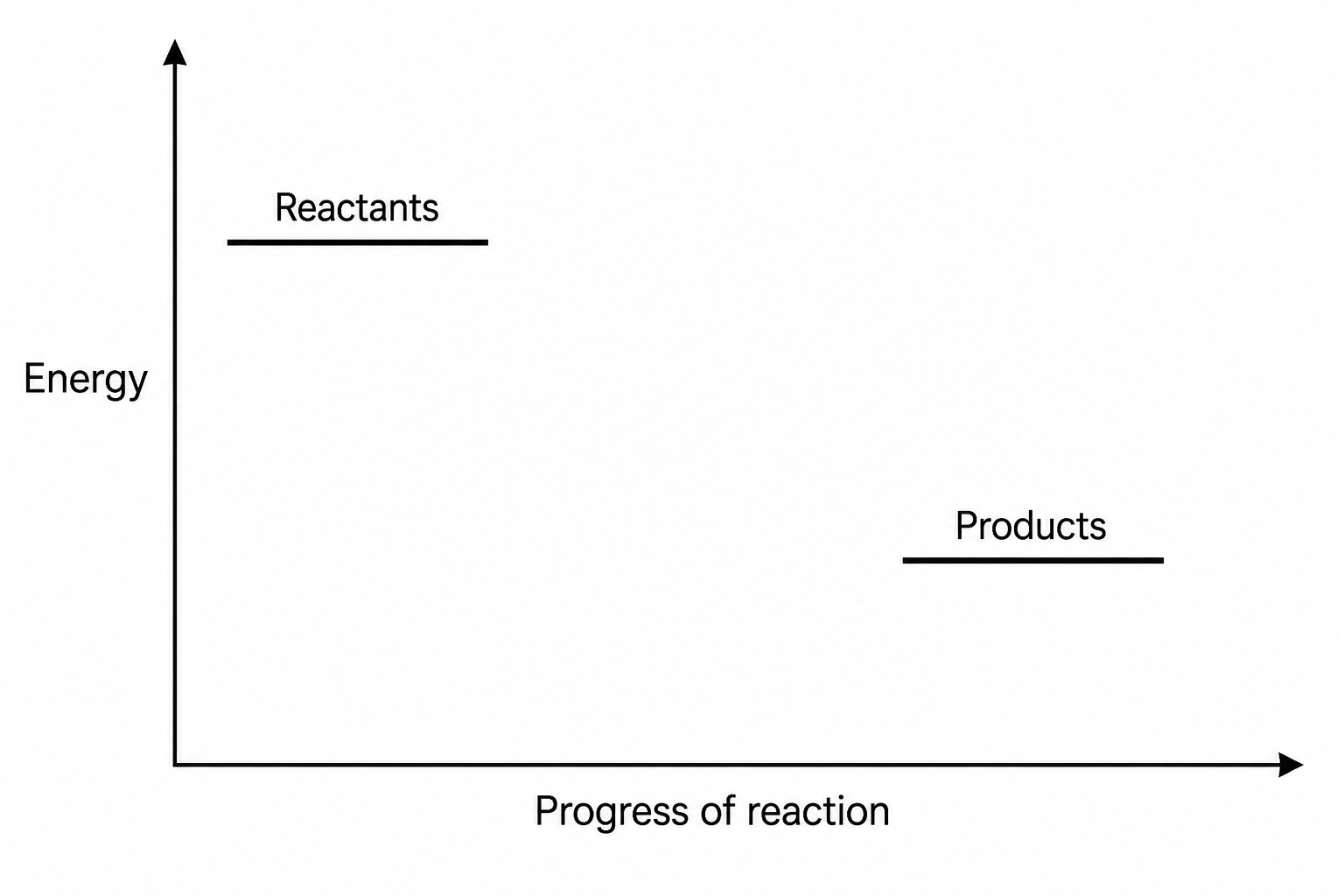
FThe figure shows an incomplete reaction profile for an exothermic reaction.
Figure: An incomplete reaction profile for an exothermic reaction, with the reactants and products drawn but the curve missing
a.[1]
Complete the reaction profile by drawing a curved line to show how the energy changes during the reaction.
b.[1]
Draw and label an arrow on the figure to show the activation energy of this reaction.
c.[1]
Give what is meant by the activation energy.
d.[2]
The products of this reaction store less energy than the reactants. Explain what happens to the energy that is no longer stored in the chemicals.
5.1 Exothermic and endothermic reactions Questions
39 exam-style questions on AQA GCSE Chemistry 5.1 Exothermic and endothermic reactions, covering 5.1.1 Energy transfer during exothermic and endothermic reactions, 5.1.2 Reaction profiles, and 5.1.3 The energy change of reactions. Each one has a worked solution and a mark scheme showing where the marks go.