Question 3
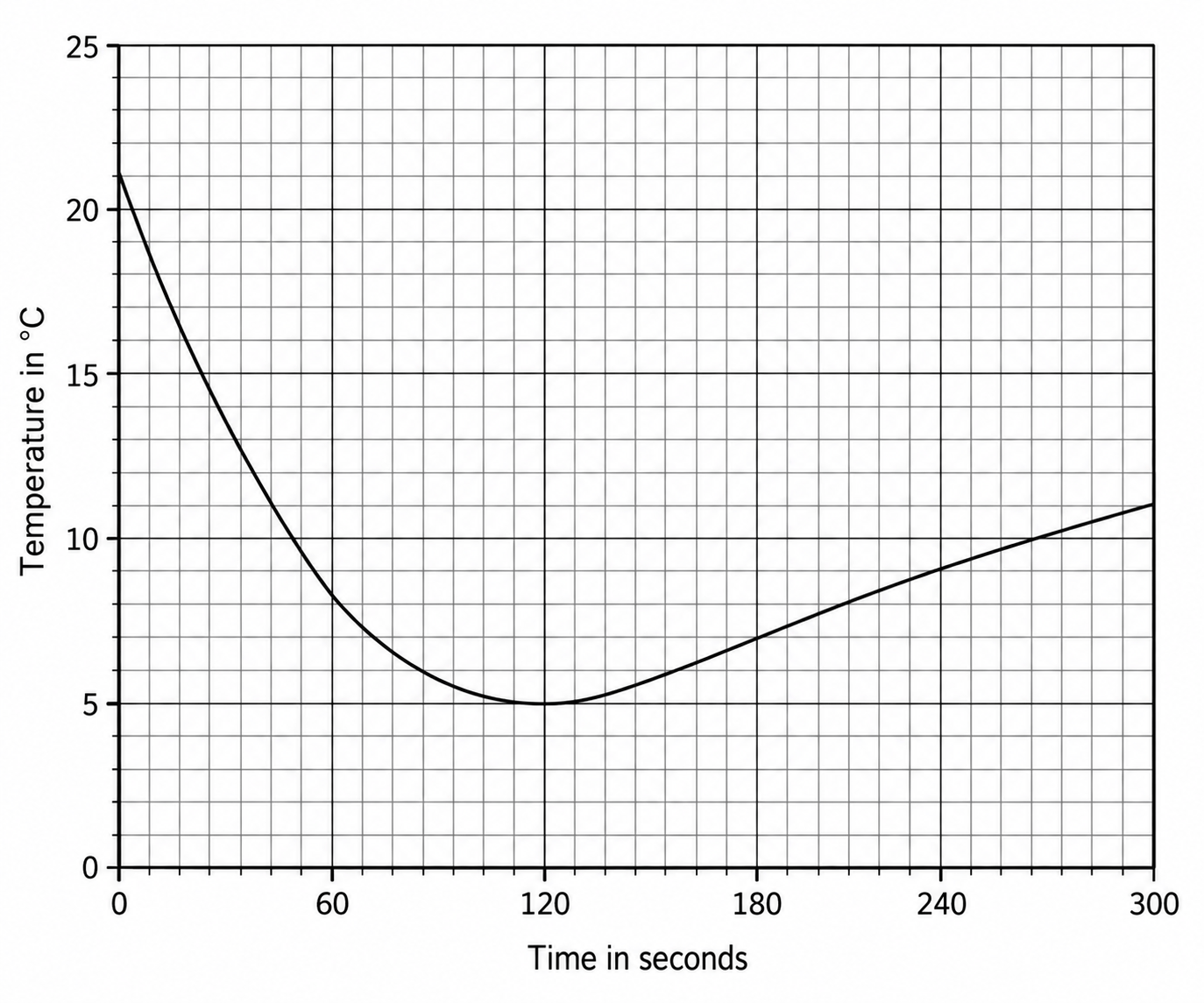
FA sports injury cold pack contains two chemicals in separate compartments. When the pack is squeezed the chemicals mix and react, and the pack becomes cold. The figure shows how the temperature inside the pack changed after it was squeezed.
Figure: The temperature inside a sports injury cold pack in the 300 seconds after the pack was squeezed
a.[1]
Use the figure to give the lowest temperature reached inside the pack.
b.[1]
Calculate the fall in temperature between 0 seconds and 120 seconds.
c.[2]
Explain why the temperature inside the pack falls.
d.[1]
After 120 seconds the temperature inside the pack starts to rise again. Suggest why.
5.1 Exothermic and endothermic reactions Questions
39 exam-style questions on AQA GCSE Chemistry 5.1 Exothermic and endothermic reactions, covering 5.1.1 Energy transfer during exothermic and endothermic reactions, 5.1.2 Reaction profiles, and 5.1.3 The energy change of reactions. Each one has a worked solution and a mark scheme showing where the marks go.