What a business plan is
Definition
Business plan: a written document that sets out the business idea, what the owner wants the business to achieve, and how it will be run and financed.
- A plan is usually written before the business starts trading, then updated as the business grows or as costs and customers change.
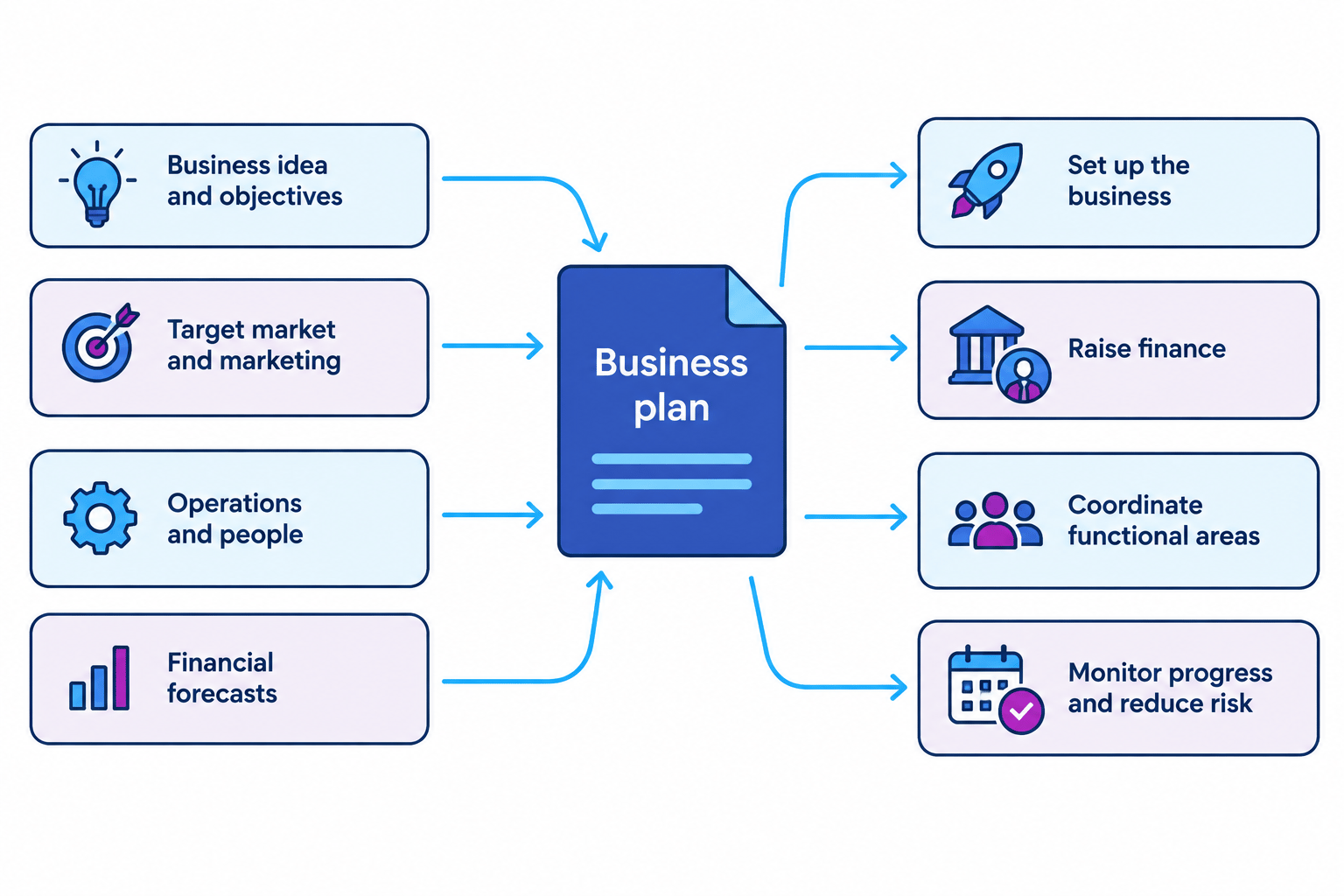
- It gathers the idea, the target market, the marketing mix, the people and premises, and the financial forecasts into one document, so the whole business can be judged at once.
- The plan is written by the owner or the entrepreneur, and it is read by people outside the business, most often a bank manager or an investor.
Note
- You are never asked to write a full business plan for AQA, only to explain why one is written and what it does for the business.
- What goes inside each section of the plan is covered separately in the article on the sections of a business plan.
Why a business writes a plan
- To set up a new business: writing the plan forces the entrepreneur to answer the practical questions before any money is spent: who the customers are, what price they will pay, where the business will trade and what equipment it needs.
- Problems such as a supplier being too expensive or demand being seasonal show up on paper, where they cost nothing to fix, rather than in the first trading month.
- To raise finance: a bank or an investor will not hand over money on the strength of an idea, so the plan is the evidence that the business can repay a loan or produce a return.
- The financial forecasts matter most to a lender, because they show whether the business expects enough cash coming in each month to cover the repayments.
- To set objectives: the plan turns a vague ambition such as "do well" into targets the owner can measure, for example reaching £120,000 of sales in year one or opening a second branch within three years.
- To organise the functional areas: the plan states what marketing, operations, finance and human resources each have to do, and when, so the parts of the business fit together instead of pulling in different directions.
- If the plan promises a launch in April, marketing knows when to advertise, operations knows when stock must arrive and finance knows when the money for that stock is needed.
Example
- Priya wants to open a bakery in Sheffield and asks Barclays for a £25,000 start-up loan.
- Her plan gives survey results from 200 local shoppers, the price of a loaf, the rent on the unit and a month-by-month forecast of cash coming in and going out.
- The bank agrees to lend because the forecast shows the quiet January trade is covered by savings held back for it.
Benefits of business planning
- Lower risk of failure: researching the market and the costs in advance means fewer surprises, so the business is less likely to run out of cash in its first year.
- Clear direction for staff: employees know what the business is trying to achieve and what their part of it must deliver, which cuts wasted effort and duplicated work.
- A reference point for monitoring: actual sales and costs can be compared against the forecast each month, so a shortfall is spotted while there is still time to cut spending or change price.
- Better decisions: with the market research and the costings written down, the owner chooses between options using evidence rather than instinct.
Example
- Greggs plans each new shop opening in advance, setting the expected weekly sales for the site before the lease is signed.
- If a new shop takes far less than the plan expected, the company can review staffing and opening hours quickly instead of waiting for the year-end figures.
Drawbacks of business planning
- It takes time. Market research, costings and forecasts can take weeks, and for a sole trader that is time not spent selling or serving customers.
- It costs money. An owner who pays an accountant or a consultant to prepare the forecasts spends cash the new business can barely spare.
- It is built on forecasts. Sales and costs in the plan are estimates, and if the estimate of demand is too optimistic the whole plan, including the cash flow forecast, is wrong.
- It goes out of date. A new competitor, a rent rise or a change in what customers want can make a plan written six months ago describe a market that no longer exists.
- It can make the owner inflexible. Sticking to the written plan when sales show customers want something different means missing an opportunity the plan never predicted.
Common Mistake
- A plan does not guarantee success, because it only sets out what the owner expects to happen.
- The value of a plan comes from using it to check progress and updating it, not from writing it once for the bank and filing it away.
Exam technique
- Explain one reason why a business writes a business plan needs a chain, so say the plan sets measurable objectives, which lets the owner compare actual sales with the target and act early if sales are low.
- The common mistake is describing what is inside a plan when the question asked why the plan is written, which answers a different question.
Self review
- What is a business plan?
- Name the four reasons a business creates a plan.
- Why does a bank want to see a plan before lending?
- How does a plan help the functional areas work together?
- Give two reasons a plan can turn out to be unreliable.