Question 37
FMany vegetables have been produced from one species of wild cabbage plant.
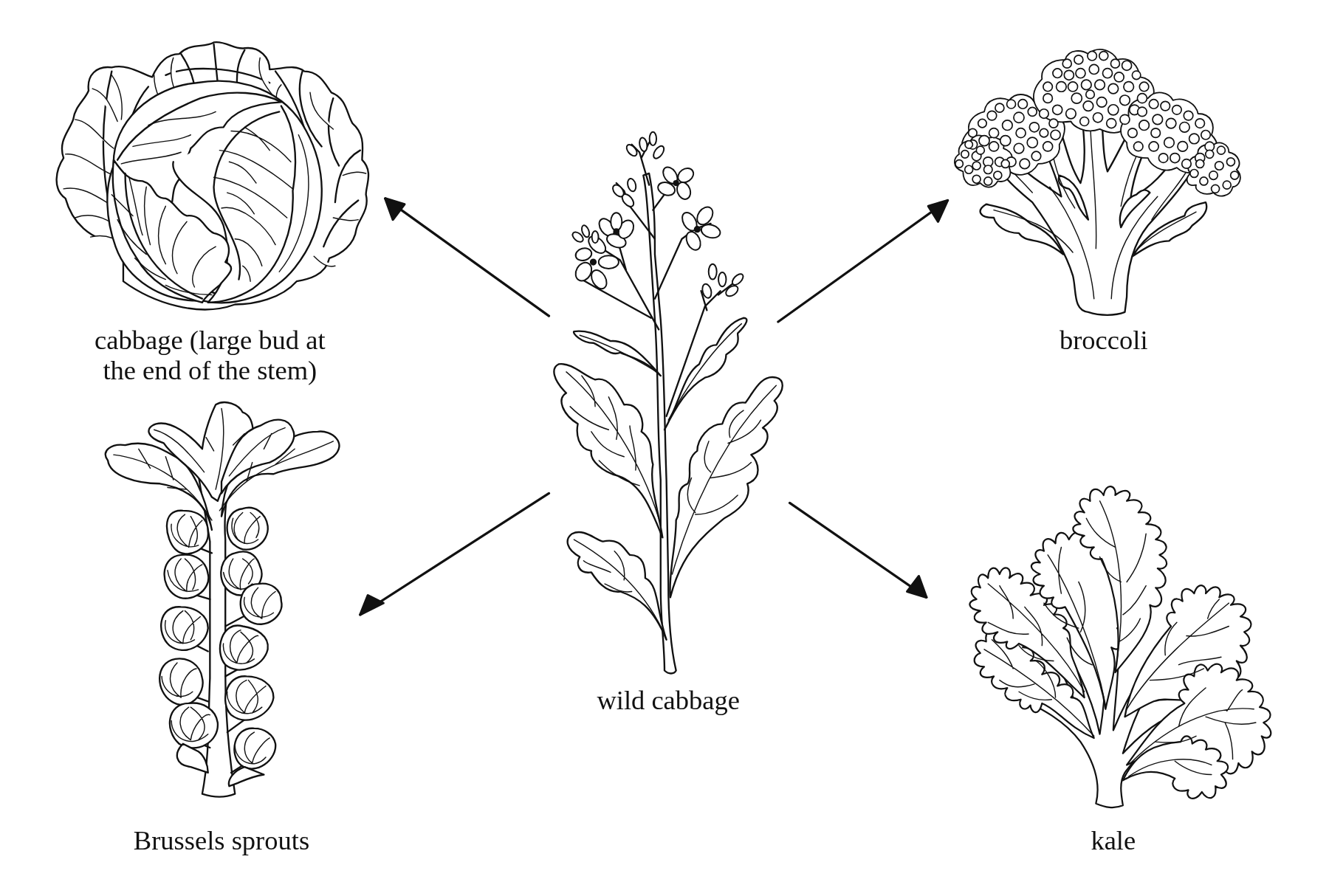
The Figure shows the wild cabbage and four vegetables produced from it.
Figure
a.[1]
Name the process that farmers used to produce these vegetables from the wild cabbage.
b.[1]
Use the Figure to give the name of the vegetable produced by choosing plants with large buds along the side of the stem.
c.[2]
Broccoli and kale were both produced from the wild cabbage.
Explain why broccoli and kale look very different from each other.
d.[1]
Give one disadvantage of producing crops in this way.
6.2 Feeding the human race Questions
127 exam-style questions on OCR GCSE Biology 6.2 Feeding the human race, covering 6.2.1 Biological factors affecting food security, 6.2.2 Agricultural solutions to growing demand, 6.2.3 Selective breeding, 6.2.4 Genetic engineering, 6.2.5 Steps in genetic engineering, 6.2.6 Benefits and risks of gene technology in agriculture, and 6.2.7 Biotechnological solutions to growing demand. Each one has a worked solution and a mark scheme showing where the marks go.