The graph below shows the plasma concentration of luteinising hormone (LH) in two female patients, P and Q, over a standard 28-day cycle. One patient is taking a combined oral contraceptive pill, while the other is experiencing a normal, drug-free menstrual cycle.
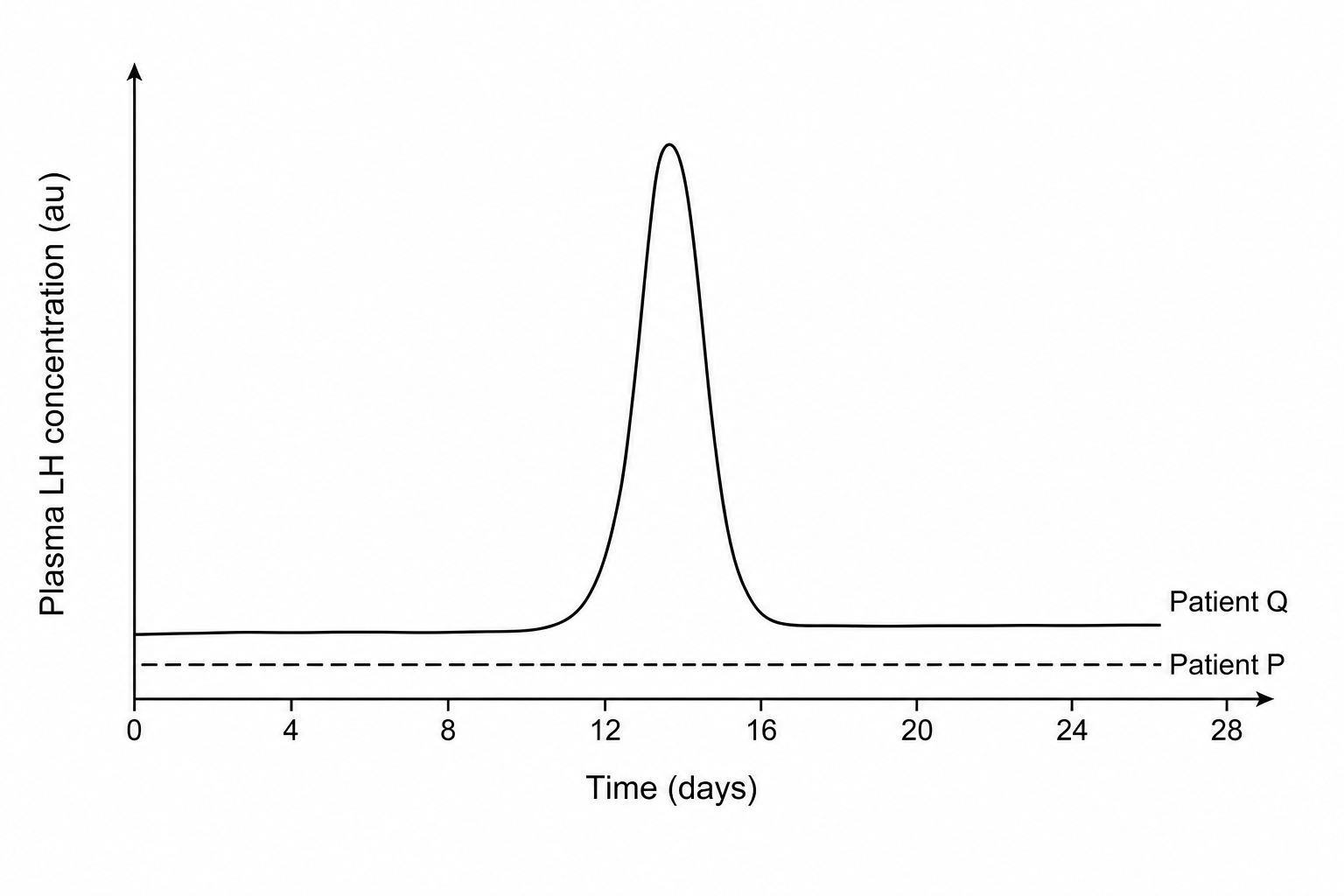
Which of the following options correctly identifies the patient taking the combined oral contraceptive pill and describes the physiological mechanism responsible for their LH profile?
Patient P; sustained high levels of synthetic oestrogen and progesterone exert negative feedback on the pituitary gland, preventing the LH surge and inhibiting ovulation.
Patient P; rapid degradation of synthetic hormones stimulates negative feedback on the ovaries, causing follicles to remain immature without requiring LH.
Patient Q; sustained high levels of synthetic oestrogen stimulate positive feedback on the pituitary gland, inducing a rapid release of LH to maintain the uterine lining.
Patient Q; synthetic progesterone directly stimulates the pituitary gland to release a surge of LH, which thickens cervical mucus to block sperm.

