Definition
Variation
The differences in the characteristics of individuals of the same species.
- Variation is the differences in the characteristics of individuals of the same species.
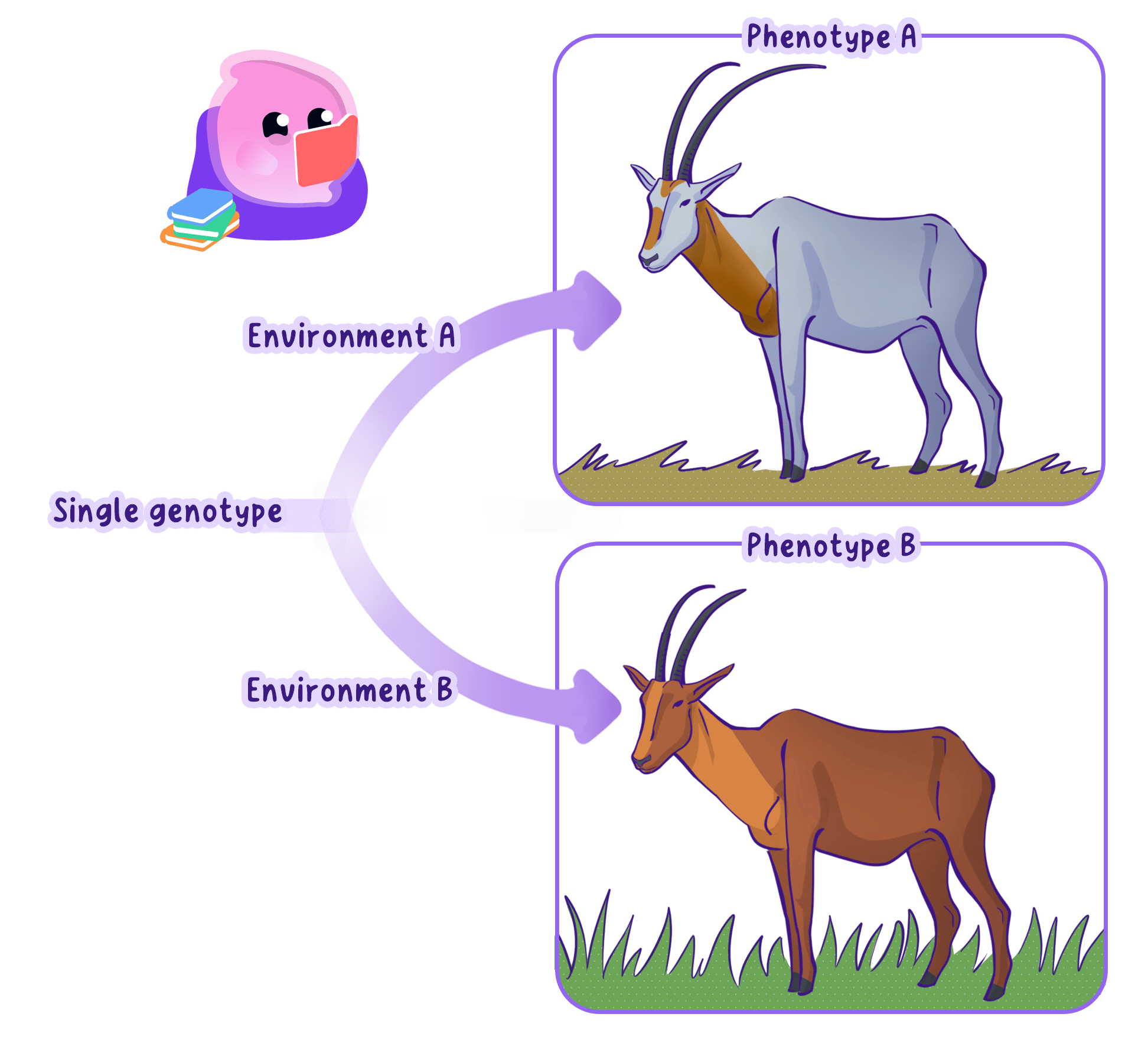
- An organism's phenotype develops from its genome interacting with its environment.
- Within a population there is usually extensive genetic variation, so no two individuals are exactly alike unless they are identical twins.
Key Idea
Every characteristic is shaped by genes, by the environment, or by both together.
The causes of variation
- Genetic causes: differences caused by the alleles an individual inherits, such as ABO blood group or an inherited condition like cystic fibrosis.
- Environmental causes: differences caused by the conditions an organism develops in, such as a scar, an accent, or a plant grown in shade.
- A combination of both: most characteristics are affected by genes and the environment together.
- For example, genes set a person's potential height, but diet and health during growth decide the height actually reached.
Common Mistake
Do not assume every difference you can see is genetic; ask whether it would change if the individual had grown up somewhere else.
Variation comes from mutations
Definition
Mutation
A change in the base sequence of DNA, which occurs continuously and may or may not change the protein that is produced.
- All genetic variants ultimately arise from mutations, changes in the base sequence of DNA.
- Mutations occur continuously.
- Most mutations have no effect on the phenotype.
- Some mutations influence the phenotype.
- Very few mutations determine the phenotype on their own.
Note
A mutation can produce a new allele, which is the ultimate source of all genetic variation.
When a mutation drives rapid change
- Very rarely, a mutation leads to a new phenotype.
- If that new phenotype is suited to a change in the environment, the individuals that have it are more likely to survive and reproduce.
- They pass the new allele on to their offspring.
- This can lead to a relatively rapid change in the species by natural selection.
Key Idea
Mutations are the raw material of variation, and a beneficial one can spread quickly through a population by natural selection.
Self review
- What is meant by variation within a species?
- Name the three causes of variation.
- Where do all genetic variants ultimately come from?
- What effect do most mutations have on the phenotype?
- How can a rare beneficial mutation lead to rapid change in a species?
