The sex chromosomes
Definition
Sex chromosomes
The pair of chromosomes that determine biological sex: XX in females and XY in males.
- Each ordinary human body cell holds its chromosomes as 23 matching pairs.
- Twenty-two of those pairs deal only with the body's ordinary characteristics.
- The final pair, the sex chromosomes, is the one that settles whether you develop as male or female.
- A female carries two matching sex chromosomes, written XXXXXX.
- A male carries two different ones, written XYXYXY.
Note
The Y chromosome carries the genes that lead to male development.
Working out the sex of a child
Definition
Punnett square
A grid used to predict the possible genotypes and phenotypes of offspring from a genetic cross.
- Because the mother is XXXXXX, all of her egg cells carry one X chromosome.
- Because the father is XYXYXY, half his sperm carry an X and half carry a Y.
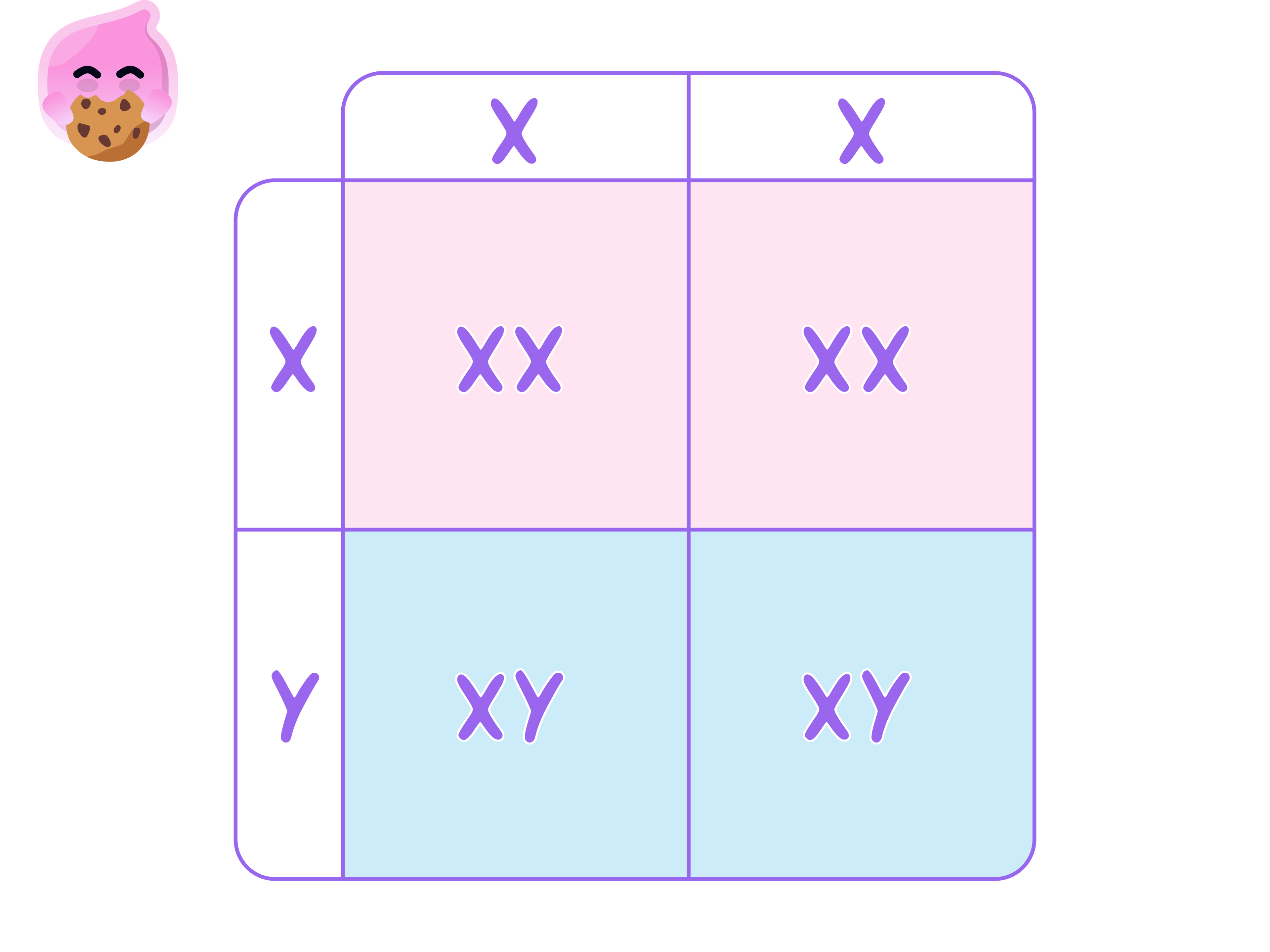
- To show sex inheritance, write the mother as XXXXXX and the father as XYXYXY and combine their gametes in a Punnett square.
- The four boxes give XXXXXX, XXXXXX, XYXYXY and XYXYXY: two female and two male.
- This is a 1:11:11:1 ratio, so each child has about a 50%50\%50% chance of being either sex.
Common Mistake
Do not say the mother decides the sex; the sperm carries the X or Y that decides it.
Self review
- How many pairs of chromosomes are in a human body cell, and how many carry the sex genes?
- Which sex chromosomes do females and males have?
- Why can the mother's egg only carry an X chromosome?
- Which parent's gamete decides the sex of the child?
- What ratio of male to female offspring does a genetic cross predict?
