Metabolism Is All the Reactions in the Body
Definition
Metabolism
The sum of all the chemical reactions that take place in a cell or in the body.
- Metabolism is the sum of all the chemical reactions in a cell or in the body.
- These reactions are controlled by enzymes.
- The energy transferred by respiration is used to drive them.
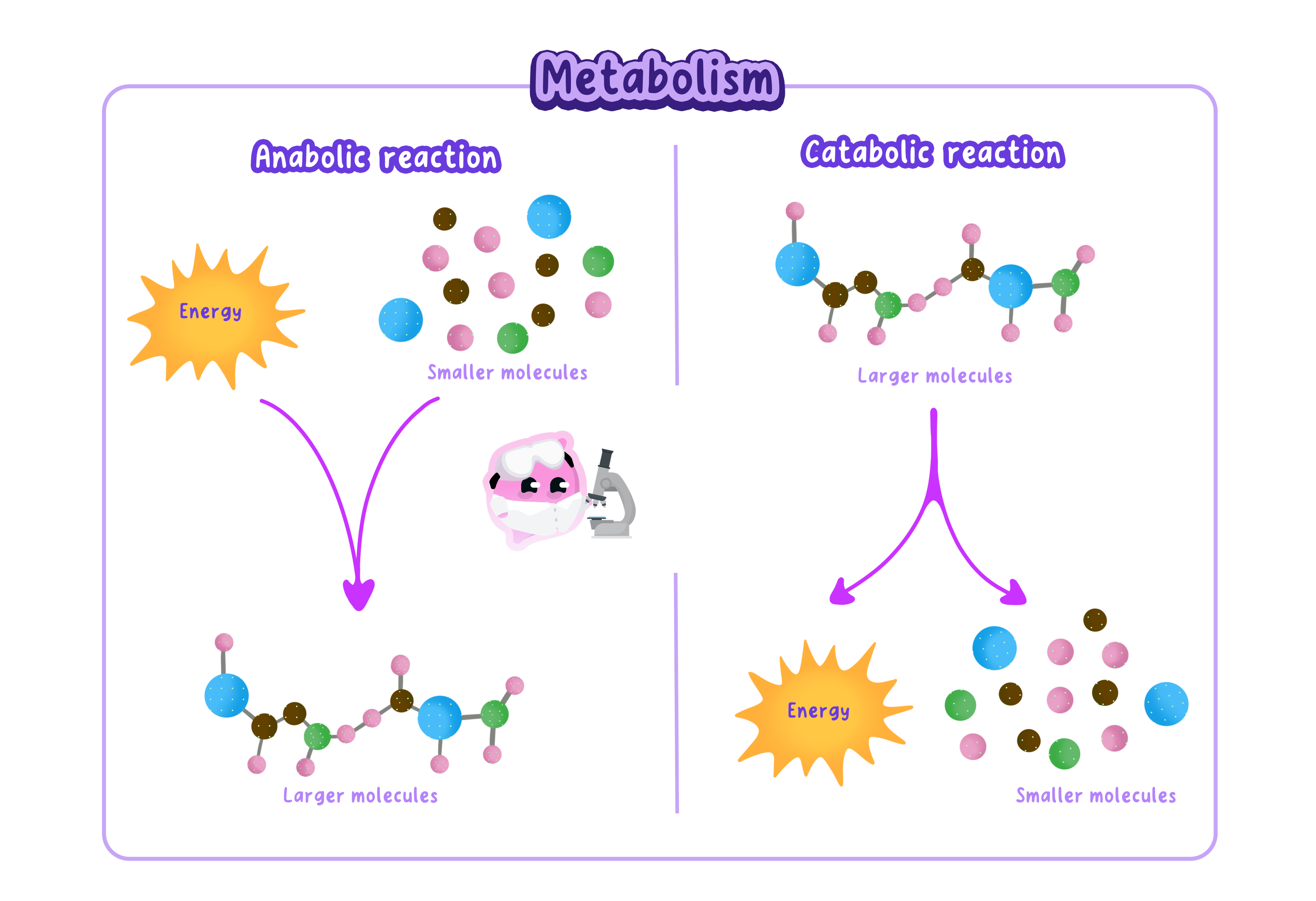
- Metabolism includes reactions that build larger molecules and reactions that break molecules down.
Key Idea
Respiration supplies the energy that powers all the reactions of metabolism.
Building Larger Molecules
Definition
Glycogen
A carbohydrate store in the muscles and liver that can be broken down quickly to glucose for respiration.
- Glucose is joined together to make larger carbohydrates such as starch, glycogen and cellulose.
- A lipid molecule is made from one molecule of glycerol and three molecules of fatty acids.
- Glucose and nitrate ions are used to make amino acids, which are joined together to make proteins.
Note
Making bigger molecules from smaller ones is called synthesis, and it needs energy from respiration.
Breaking Molecules Down
- Respiration breaks glucose down to transfer the energy the cell needs.
- Excess proteins that the body cannot store are broken down in the liver.
- This produces urea, which is carried to the kidneys and removed from the body in the urine.
Example
Eating far more protein than you need means the extra is broken down and lost as urea.
The Building Blocks of Metabolism
- Sugars, such as glucose:
- Used to build carbohydrates, and broken down in respiration to release energy.
- Amino acids:
- Made from glucose and nitrate ions, and joined together to build proteins.
- Fatty acids and glycerol:
- Joined together to make lipids, and released again when lipids are broken down.
Self review
- What is metabolism?
- Name three large carbohydrates made by joining glucose molecules.
- What is a lipid molecule made from?
- How are amino acids made, and what are they used for?
- What does the liver make when it breaks down excess protein, and how is it removed?
