4.2.2a Response to exercise
Exercise Increases the Demand for Energy
- During exercise, the muscles contract harder and more often, so they need more energy.
- This means they need more glucose and oxygen for respiration, and they produce more carbon dioxide.
- The body responds to supply the muscles with what they need and to remove the extra waste.
During exercise the heart rate, breathing rate and breath volume all increase to get more oxygen to the muscles.
How the Body Responds to Exercise
Glycogen
A carbohydrate store in the muscles and liver that can be broken down quickly to glucose for respiration.
- The heart rate increases, pumping oxygenated blood to the muscles faster.
- The breathing rate and breath volume increase, so more oxygen is taken in and more carbon dioxide breathed out.
- The arteries supplying the muscles widen, increasing the blood flow to them.
- The glycogen stored in the muscles is converted back to glucose to fuel respiration.
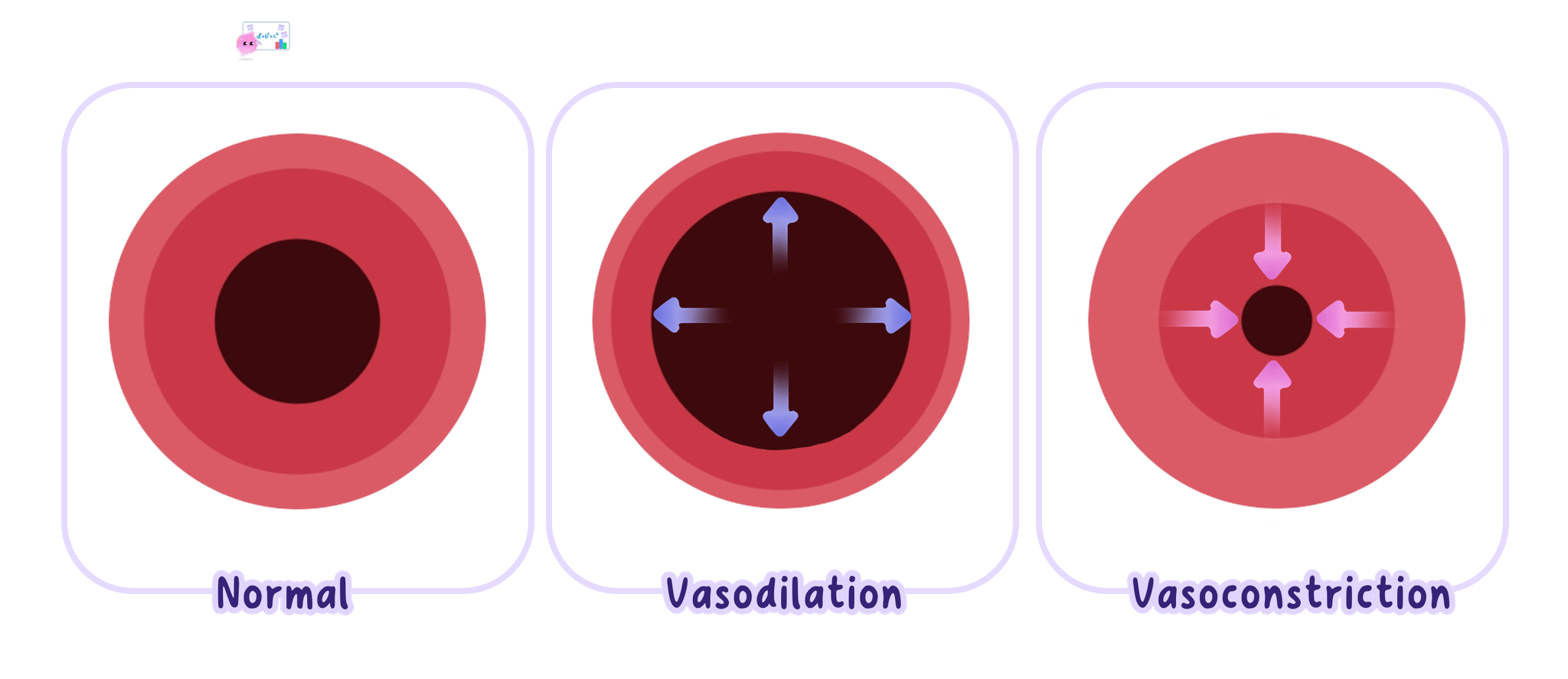
Together these changes increase the supply of glucose and oxygen to the muscles and speed up the removal of carbon dioxide.
Anaerobic Respiration During Hard Exercise
Lactic acid
The product of anaerobic respiration in animal muscles, which builds up during hard exercise and causes muscle fatigue.
- Sometimes the blood cannot supply oxygen to the muscles fast enough.
- The muscles then respire anaerobically, without oxygen.
- This transfers less energy and produces lactic acid, which builds up in the muscles.
- The build-up of lactic acid creates an oxygen debt.
Anaerobic respiration lets the muscles keep working for a short time, even when oxygen is running short.
Muscle Fatigue
Muscle fatigue
When muscles stop contracting efficiently after long, vigorous exercise, partly because of a build-up of lactic acid.
- During long periods of vigorous activity, the muscles become fatigued.
- Fatigued muscles stop contracting efficiently.
- This is partly caused by the build-up of lactic acid from anaerobic respiration.
- Give three ways the body responds to the increased energy demand of exercise.
- Why do the breathing rate and breath volume increase during exercise?
- What is glycogen used for during exercise?
- What is produced when muscles respire anaerobically?
- What is muscle fatigue, and what causes it?
4.2.2b Response to exercise (Higher tier)
Oxygen Debt Builds Up During Hard Exercise
Oxygen debt
The extra oxygen the body needs after exercise to react with the lactic acid that has built up in the muscles.
- During hard exercise, lactic acid builds up in the muscles from anaerobic respiration.
- After exercise, extra oxygen is needed to deal with this lactic acid.
- The oxygen debt is the amount of extra oxygen the body needs after exercise to react with the accumulated lactic acid and remove it.
- This is why you keep breathing hard and your heart rate stays high after you stop.
The bigger the oxygen debt, the longer you keep breathing hard after exercise to repay it.
How the Liver Removes the Lactic Acid
Lactic acid
The product of anaerobic respiration in animal muscles, which builds up during hard exercise and causes muscle fatigue.
- Blood flowing through the muscles carries the lactic acid to the liver.
- In the liver, the lactic acid is converted back into glucose.
- This glucose can then be respired aerobically, or stored as glycogen.
- The oxygen debt is repaid once all the lactic acid has been reacted with oxygen and removed.
- lactic acid+oxygen→carbon dioxide+water\text{lactic acid} + \text{oxygen} \rightarrow \text{carbon dioxide} + \text{water}lactic acid+oxygen→carbon dioxide+water
- What is meant by the oxygen debt?
- Why do you keep breathing hard for a while after hard exercise?
- Where is the lactic acid taken to be dealt with, and how does it get there?
- What is the lactic acid converted into in the liver?
- When is the oxygen debt repaid?
