Question 2
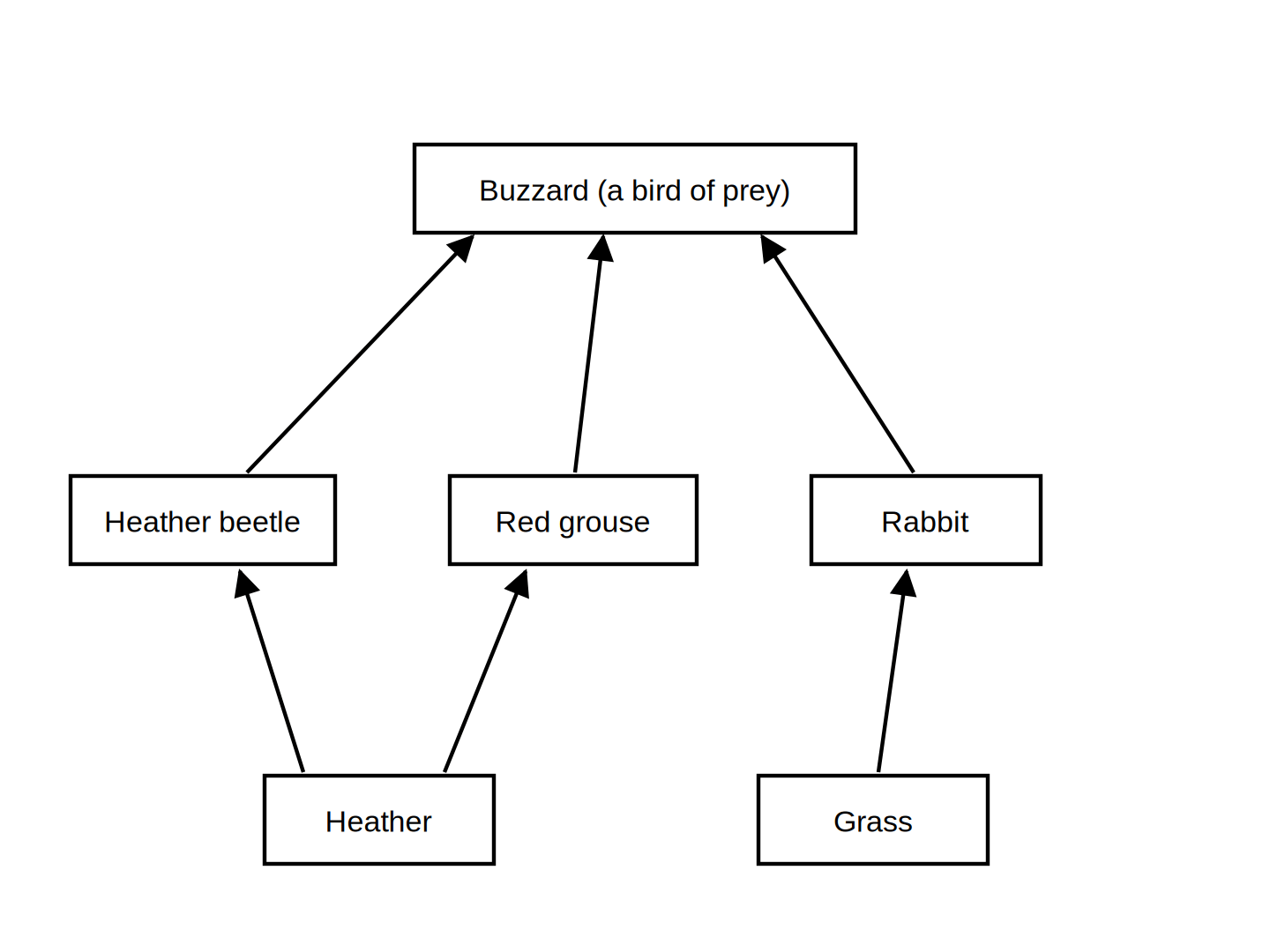
FThe figure shows a food web for five species in a moorland community. The moorland has been a stable community for many years.
Figure: A food web for five species in a moorland community
a.[3]
A pathogen destroys all of the heather beetles in the moorland. Explain how this could cause the number of red grouse to decrease.
b.[1]
Give the meaning of the term interdependence.
c.[1]
Give one feature of a stable community.
7.1 Adaptations, interdependence and competition Questions
40 exam-style questions on AQA GCSE Biology 7.1 Adaptations, interdependence and competition, covering 7.1.1 Communities, 7.1.2 Abiotic factors, 7.1.3 Biotic factors, and 7.1.4 Adaptations. Each one has a worked solution and a mark scheme showing where the marks go.