Will GCSE Maths Exams Move Earlier or Later?
Will GCSE Maths exams move later or earlier in the year? No national move is announced. Read what parents need to know about dates and GCSE reform.
Updated: 3 November 2026
Will GCSE Maths exams move later or earlier in the year? There is currently no announced national plan to move them substantially earlier or later in England.
Department for Education (DfE), Ofqual and Curriculum and Assessment Review publications discuss curriculum changes and reducing the overall volume of GCSE assessment. They do not announce a wholesale shift away from the usual summer exam period.
Individual paper dates change each year, and future reform could alter assessment length or structure. However, a proposal to shorten assessment is different from moving the examination season. For parents, the practical response is to follow the school’s confirmed timetable and keep revision focused on the specification their child is taking.
The answer at a glance
- There is no confirmed national decision to move GCSE Maths significantly earlier or later.
- Exact paper dates vary by year and exam board.
- The 2026 GCSE, AS and A Level examination period ran from 7 May to 23 June, with a contingency day on 24 June.
- The Curriculum and Assessment Review recommended reducing overall GCSE exam time, not relocating the summer season.
- Schools and colleges provide candidates’ definitive personal timetables.
Keep planning for summer exams unless your child’s school confirms otherwise.
Why parents are hearing about GCSE Maths changes
A parent might encounter three separate stories: curriculum reform, shorter assessments and annual timetable announcements. Together, these can sound like one dramatic change, although they concern different decisions.
The Curriculum and Assessment Review published its final report in November 2025. It recommended that the government work with Ofqual to reduce overall GCSE exam time by at least 10%10\%10%. The government’s response accepted the need to reduce the assessment burden while retaining examinations as a central part of GCSE assessment.
That concerns the volume of assessment. It does not determine whether a Maths paper happens earlier in May or later in June.
Ofqual has also consulted on formula support for GCSE Mathematics, Physics and Combined Science from 2028 for the lifetime of the current specifications. This concerns memorisation and examination support, rather than the examination season.
The distinction matters because families can otherwise change revision plans in response to a possibility rather than a published timetable.
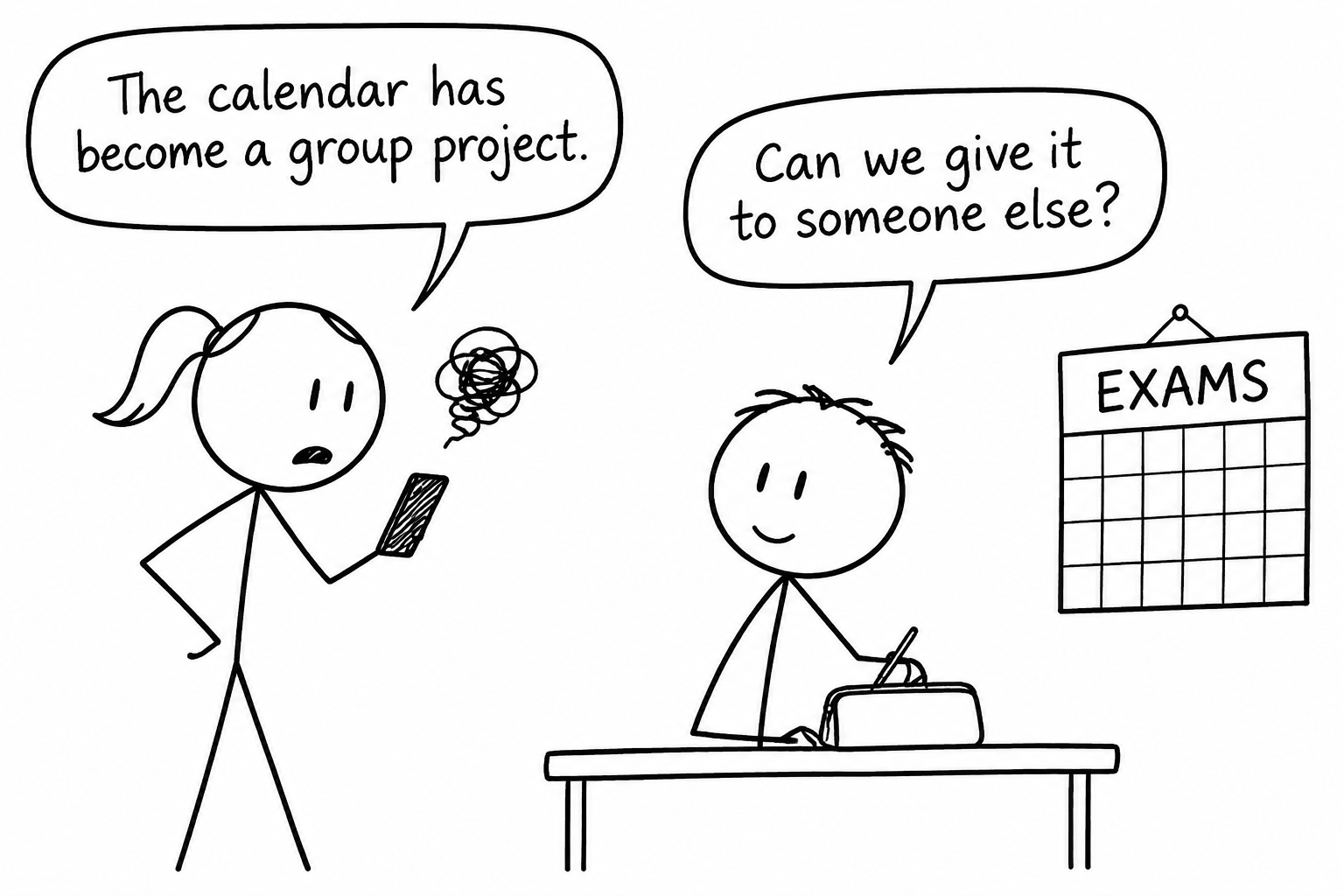 A parent and student joke about GCSE exam calendar rumours
Could individual Maths papers move within the summer?
Yes. Paper dates can move within the summer series from one year to the next.
Exam boards, including Edexcel, AQA, OCR and Eduqas, publish timetables for their qualifications. Schools then issue individual timetables to candidates. Last year’s dates may suggest a rough pattern, but they should never be treated as confirmation for another year.
Ofqual’s guidance for 2026 placed GCSE, AS and A Level exams between 7 May and 23 June. That described the overall series, not permanent dates for future GCSE Maths papers.
Check the exam board, foundation or higher tier, final school timetable and designated contingency arrangements. If an entry or date looks wrong, contact the school’s examinations officer.
What GCSE reform could change
GCSE reform involves several stages. The DfE’s published plans indicate phased introduction of revised GCSEs, with first teaching beginning in 2029 or 2030 depending on the subject and phase. Detailed subject content and assessment arrangements still require development.
Future decisions could affect curriculum content, the distribution of topics across papers, total examination time, formula support and question design. None automatically means moving GCSE Maths out of the summer series.
Students examined before a reformed qualification reaches them should continue with their current specification. The useful question is therefore: “Which specification and timetable apply to my child?”
Once that is confirmed, the GCSE Maths revision hub provides a route into the relevant material.
A practical plan for parents
Confirm the administrative details
Ask the school to confirm the exam board, tier and final examination timetable. Keep the school-issued version somewhere visible and replace any provisional dates when final arrangements arrive.
Revise the current specification
Use lessons matched to your child’s course. The Edexcel GCSE Maths revision page organises material by topic and grade. The aim is to close known gaps in examinable content, rather than anticipate policy announcements.
Keep the final weeks flexible
Begin with topic revision, then introduce mixed examination practice. Leave space to respond to the actual gaps between papers. A packed plan can become difficult to maintain when illness, school commitments or fatigue intervene.
Support without taking over
Help your child protect regular revision time, find suitable resources and review mistakes. Maths Genie’s GCSE lessons and resources can give those sessions a clear focus. A steady routine is more useful than repeatedly revisiting unconfirmed headlines.
Common mistakes parents should avoid
Treating recommendations as confirmed rules
A review recommendation, government response, consultation and final examination timetable represent different stages. Check what has actually been decided and which students it affects before changing plans.
Confusing shorter exams with earlier exams
Reducing examination time does not establish where papers sit in the calendar. A shorter assessment could remain within the same summer window.
Using outdated dates or unsuitable material
Previous timetables cannot replace current school guidance. Revision material should also match the specification and tier. Targeted resources such as Transformations revision and Algebraic Fractions revision help students address particular gaps, where those topics are relevant to their course.
Waiting for certainty before revising
Annual dates matter, but mathematical understanding develops over time. Continue practising the current course while schools communicate confirmed changes.
Keep revision anchored to what is confirmed
Parents do not need to redesign the year around rumours. Confirm the timetable, identify the current specification and help your child maintain manageable revision sessions.
Start with Maths Genie’s current GCSE Maths revision resources, choose a topic that needs attention and review the answers together. That turns uncertainty about future policy into a useful next step today.