

GCSE: Use OCR English Language Past Papers Properly
GCSE students: learn how to use OCR English Language past papers properly with a calm routine, timing strategy, and mark scheme feedback loop.
GCSE revision has a funny way of making sensible people do odd things. You tell yourself you’ll “just do one past paper”, and suddenly it’s midnight, you’ve half-read a source text, circled three adjectives, and decided you’re “bad at English”.
The truth is simpler and kinder: most students don’t need more OCR GCSE English Language past papers. They need a better method for using them. And if you’re a maths student, you already have a secret advantage: you understand practice, feedback, and patterns. This guide shows you how to use OCR GCSE English Language past papers properly, without wasting time or confidence.
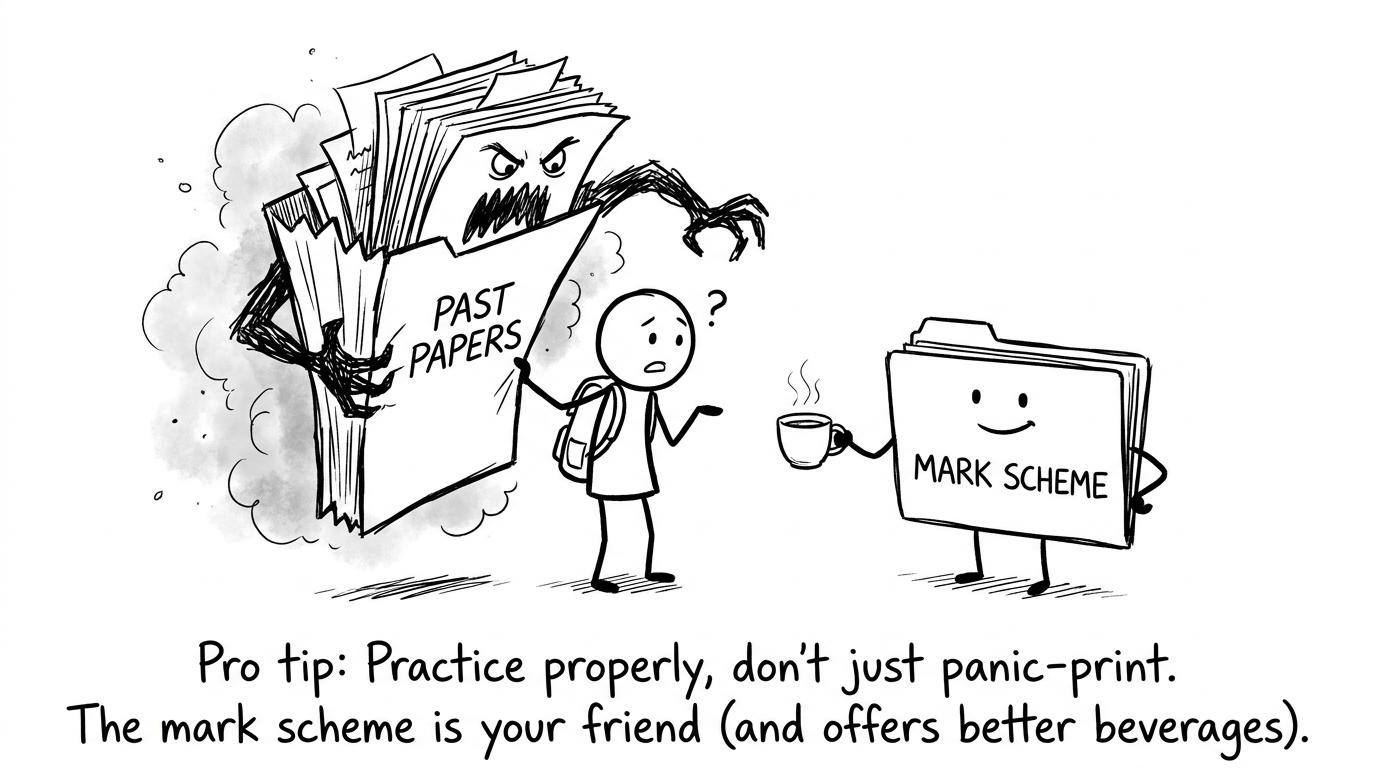 A monster folder of past papers meets a calm mark scheme
The goal (and why most GCSE past paper practice fails)
When you practise maths, you don’t just “do questions”. You mark them, spot the skill you missed, then drill that skill until it becomes normal. English works the same way, but students often skip the feedback loop.
Here’s the real goal of OCR GCSE English Language past paper practice:
- Build a repeatable routine for every question type
- Improve timing without panic
- Learn what the mark scheme rewards (and what it ignores)
- Create an “error log” so each paper makes the next one easier
If you do that, your GCSE grade moves because your process improves, not because you got lucky with a nice extract.
Quick checklist: how to use OCR GCSE English Language past papers
Use this every time you sit down with a paper:
- Choose the right paper and component (OCR has different titles across specs)
- Do one section under a clear time limit
- Mark immediately with the mark scheme
- Rewrite one response using improvements
- Log mistakes (timing, technique, evidence, structure)
- Set one targeted task before the next paper
On YesGenie you can find OCR English Language past papers organised clearly, so you spend your energy revising, not hunting PDFs: OCR GCSE English Language Past Papers.
Understand what OCR is actually assessing
OCR GCSE English Language questions reward two big things:
- Reading: selecting evidence and explaining effects
- Writing: communicating clearly for purpose and audience
That sounds obvious, but many GCSE students answer like they’re trying to “sound clever”. In reality, examiners want clarity, control, and proof.
A practical way to think about it (especially if you like maths): treat each question like an optimisation problem.
- Your time is fixed.
- Your marks are fixed.
- Your job is to maximise marks by choosing high-value actions.
If you spend 6 minutes re-reading the extract and 4 minutes writing, you’ve inverted the ratio. The paper punishes that.
The maths student’s advantage: build a feedback loop
Maths students improve fast because they accept a hard truth: your first attempt is data.
Do the same with GCSE English Language.
Make an “English error log” like a maths one
After marking, write a short entry under headings such as:
- Technique: Did I answer the exact question?
- Evidence: Did I use short, relevant quotations?
- Analysis: Did I explain how language/structure creates meaning?
- Structure: Did I build paragraphs logically?
- Timing: Did I run out of time or overwrite?
Keep it brutally simple. The point is not to judge yourself. It’s to reduce repeated mistakes.
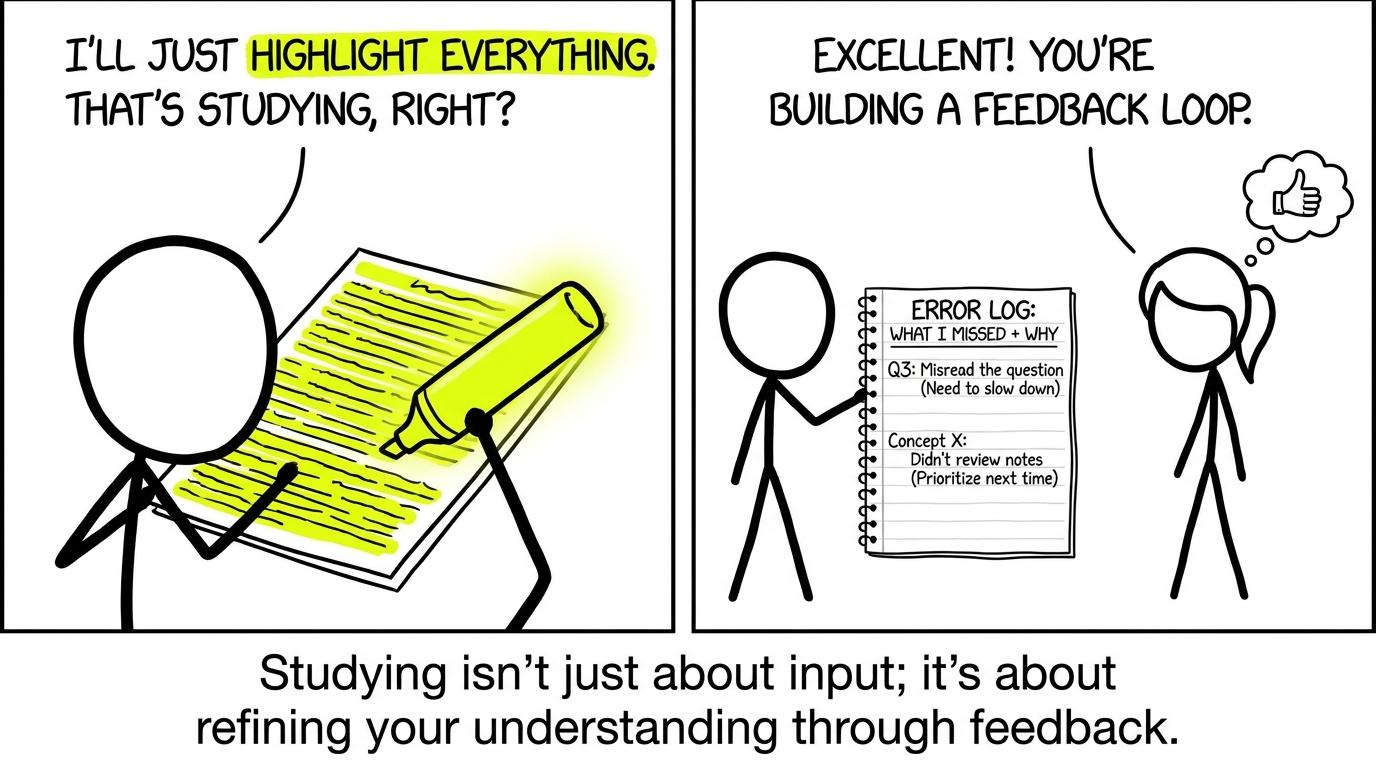 Highlighting everything vs building an error log
How to mark OCR GCSE English Language papers properly
Marking is where most learning happens. But only if you do it in the right order.
First mark for “did I answer the question?”
Before you think about “quality”, check the basics:
- Did you write about the correct lines/section?
- Did you address the focus words (for example, effect, impact, attitude, perspective)?
- Did you use evidence from the text (not your memory of it)?
A surprising number of GCSE marks are lost here. It’s the English version of dropping a negative sign.
Then mark for the mark scheme behaviours
OCR mark schemes (like all GCSE boards) reward behaviours:
- Selecting relevant quotations
- Using subject terminology accurately (when helpful)
- Explaining effects clearly
- Writing with purpose and control
So when you mark, don’t just write “7/10”. Identify which behaviour was missing.
Rewrite one paragraph, not the whole answer
A powerful rule: after marking, rewrite one paragraph as if you’re chasing the top band.
This is like reworking one tricky algebra step rather than redoing the whole page.
Timing: build a “ladder” instead of jumping to full papers
Full past papers are important, but they’re also exhausting. Many GCSE students do one, hate it, then avoid English for a week.
Instead, build timing gradually.
A simple timing ladder
- Day 1: One short reading question timed
- Day 2: One writing task plan timed
- Day 3: One writing task full response timed
- Day 4: Half a paper timed
- Day 5: Full paper timed
If you want that same structured approach for maths, YesGenie’s GCSE resources make it easy to practise in smaller chunks too, using GCSE Past Papers and topic practice.
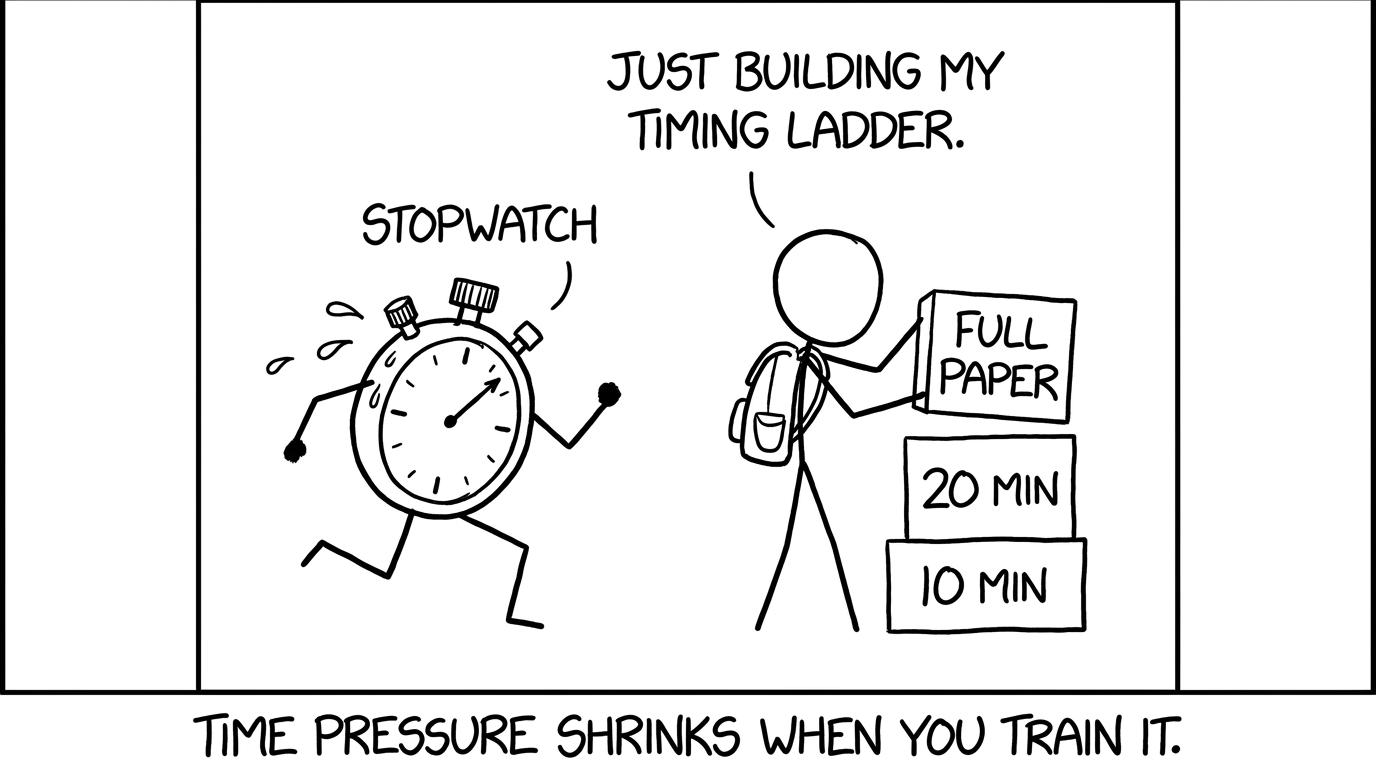 Stopwatch vs timing ladder
Worked method: a “ratio” for planning writing tasks (maths-style)
You asked for a blog aimed at maths students, so here’s a method that uses a little maths thinking to keep your writing balanced.
Many OCR GCSE English Language writing tasks reward:
- Clear ideas (content)
- Organisation (structure)
- Technical accuracy (SPaG)
When students panic, they often over-focus on one area. A simple way to self-check is to assign your time in a ratio.
Example: plan a 40-minute writing task
Suppose you have 404040 minutes.
A sensible split could be planning : writing : checking in the ratio 1:6:11:6:11:6:1.
Total parts =1+6+1=8= 1 + 6 + 1 = 8=1+6+1=8.
- Planning time =18×40=5= \frac{1}{8} \times 40 = 5=81×40=5 minutes
- Writing time =68×40=30= \frac{6}{8} \times 40 = 30=86×40=30 minutes
- Checking time =18×40=5= \frac{1}{8} \times 40 = 5=81×40=5 minutes
This stops you from doing a 151515-minute plan (beautiful, but pointless) or a 000-minute plan (fast, but messy). It’s not magic, just control.
Example: make checking concrete
In the final 555 minutes, check:
- Sentence boundaries (no accidental run-ons)
- Paragraphing (each paragraph does one job)
- Spelling of common high-frequency words
- Whether your ending actually ends (no drifting)
That last point matters more than people admit. Examiners remember endings.
How to choose which OCR GCSE English Language past papers to do
Not all past paper practice is equal.
Start with older papers for technique
Use earlier OCR GCSE English Language past papers to learn routines without the pressure of “this is the one everyone did”. Your aim is consistency.
Use recent papers for realism
Later in revision, switch to the newest OCR past papers for timing and exam feel. You’ll notice patterns in phrasing and mark scheme emphasis.
If you’re juggling subjects, keep your maths revision moving too. A good “maintenance” option is to use short tests: GCSE Maths Mini Tests.
Common mistakes students make with OCR GCSE English Language past papers
These are the mistakes that quietly cap a GCSE grade.
Doing papers “open book” and calling it revision
If you constantly pause, check notes, and rewrite mid-question, you’re not practising exam performance. You’re practising comfort.
Marking too kindly (or too harshly)
If you always give yourself the benefit of the doubt, you don’t improve. If you mark like you hate your own writing, you also don’t improve. Mark like an examiner: evidence-based and specific.
Writing long quotations
Long quotations often hide a lack of analysis. Short quotations force you to explain the effect.
Ignoring the question focus
If the question asks about impact, and you write about summary, you’ll lose marks even if your writing is fluent.
Not practising planning
Planning is not optional at GCSE. It’s the difference between a controlled argument and a wandering one.
How to fit English past papers around maths revision
Most students reading this are primarily revising maths. The trick is to avoid English taking over your week.
A practical routine:
- Two short English sessions (one reading, one writing) each week
- One timed maths paper session each week
- One targeted maths topic session (your weakest area)
YesGenie helps you keep the maths side structured with exam-board routes and practice banks, for example: OCR GCSE Maths and Edexcel GCSE Maths Past Papers.
If you like having everything in one place, you can also browse the wider set of tools here: YesGenie Resources and Other Revision Resources.
Bringing it together: a calm, repeatable GCSE routine
If you remember one idea, make it this: OCR GCSE English Language past papers are not a judgement. They’re a mirror. Used properly, they show you exactly what to practise next.
So run the loop: timed attempt, mark scheme, rewrite, error log, targeted practice. Keep it small and consistent. Do it alongside your maths revision, where the same feedback mindset already works.
When you’re ready to practise, start here: OCR GCSE English Language Past Papers. Then keep your maths sharp with GCSE Past Papers, exam-board routes like OCR GCSE Maths, and quick confidence builders like GCSE Maths Mini Tests.
YesGenie is built for this kind of revision: free revision lessons, practice questions, past papers, predicted papers, mark schemes, and tools that help you turn effort into marks. Pick one paper, do it properly, and let the next step be obvious.










