GCSE Night-Before Biology Plan (No Panic)
GCSE night-before Biology plan that avoids panic: calm checklist, smart recall, quick maths support, and a sleep-first routine using YesGenie resources.
If you are revising the night before a GCSE Biology exam, you already know the feeling: one minute you are highlighting notes like a professional, and the next you are convinced you have forgotten what a cell is. Panic is rarely about knowledge. It is about uncertainty, not knowing what to do next, or whether it is “enough” for your GCSE.
This plan is designed to remove uncertainty. It is not heroic. It is calm, structured, and realistic. It also quietly helps your maths, because Biology papers are full of data, percentages and graphs, and a strong GCSE maths brain can win you marks when your memory feels shaky.
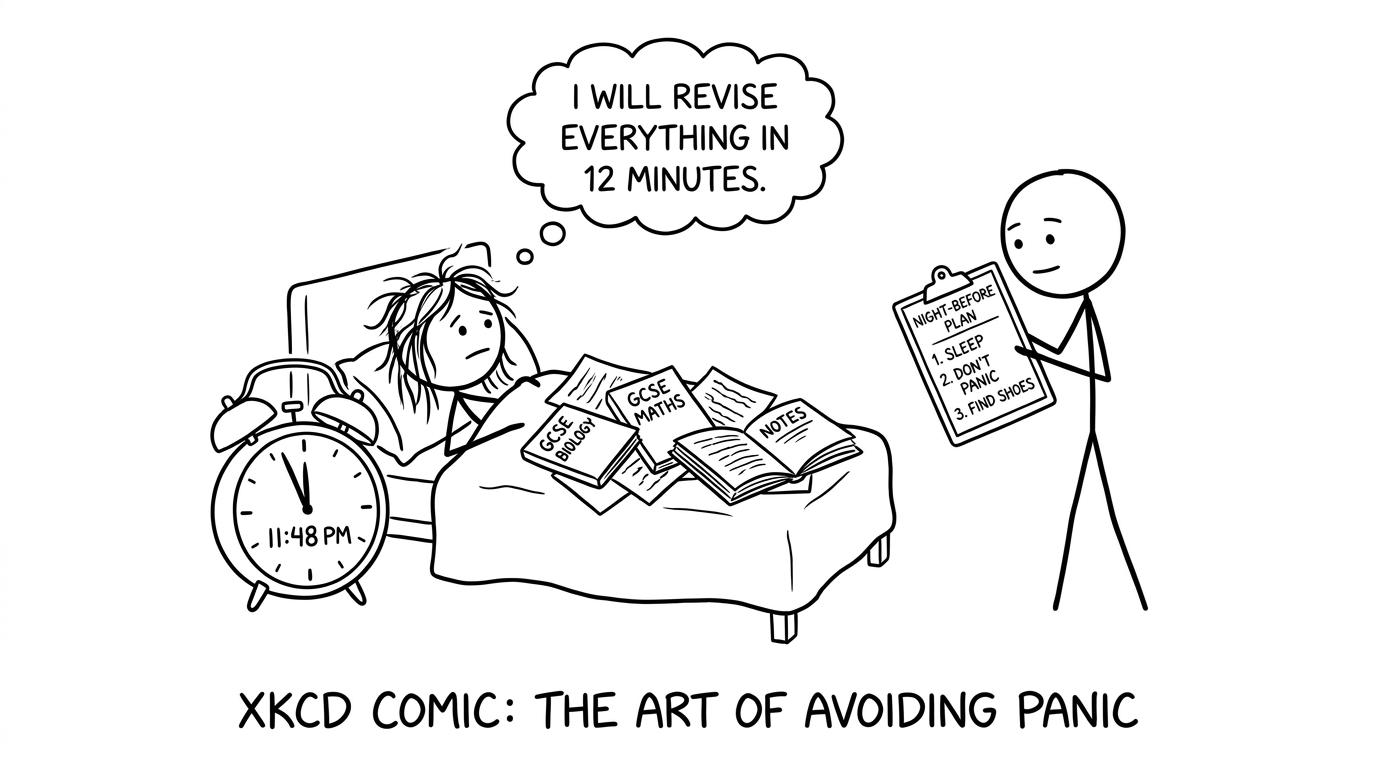 Student vs the 12-minute masterplan
The night-before checklist (keep it simple)
Use this GCSE checklist as your anchor:
- Choose the right exam board focus (AQA, Edexcel, OCR, Eduqas) and paper (Paper 1 vs Paper 2).
- Do two short active-recall passes (not rereading).
- Do one data-and-maths pass (graphs, rates, required practicals tables).
- Do one timed mini session with mark-scheme thinking.
- Pack your bag, set alarms, and protect sleep.
When you do not know what to do, return to the checklist. That is how you avoid panic the night before a GCSE.
Why “more hours” is a trap the night before GCSE
The night before a GCSE, revision is not about building new skyscrapers of knowledge. It is about tightening bolts. If you try to learn brand-new topics at midnight, your brain pays twice: once in stress, and again in lost sleep.
A better approach is:
- Reduce scope (pick high-yield content).
- Increase retrieval (force your brain to produce answers).
- Practise mark-scheme language (especially in Biology).
And because you are a maths student too, you can use one of the most maths-like skills of all: prioritisation under constraints. Imagine you have 180180180 minutes left tonight. You cannot spend 300300300 minutes. You must allocate time that exists.
Your GCSE night-before timeline (a calm 3-hour plan)
This timeline is written for about 3 hours of focused work. If you have less time, compress the blocks but keep the order.
Set-up (10 minutes)
- Clear desk, water ready, phone out of reach.
- Write a “win list” of 3 outcomes: e.g. “required practicals”, “infection and response”, “data questions”.
- Open the resources you will use so you do not waste willpower later.
If you need a clean structure for maths alongside science week, the Resources hub is a good place to bookmark what you will use next.
Block 1: Fast recall (35 minutes)
Do active recall only. No pretty notes.
- Take your Biology spec headings.
- For each heading, speak or write what you know in 60-90 seconds.
- Then check and correct.
This is the same logic as GCSE maths: you do not get better at algebra by reading someone else’s algebra. You get better by doing it.
Block 2: Data and maths marks (35 minutes)
Biology rewards students who can calculate accurately and describe data clearly. This is where your GCSE maths revision quietly pays off.
Use these three core skills:
Percent change (worked example)
A common Biology question: “The mean heart rate increased from 80 bpm to 92 bpm. Calculate the percentage increase.”
Percentage increase is:
percentage change=new−oldold×100 \text{percentage change} = \frac{\text{new} - \text{old}}{\text{old}} \times 100 percentage change=oldnew−old×100So:
92−8080×100=1280×100=0.15×100=15% \frac{92 - 80}{80} \times 100 = \frac{12}{80} \times 100 = 0.15 \times 100 = 15\% 8092−80×100=8012×100=0.15×100=15%That is a clean 222 or 333 marks on many GCSE papers.
For quick refresher maths, YesGenie’s Fractions, Decimals and Percentages revision guide is ideal the night before because it is short, method-first, and exam-shaped.
Mean from a table (worked example)
Suppose you have times (seconds): 12,15,13,2012, 15, 13, 2012,15,13,20.
Mean time:
mean=12+15+13+204=604=15 \text{mean} = \frac{12 + 15 + 13 + 20}{4} = \frac{60}{4} = 15 mean=412+15+13+20=460=15In Biology you often need to comment on anomalies too: 202020 looks high compared to the others, so you might mention it as an outlier and discuss repeating trials.
Interpreting graphs (a method)
When asked to “describe the relationship”:
- Use direction (increases/decreases).
- Use numbers (quote data).
- Use shape (levels off, peak, steep then gentle).
This mirrors how mark schemes reward specificity in GCSE maths explanations too.
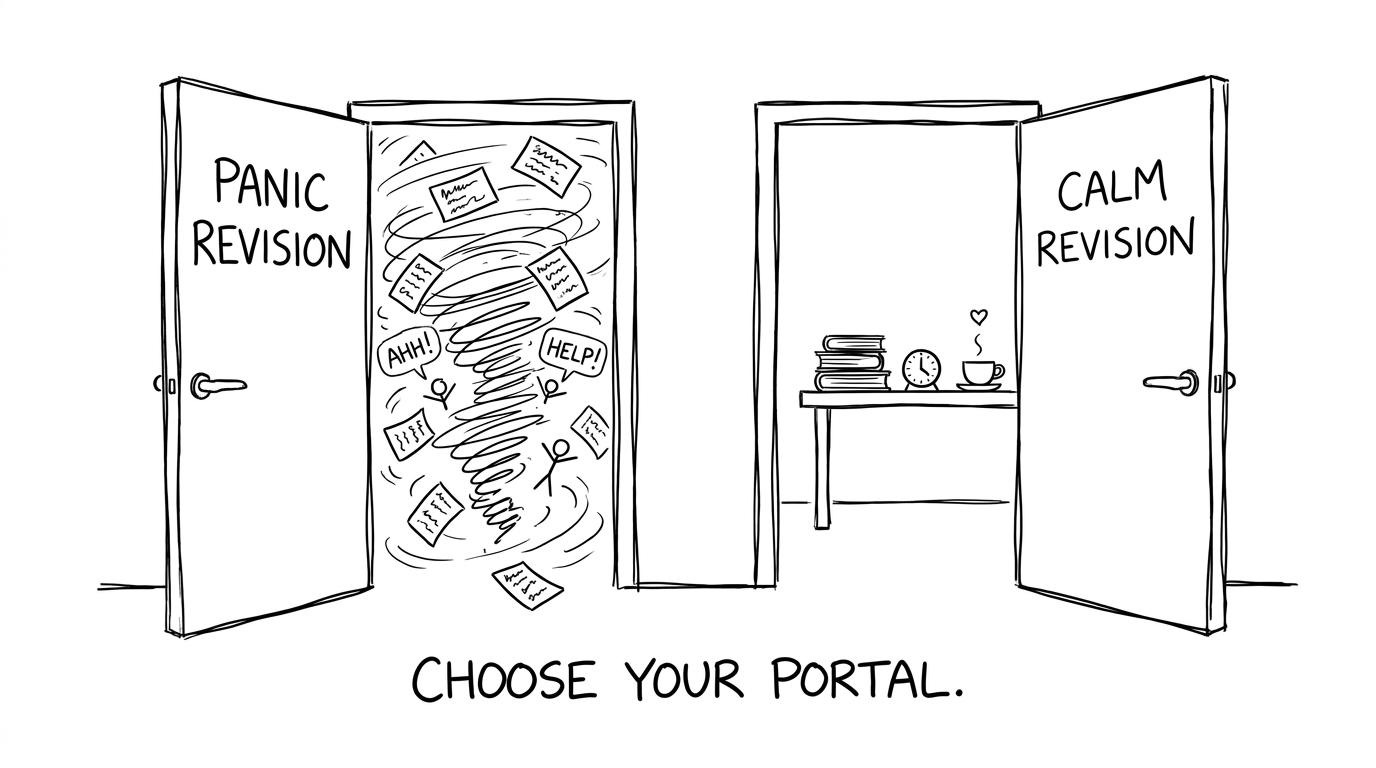 Choose your portal
Block 3: One timed section with mark-scheme thinking (45 minutes)
Choose one focused chunk of exam practice. Not a full paper. The goal is to rehearse the feeling of answering under time, then correcting.
If you want the simplest way to do this for maths (so you do not drop easy marks in the same exam week), use:
- Edexcel GCSE Maths Mini Tests for short timed practice.
- Or build confidence with real GCSE Past papers.
Even if tomorrow is Biology, doing one short GCSE maths mini test tonight can calm your week: it stops that background worry of “I am falling behind in everything”.
Block 4: Patch the top 3 weak spots (30 minutes)
Now you are allowed to look at notes, but only to fix what you have just discovered.
Pick three weak spots. Examples:
- Required practicals (methods, variables, safety, improvements).
- Key definitions (osmosis, diffusion, active transport).
- Common six-mark themes (evaluating experiments, interpreting data, explaining processes).
If you need a quick “how to learn from your mistakes” model, maths mark schemes are ruthless in a helpful way: you either did the method or you did not. Biology is similar, just with more words.
Shut-down routine (15 minutes)
Write on a small card:
- 5 key facts or definitions.
- 2 practical reminders.
- 1 data method (like percent change).
Then stop. Your job becomes sleep.
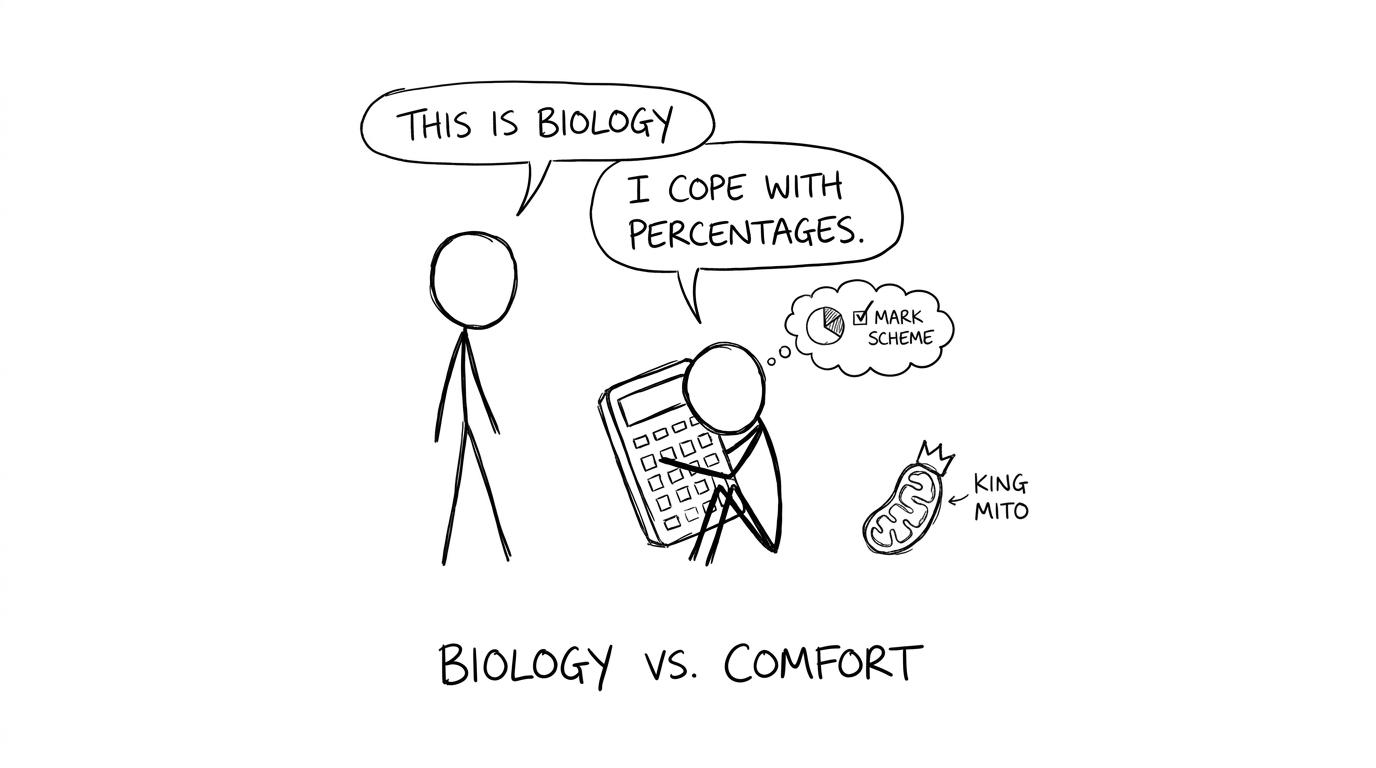 This is Biology... I cope with percentages
The “maths safety net” for GCSE Biology exams
A lot of students underestimate how many GCSE Biology marks are actually “maths-adjacent”. You are not turning the Biology exam into a maths exam. You are using maths to stabilise your performance.
Here are three small maths habits that protect marks:
Always show the calculation structure
Even if you can do it in your head, write the line. For example:
rate=changetime \text{rate} = \frac{\text{change}}{\text{time}} rate=timechangeMark schemes often award method marks. That is true across GCSE maths and science.
Use units like they are part of the answer
Write cm3\text{cm}^3cm3, g\text{g}g, s\text{s}s, bpm\text{bpm}bpm, and check conversions.
Check “sensible size”
If a percentage increase comes out as 1500%1500\%1500%, pause. In maths you would sanity-check; do the same here.
To keep your core arithmetic sharp, YesGenie’s BIDMAS revision guide is a quick reset when you feel scrambled the night before a GCSE.
Common mistakes that cause night-before GCSE panic
- Rereading for hours and calling it revision. It feels safe, but it does not test retrieval.
- Trying to learn everything instead of choosing the highest-yield topics (required practicals and data questions are often efficient marks).
- Ignoring the mark scheme voice. In Biology, words like “because”, “therefore”, “increase”, “decrease”, “diffuse” matter.
- Not practising calculations because “I’m not a maths person”. You are a GCSE maths student; use that advantage.
- Going to bed with no plan for the morning, then waking up in panic and burning energy on decisions.
A calm closing: use YesGenie to keep GCSE revision steady
The night before a GCSE Biology exam is not the moment to become a new person. It is the moment to be a slightly calmer version of yourself: focused, methodical, and willing to win marks one step at a time.
If you want your overall exam season to feel less chaotic, build a simple routine around YesGenie. Use revision lessons and topic notes when you need clarity, then switch to practice questions, mini tests, and past papers when you need proof. Keep GCSE Past papers ready for weekends, use Edexcel GCSE Maths Mini Tests for short confidence boosts, and lean on Edexcel GCSE Maths Predicted Papers when you want exam-shaped practice.
Tonight, your mission is simple: follow the plan, avoid panic, and protect sleep. That is how you turn the night before a GCSE into something quieter, and far more effective.
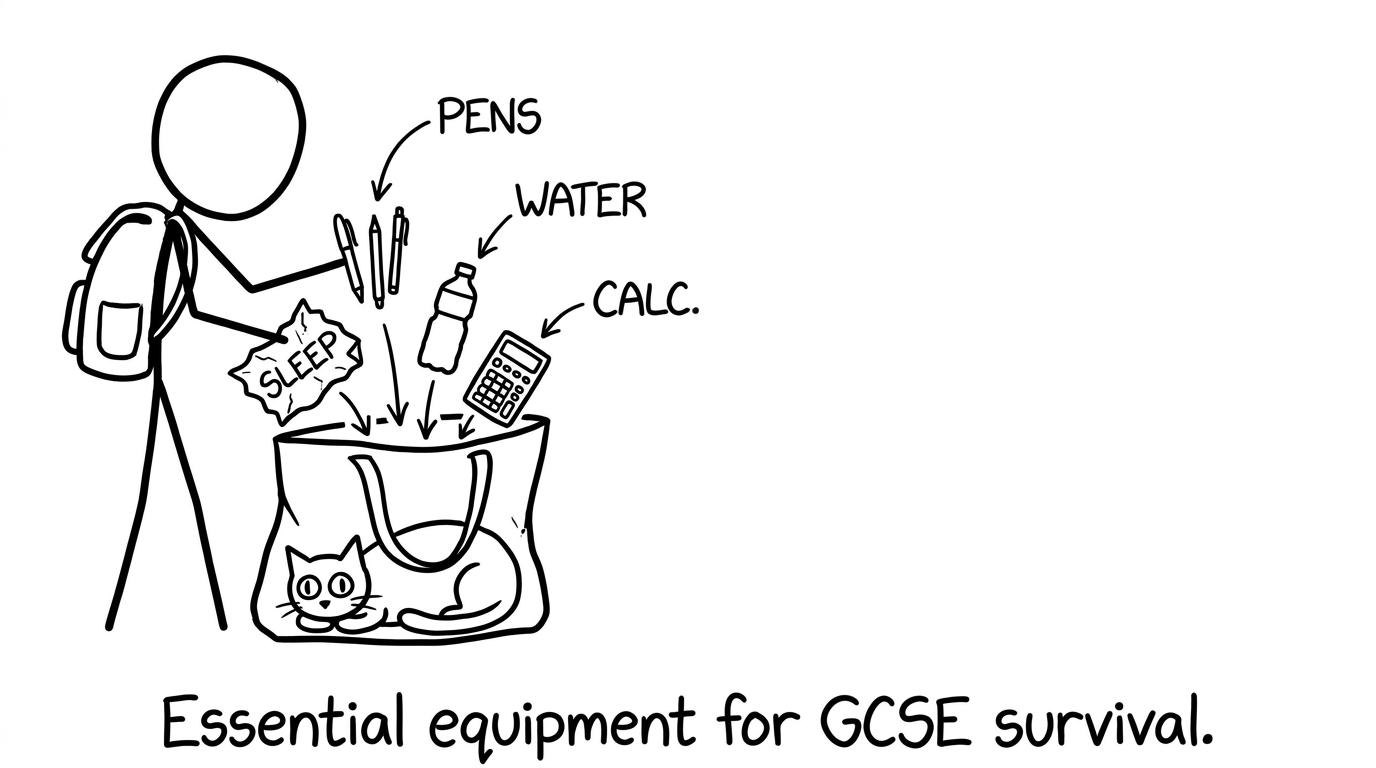 Essential equipment for GCSE survival