

GCSE Maths Resit vs Functional Skills: Which?
GCSE maths resit vs Functional Skills explained for post-16 students. Compare current rules, recognition, exams and the best route for your next step.
Starting college with maths unfinished can feel familiar: a new timetable, but one school grade still follows you. When comparing a GCSE maths resit vs Functional Skills, the answer depends on your grade, study programme and future plans. In England, full-time students holding grade 3 must study GCSE maths under the 2026-27 funding rules. Those with grade 2 or below may work towards GCSE maths at grades 9-4 or Functional Skills Maths Level 2.
Your chosen qualification must also meet the requirements of your next employer, apprenticeship, college or university.
Your decision checklist
Before choosing, establish:
- Your existing GCSE maths grade and whether you study full-time.
- Whether your destination specifically requires GCSE maths.
- Which assessment style suits your strengths.
- What assessment dates your provider offers.
- Which topics prevented you from reaching your target.
Ask your provider how the funding condition applies to your circumstances. Rules outside England differ; students in Wales or Northern Ireland should check local arrangements.
GCSE maths resit vs Functional Skills: the differences
What a GCSE maths resit involves
A resit covers the GCSE specification: number, algebra, ratio, geometry, probability and statistics, assessed through written papers.
Foundation tier offers grades 1-5. Higher tier offers grades 4-9, with a limited grade 3 outcome available under awarding arrangements. Your centre should choose the tier using assessment evidence and your target grade.
GCSE offers clear recognition when an application explicitly requires GCSE maths at grade 4 or above. It can preserve options if your plans change.
The GCSE Maths revision hub provides revision lessons, practice questions, past papers and mark schemes. Select your exam board, including Edexcel, AQA, OCR or Eduqas, so your preparation matches your specification.
What Functional Skills Maths Level 2 involves
Functional Skills Maths Level 2 focuses on applying mathematical knowledge to realistic problems. Contexts include money, measures, scale, percentages and interpreting information. You still need secure calculations, both with and without a calculator.
Practical contexts do not automatically make questions easier. You may need to identify relevant information, organise several stages and explain whether your answer is sensible.
Assessment formats, dates and resit arrangements depend on the awarding organisation and provider. Some centres offer more flexible assessment opportunities than the fixed GCSE series. Ask what your centre provides.
Functional Skills Level 2 sits at the same qualification level as GCSE grades 9-4, but it is a different qualification. Acceptance varies. If an entry requirement names GCSE maths, obtain confirmation that Functional Skills is accepted before enrolling.
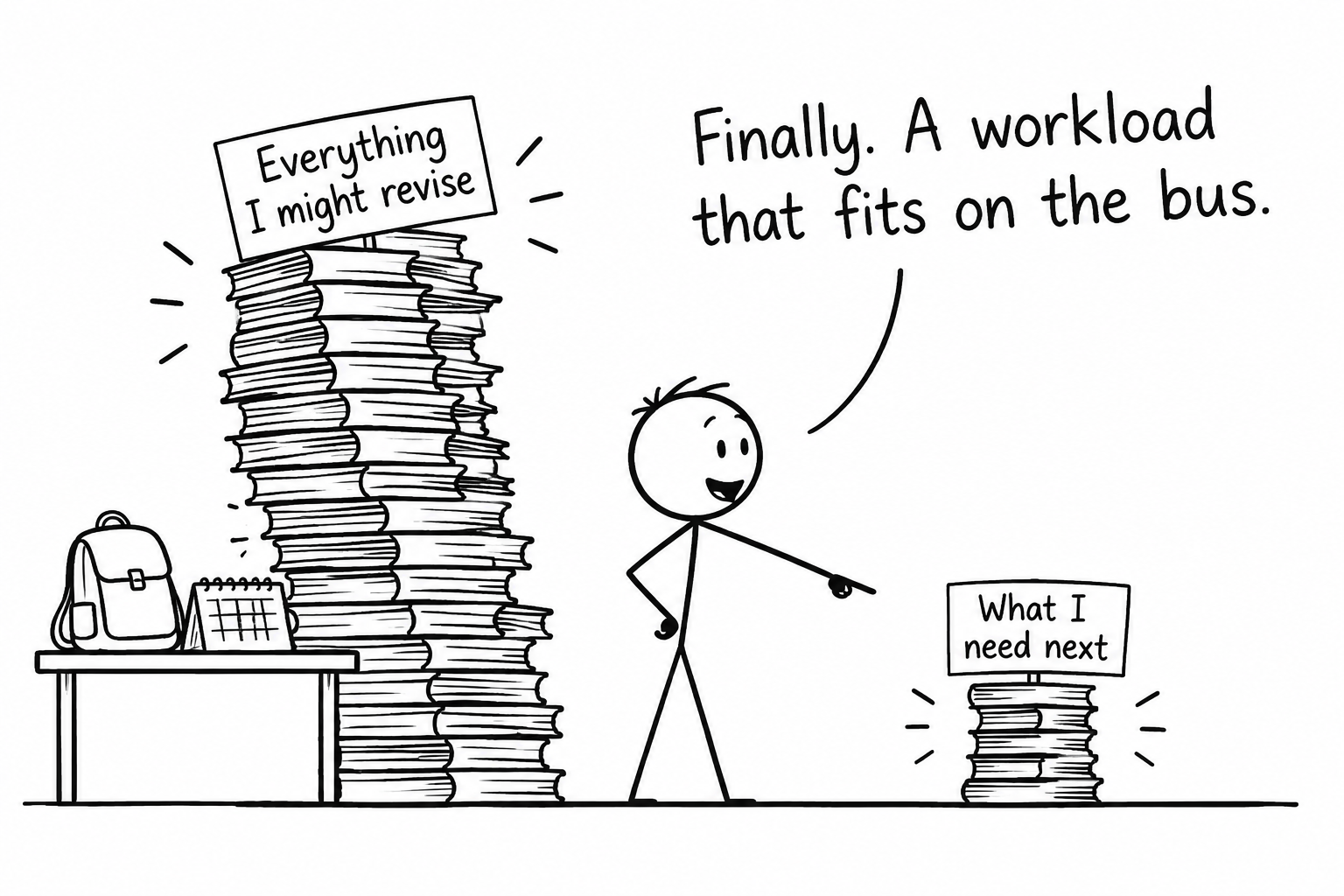 A post-16 student discovers that targeted revision is small enough to fit on the bus
Should you take the November resit?
November GCSE maths exams are available to students aged 16 or over on 31 August of that year. Exams also run in the main summer series. Confirm paper dates and entry arrangements with your exams officer.
November can suit someone close to grade 4 who can begin focused preparation immediately. Wider gaps may need longer. Continuing maths does not mean every student must enter the November series; discuss timing with your provider.
Use your previous paper breakdown or a recent assessment to separate secure topics from uncertain methods and persistent gaps. That gives your revision a purpose beyond repeating the syllabus.
The MathsGenie Revision Planner can organise topics around your exam date and available time, helping revision fit alongside college, placements or work.
Choose with your destination in mind
When GCSE is the stronger choice
If your intended course names GCSE maths, that requirement should guide your decision. University courses, teacher training, healthcare routes and apprenticeships can have different requirements, so check the exact course and ask admissions staff where wording is unclear.
GCSE may also suit someone near grade 4 whose main difficulties involve timing, exam technique or a few weak topics. Use GCSE maths mini tests to check whether those topics are becoming reliable.
When Functional Skills may suit you
Functional Skills can be sensible when your funding circumstances permit it and your destination accepts it. Its applied approach may suit your strengths.
Do not choose solely because someone calls it “equivalent”. Being at Level 2 does not guarantee acceptance for every application. Check before committing, especially if your longer-term plans remain uncertain.
Let assessment evidence guide revision
Your last grade records a total, not its causes. Lost marks might reflect weak methods, rushed reading, missing working or unfinished questions.
Try the 45-minute GCSE maths tests as a manageable diagnostic. Mark your attempt, review video solutions and identify what needs teaching or practice.
Then progress to complete GCSE maths past papers. Mark schemes show how working earns marks. Predicted papers can provide additional preparation nearer the summer series, alongside broader topic revision.
Common mistakes to avoid
Assuming qualifications are interchangeable. Check acceptance with the organisation making the decision, rather than relying on general advice about equivalence.
Entering November without a preparation plan. An earlier exam helps only when you can make useful progress beforehand. Agree a realistic entry plan with your teacher.
Repeating papers without repairing topics. Papers reveal weaknesses. Follow them with lessons, targeted questions and another check of the method.
Planning revision around an unrealistic week. Post-16 life includes other commitments. Choose sessions you can sustain and give each one a specific task.
Turn your choice into progress
Confirm your route with your provider, check your next entry requirement and identify the gaps you can tackle first.
Use MathsGenie as your free revision base: lessons rebuild methods, practice questions strengthen them, and mark schemes and video solutions help you improve exam answers.
Start with the MathsGenie Mock Exam Builder to create targeted practice from past-paper questions. Complete it, mark it carefully and use the evidence to choose your next revision session.















