GCSE English Language Exam Conditions Practice
GCSE English Language exam conditions practice: set up a realistic timed session at home, control distractions, pace the paper and review it properly.
The strange thing about an exam is that knowing the subject is only part of the challenge. You must also retrieve ideas, read carefully and make decisions while a clock moves steadily beside you.
That is why GCSE English Language exam conditions practice matters. To create a realistic session at home, use the correct paper for your exam board, follow its stated time limit, work without notes or interruptions, and complete the whole paper in one sitting. Afterwards, mark and review it separately.
This is not about making revision needlessly uncomfortable. It is about making the real exam feel familiar. For students preparing for both English and maths, the same routine can improve pacing, concentration and confidence across subjects.
Your realistic practice checklist
Before beginning, make sure you have:
- the correct GCSE English Language paper and any source insert;
- the corresponding answer booklet or lined paper;
- the time allowance printed on the paper;
- black pens and permitted equipment;
- a visible clock or simple timer;
- a quiet desk cleared of notes and textbooks;
- your phone switched off and placed outside reach;
- uninterrupted time for the complete paper;
- the mark scheme, kept hidden until afterwards;
- a plan for reviewing mistakes when the session ends.
English Language specifications differ between AQA, Edexcel, OCR and Eduqas. Their paper structures, question types and timings are not interchangeable, so always use material for the specification you are actually taking.
Start with the correct paper
A realistic simulation begins before the timer starts. Find out your exam board, specification and paper number from your teacher or examination timetable. Do not assume that a paper found online matches your course merely because it says GCSE English Language.
Use a clean, unseen past paper where possible. If you have already read the extracts, discussed the writing task or studied the mark scheme, the session may still provide useful practice, but it will not offer a true measure of your first response under pressure.
Download and print every required part in advance. Some examinations use a separate source booklet or insert. Check the front cover for the official duration, instructions and materials because these details can change between specifications and papers.
Do not borrow timing advice from another exam board. GCSE English Language is not divided into foundation and higher tiers, but that does not mean every board assesses it in the same way.
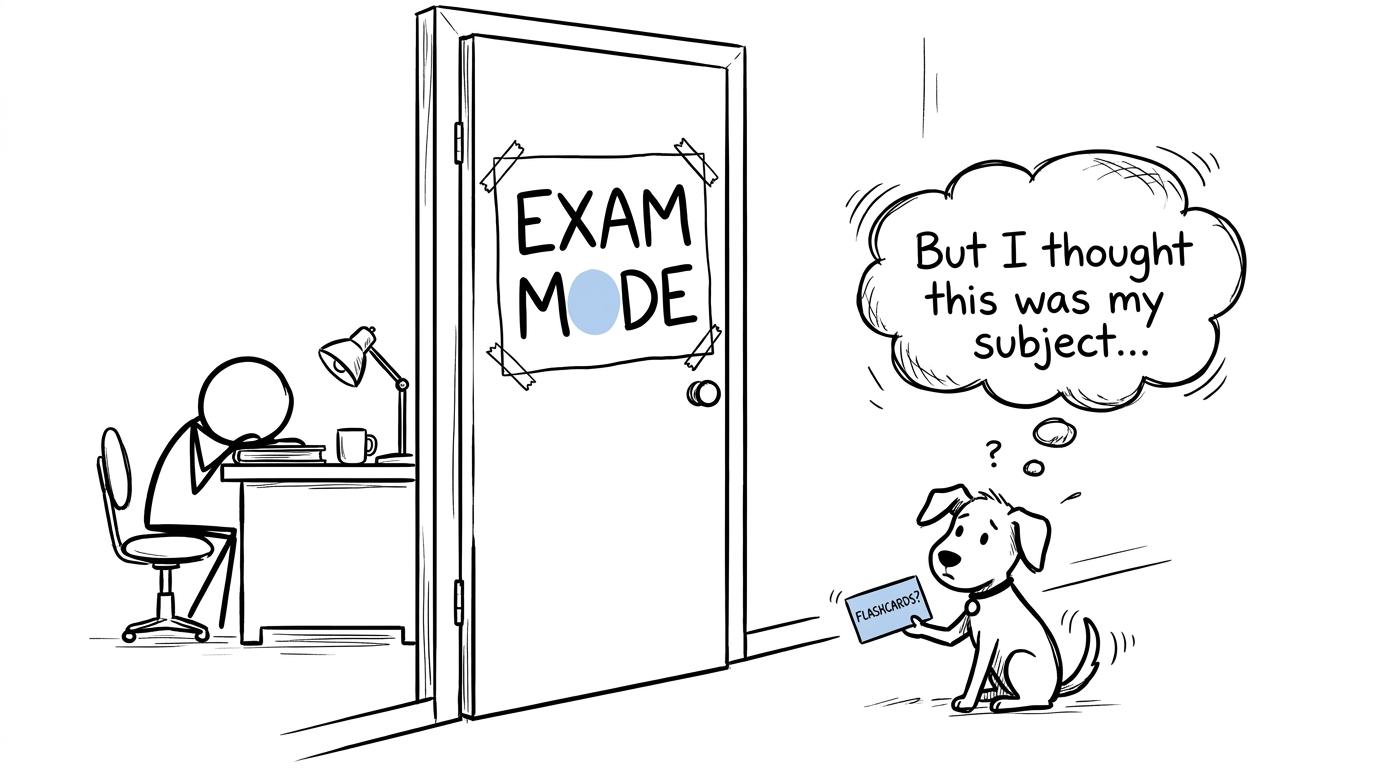 A student creates exam mode while a patient pet waits outside
Make the room realistic, not theatrical
You do not need to recreate an examination hall. You need to reproduce its important constraints.
Choose a table rather than a sofa or bed. Clear away revision cards, model answers, dictionaries and devices unless a particular item is explicitly permitted for that paper. Have the paper, insert, answer pages and pens ready before starting.
Ask other people at home not to interrupt you. Close unnecessary computer tabs, silence notifications and keep food away from the desk. Water in a clear bottle can make the setup feel more familiar, provided that matches your school’s arrangements.
Ordinary household noise is not a disaster. A real examination room is rarely perfectly silent. The goal is to remove avoidable interruptions, not to wait for an imaginary perfect morning that never arrives.
Use only your normal approved arrangements
If your school has confirmed an access arrangement, such as supervised rest breaks, a reader, a scribe, a word processor or extra time, practise with that arrangement as closely as home circumstances allow. Follow the guidance supplied by your school rather than creating your own allowance.
Home practice cannot reproduce formal supervision, but it can help you learn how to use an approved arrangement effectively. For example, if you receive extra time, the purpose is not simply to write for longer. You need to know where that time will help most.
Set the timer from the paper, not from memory
Read the front-cover instructions before starting. Then set one timer for the complete official duration. If your paper includes guidance about how long to spend on sections, treat that as planning support rather than permission to pause the clock.
A countdown timer can help, although a normal clock may feel closer to your examination room. Avoid using a phone as the timer if seeing it encourages you to check messages. A kitchen timer or clock is usually less distracting.
Write your start and finish times on scrap paper before beginning. Once the session starts:
- do not pause for messages, snacks or quick searches;
- do not check a quotation, definition or technique;
- do not look at the mark scheme;
- do not extend the finish time because a response is nearly complete;
- do not ask somebody whether your interpretation is correct.
These rules reveal something ordinary revision often hides: whether your knowledge remains usable when help is unavailable.
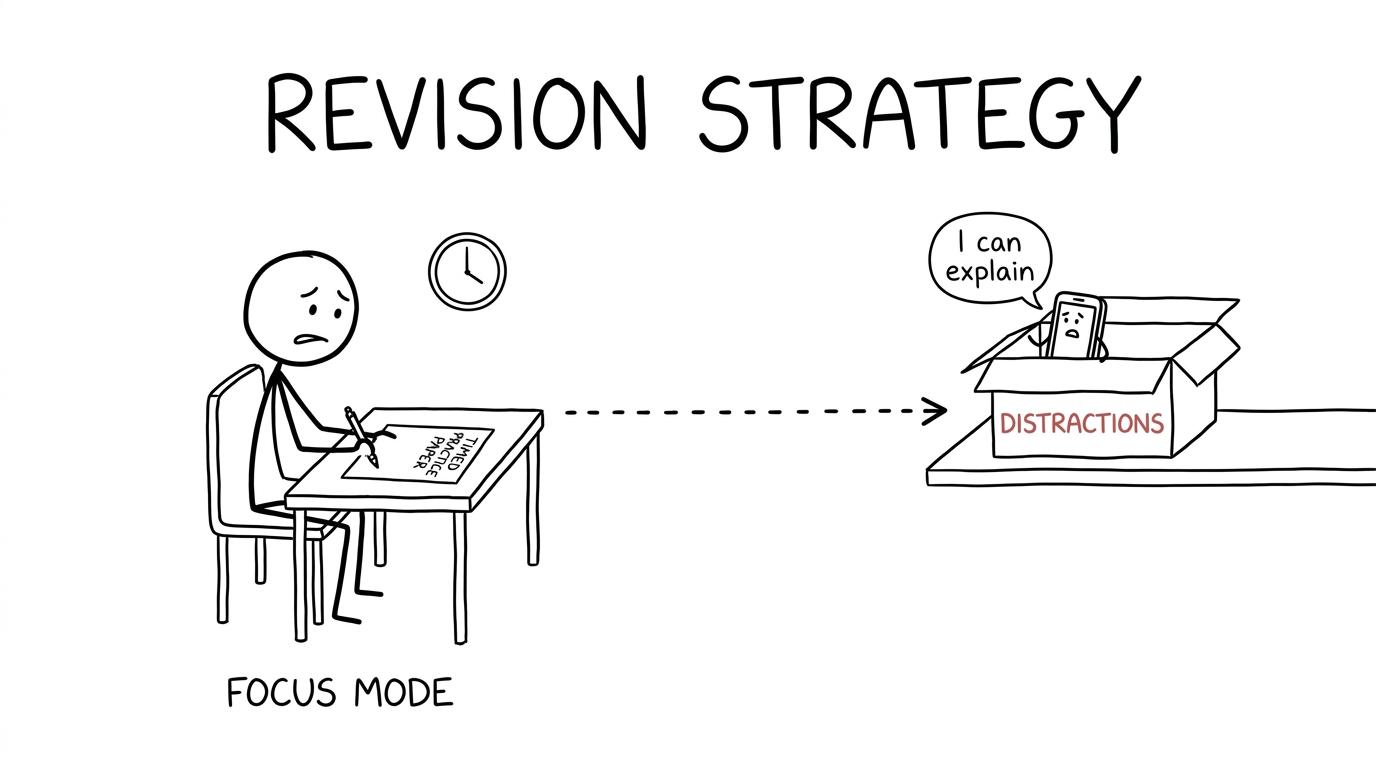 A banished mobile phone attempts to negotiate with a student
Practise decisions as well as writing
English Language exams test more than how quickly you can fill pages. You must read unfamiliar material, identify what each question requires, select evidence, organise analysis and produce extended writing.
Before writing, scan the paper and note its structure. Follow the instructions about which questions to answer. If the exam board provides suggested timings or mark totals, use them to make proportionate decisions.
Your plan should remain simple. Decide roughly when you need to leave each section, then continue working. Constantly recalculating timings wastes attention and can create panic.
If a question stalls you, make the best progress you can and move on before it damages the rest of the paper. Returning later is usually more useful than sacrificing a substantial writing task to perfect one earlier paragraph.
The same principle appears in GCSE maths. A difficult algebra question should not consume time needed for accessible marks elsewhere. Students can develop this judgement through MathsGenie’s free GCSE maths revision, where topic practice can be followed by complete timed papers.
Finish exactly when time ends
Stopping matters. If you routinely award yourself another ten minutes, you are practising a paper that does not exist.
When the timer sounds, put your pen down and record where you reached. Do not immediately complete the final answer. The unfinished section is evidence: perhaps reading took too long, planning became excessive or an earlier question absorbed disproportionate time.
After a short break, you may finish unanswered work in a different pen. This separates what you achieved under exam conditions from what you could produce with unlimited time. Both are useful, but they answer different questions.
For maths practice, the GCSE exam papers collection provides papers with mark schemes and video solutions. Students following other specifications can also find dedicated AQA GCSE maths papers and OCR GCSE maths papers.
Review the session in two stages
A timed paper tells you what happened. The review tells you what to do next.
First, judge the conditions rather than the English. Ask:
- Did I begin promptly?
- Did I finish every required question?
- Where did I lose time?
- Did I misread any command words?
- Did concentration fade during a particular section?
- Did I leave time to check my writing?
Then use the official mark scheme and any examiner guidance supplied with the paper. Mark cautiously. English mark schemes use levels and qualitative descriptors, so self-assessment is less exact than marking many short maths questions. Where possible, ask your teacher to review a response, particularly extended writing.
Do not reduce the review to a single mark. Identify a small number of actions, such as making analysis more precise, selecting shorter evidence, planning writing more efficiently or proofreading sentence boundaries.
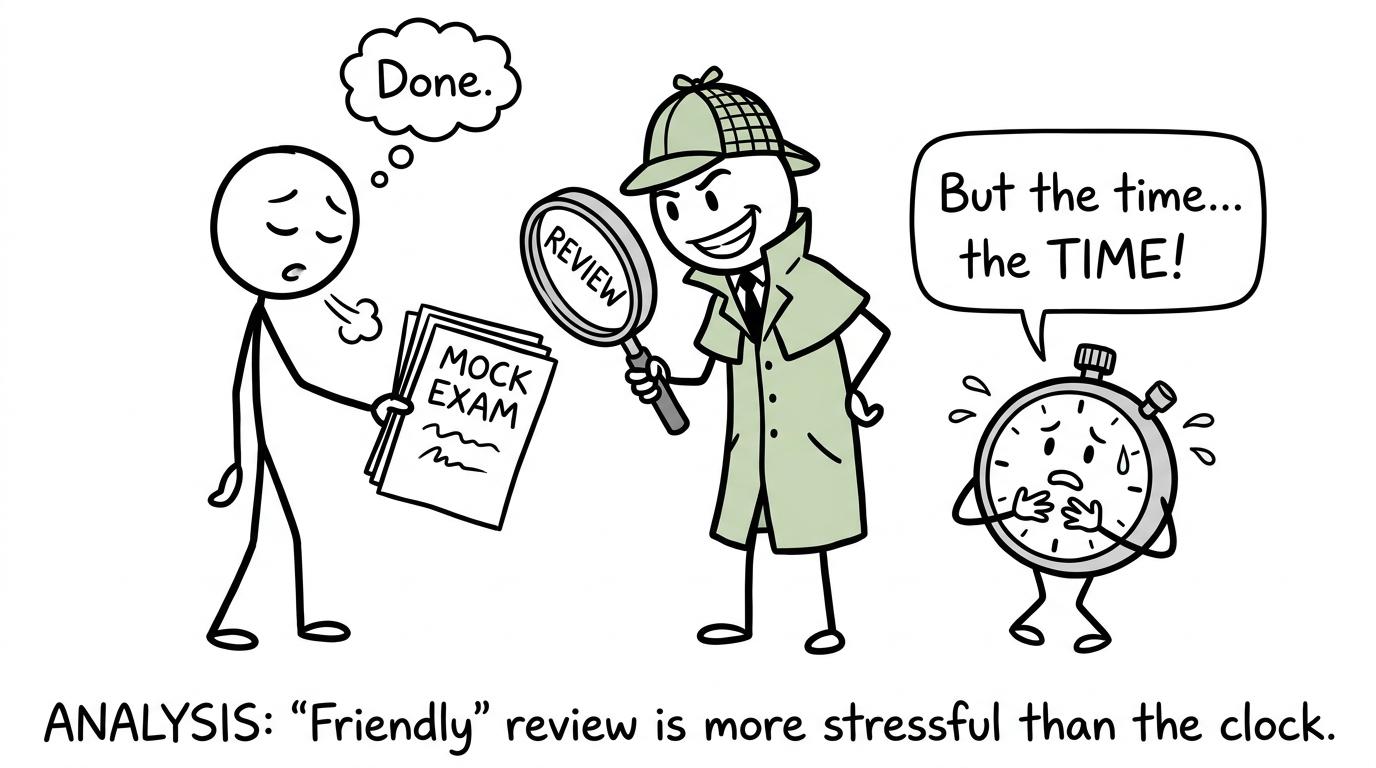 A student detective investigates a completed practice paper
Build full papers into a wider revision routine
Full simulations are valuable, but they are demanding and diagnostic. They reveal weaknesses; shorter revision sessions repair them.
A balanced cycle looks like this:
- revise one specific skill;
- practise that skill without strict timing;
- complete a question under a short time limit;
- sit a complete paper in realistic conditions;
- review the paper and choose the next priority.
Spacing full papers across your revision period gives you time to respond to what each attempt reveals. Sitting several papers without reviewing them can strengthen the same inefficient habits.
This approach transfers directly to maths. Use GCSE topic revision lessons and questions to repair individual gaps before returning to a full paper. Closer to the examination, MathsGenie predicted papers can provide additional practice alongside official past papers. Predicted papers are practice resources, not forecasts of the exact questions that will appear.
Common mistakes in home exam practice
Choosing a familiar paper
Recognition makes reading and planning easier. Keep at least one unseen paper for a genuine timed attempt rather than using every paper during ordinary revision.
Pausing the clock
A short interruption can quietly become a long advantage. Prevent interruptions beforehand and note any unavoidable disruption honestly.
Checking notes midway through
This changes the task from retrieval to supported practice. Mark the uncertainty on your paper and investigate it after time ends.
Ignoring the source insert
Print or organise all materials before starting. Switching between awkward files or discovering a missing page damages both realism and concentration.
Writing until every response is finished
Extra time hides pacing problems. Stop at the official finish, record what remains and use that information to adjust your next attempt.
Marking immediately while tired
Take a short break first. Distance makes it easier to notice weak explanations, rushed handwriting and missing checks.
Obsessing over the final mark
One home score is not a grade prediction. Paper difficulty, marking judgement and current preparation all affect it. Look for patterns across several pieces of evidence.
Make exam day feel less new
The best home simulation does not guarantee an easy paper. It does something more practical: it removes avoidable surprises.
You learn what sustained concentration feels like, how quickly time passes and what happens when an unfamiliar question appears. You also learn that a difficult moment does not have to control the rest of the paper.
Set up one complete GCSE English Language session using the checklist above, then review it honestly. For your maths preparation, make MathsGenie your next step: combine free GCSE revision resources, practice questions, mini tests, past papers, mark schemes, video solutions and predicted papers. The aim is not merely to know more on exam day. It is to have practised using what you know when the clock is running.