

Adult Learners Resitting GCSE Maths: A Practical Guide
Adult learners resitting GCSE Maths: plan revision around work, check November resit eligibility, and build a targeted practice paper with MathsGenie today.
Adult learners resitting GCSE Maths need a manageable revision plan, a confirmed exam entry and practice that targets the marks they are currently missing. Whether you are returning at college or fitting revision around work, the first step is to establish what you need to improve before choosing how much to revise.
Imagine a post-16 learner arriving at an evening lesson after a shift. They recognise percentages, but hesitate when a question asks for the original price. Their difficulty is specific. Their revision can be specific too.
That is a useful starting point: your previous result gives you information, but your next practice session gives you something to act on.
Your GCSE Maths resit checklist
Before building a timetable, confirm:
- Your exam board, specification and foundation or higher tier.
- The grade required for your next course, apprenticeship or job.
- Whether you are entered through your college or need a private exam centre.
- Your exam series, entry deadline and all paper dates.
- Which topics and exam habits currently cost you marks.
Keep these details together. An organised entry and a focused revision plan solve different problems, and both matter.
Adult learners resitting GCSE Maths: arrange the entry first
If you attend college, ask the exams office whether you have been entered. Attending lessons and having a confirmed exam entry are separate things. Check your name, board, tier and any access arrangements with staff.
If you are preparing independently, find a centre that accepts private candidates before committing to an exam series. Ask about fees, deadlines, identification and arrangements for any support you need. Centre deadlines may be earlier than awarding-body deadlines.
In England, government guidance says learners over 16 who have left school normally do not have to pay for English or maths education up to GCSE level. Eligibility and provision still need checking with the provider. Do not assume this covers a privately booked exam or every commercial course.
Check whether the November resit suits you
AQA's GCSE Mathematics specification states that November entries are available to students who were at least 16 on the preceding 31 August. Confirm eligibility with your centre, particularly if your circumstances are unusual.
The November resit can offer a nearer opportunity, but choose it with your tutor based on readiness and available preparation time. Ask your centre for the current official timetable and your entry deadline. Record every paper date, rather than treating the resit as one appointment.
If November leaves too little preparation time, discuss the summer series. A realistic timetable should reflect your starting point and responsibilities.
Diagnose the gaps before revising everything
Our hypothetical learner could spend an evening watching percentage videos. A more useful first move is attempting questions independently and finding where their reasoning breaks down.
Choose a paper matching your board and tier from MathsGenie's GCSE papers collection. Attempt a manageable section, then mark it carefully. At this stage, identifying gaps matters more than finishing quickly.
For each lost mark, record the cause:
- Knowledge: you could not recall the method.
- Application: you knew the skill but did not recognise when to use it.
- Execution: a calculation, unit or reading error interrupted otherwise sound work.
These need different responses. Missing knowledge calls for a lesson and practice questions. Application needs varied questions. Execution needs a checking habit.
Choose two or three priorities from the evidence. Keep a brief error log so that next week's choices come from your work rather than your mood.
Build revision around the week you actually have
A post-16 timetable might include vocational coursework, shifts, travel or caring responsibilities. Plan around those commitments before allocating revision.
Try three short sessions and one longer session each week. Give each a clear purpose: learn a method, practise it independently, revisit an earlier topic, or attempt mixed questions. Use the MathsGenie revision planner to give those tasks a realistic place in your week.
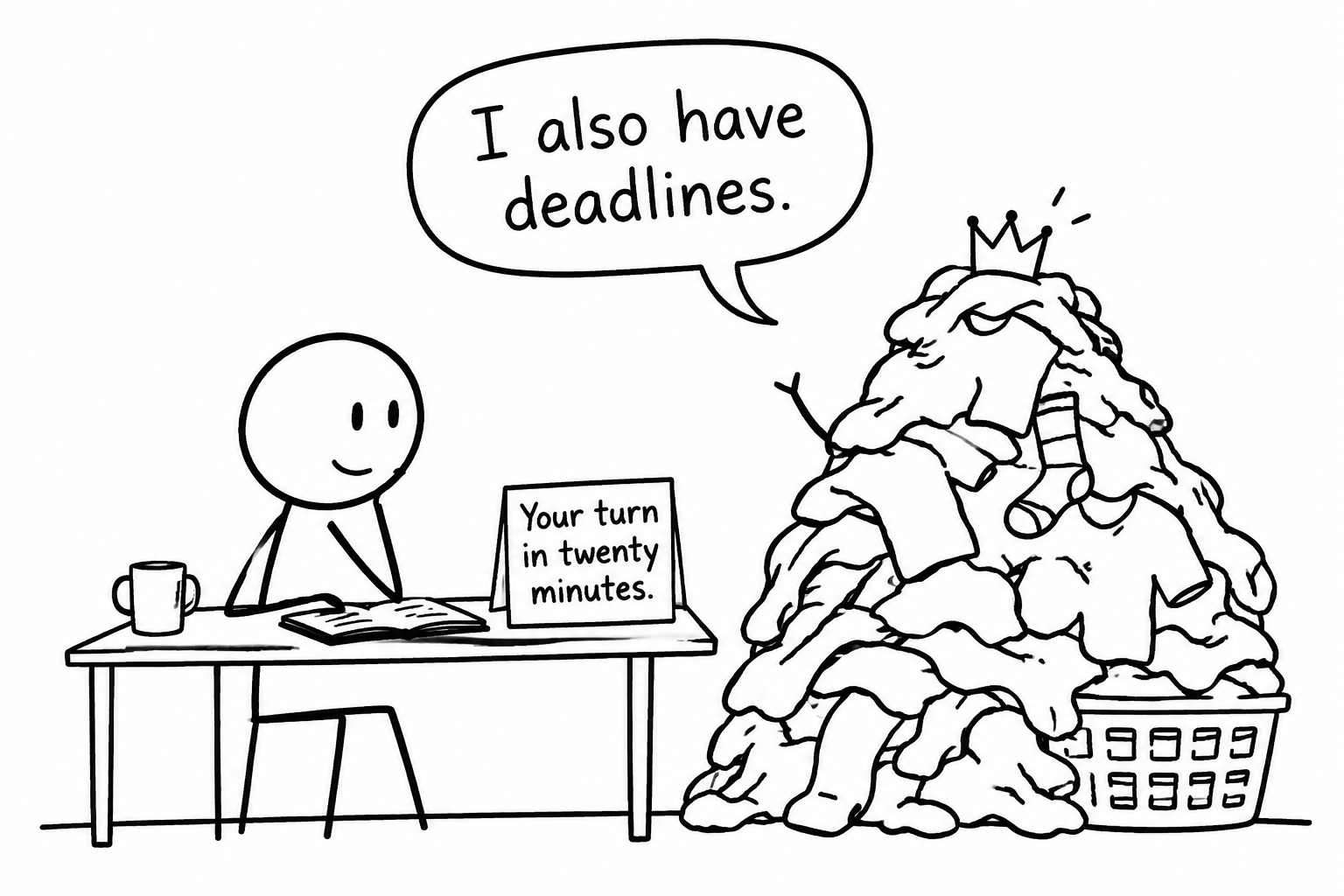 Stick-figure adult negotiates revision time with a demanding pile of laundry
On a difficult day, reduce the task to a few questions and mark them. If you miss a session, return to the next planned task. Adding every missed minute to tomorrow usually makes the plan harder to sustain.
Turn familiar methods into reliable marks
Use the free GCSE Maths revision resources to find material for your board. Work through a revision lesson, attempt questions without the explanation open, then check the mark scheme or available video solution.
The independent attempt is essential. Following someone else's method can feel comfortable before you can reproduce it yourself.
Revisit the skill several days later, mixed with older topics. MathsGenie's Edexcel GCSE Maths mini tests, for example, offer focused practice for learners following that specification.
Practise written working too. Show the calculation or reasoning behind an answer, include units and follow rounding instructions. On calculator questions, write down what you intend to calculate before entering it. This makes mistakes easier to trace and gives examiners working they can assess.
Common mistakes that make resits harder
Repeating full papers without repairing gaps. Papers reveal weaknesses; focused practice addresses them. Follow each paper with a specific repair task.
Choosing a tier without discussing the target. Foundation covers grades 1-5 and higher covers grades 4-9. Ask your tutor which tier suits your current performance and required grade.
Treating predicted papers as a forecast. Use predicted papers for additional practice. Continue covering your specification, because a predicted paper cannot guarantee the topics in your exam.
Only practising comfortable topics. Familiar questions help you begin, but your error log should influence what comes next. Keep some mixed practice so that you learn to choose methods independently.
Build your next practice paper around your gaps
Progress becomes easier to recognise when the next task is concrete. Our hypothetical learner now knows that reverse percentages need attention. They can revise the method, practise independently and check whether it holds up among other questions.
Use MathsGenie's Mock Exam Builder to build a targeted practice paper around your current priorities. Attempt it without notes, mark it and use the result to choose your next revision task.
Your resit preparation can begin with that small, useful cycle: find a gap, practise deliberately, then check again.















