Among the most debated policy proposals in recent economic forums is the campaign to bring vital regional infrastructure networks back under direct public control. The policy suggests nationalising key services that were privatised in the mid-1990s, sparking a intense debate over whether consumer and taxpayer interests are best met through private, profit-focused entities or state-directed public bodies.
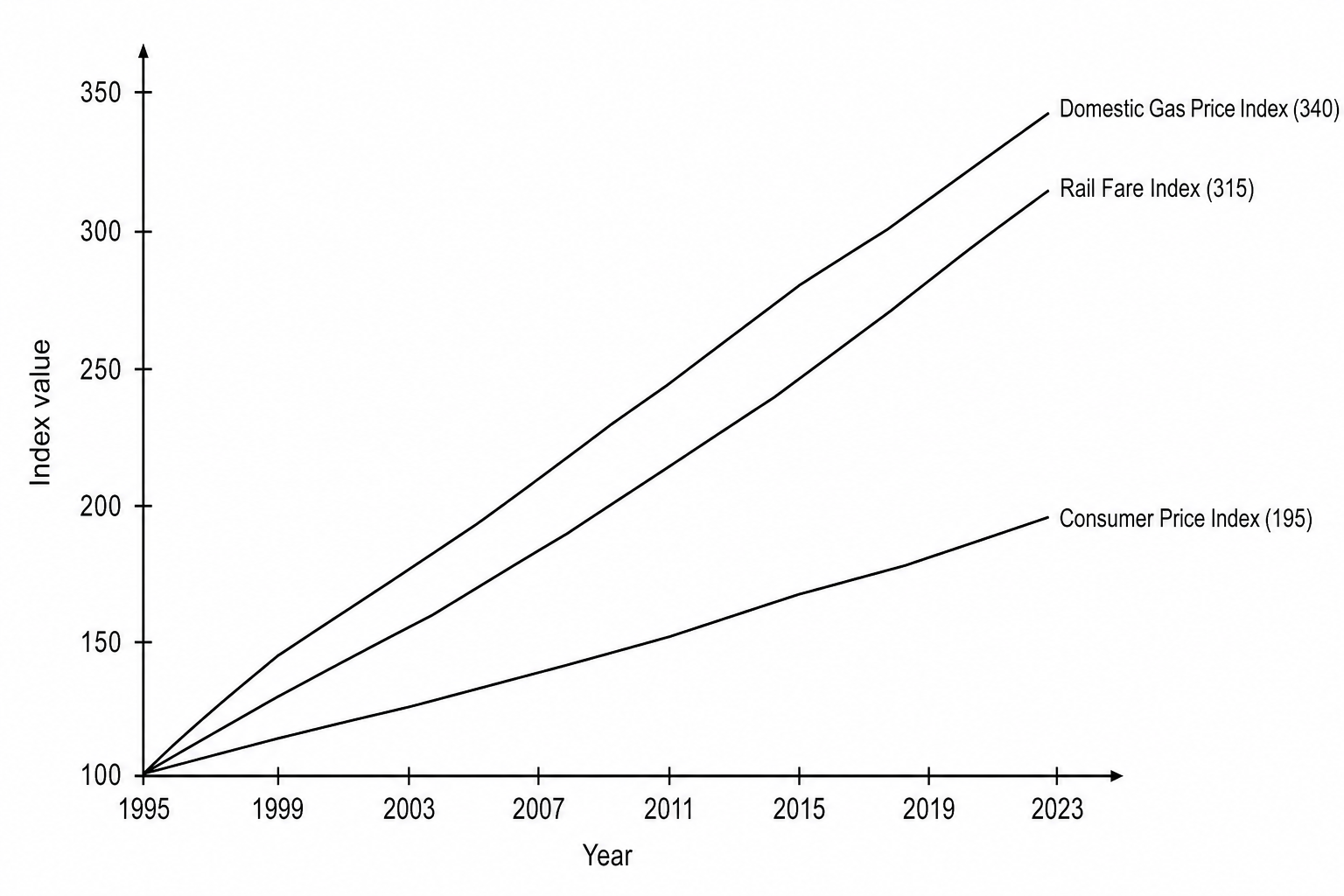
Two sectors under intense scrutiny are the domestic gas distribution network and key regional rail passenger services, which were transferred to the private sector in 1994 and 1996 respectively. At the time, supporters of privatisation argued that market discipline would unleash competition, incentivise cost-saving innovations, lower prices for households, and generate substantial tax revenues. However, nearly three decades on, critics argue that these market benefits have failed to materialise for consumers. Fig. 2.1 displays the trajectory of gas prices and regional rail fares since privatisation relative to baseline inflation.
Fig. 2.1 – Domestic Gas, Rail Fare and Consumer Price Index 1995–2023 (Base Year 1995 = 100)
| Year | Domestic Gas Price Index | Rail Fare Index | Consumer Price Index |
|---|---|---|---|
| 1995 | 100 | 100 | 100 |
| 1999 | 115 | 125 | 110 |
| 2003 | 130 | 150 | 122 |
| 2007 | 165 | 180 | 135 |
| 2011 | 210 | 210 | 148 |
| 2015 | 240 | 250 | 160 |
| 2019 | 280 | 290 | 175 |
| 2023 | 340 | 315 | 195 |
Advocates of state ownership also claim that public managers would be free to prioritize long-term capital investments that private operators are disincentivised to pursue. To support this claim, campaigners point to critical delays in pipe safety overhauls by Northern Gas Grid and minimal rolling stock upgrades on busy networks by Great Midland Rail. They argue that the divergent priorities of profit-maximising private monopolies and public welfare-maximising providers make a compelling safety and service case for state acquisition.
Conversely, current treasury ministers have warned that a comprehensive buyout would cost taxpayers an estimated £145bn. They suggest that such an enormous fiscal outlay is unjustifiable and that consumer interests can be fully protected through robust independent regulatory bodies and targeted interventions, such as the utility price caps and strict service delivery targets implemented recently.
Evaluate, using the information in Extract 2 and your economic knowledge, whether the likely objectives of a private sector gas or rail firm justify taking them into public ownership.

