Amongst the most heavily discussed policy choices in recent years is the commitment to bringing public transit networks back under direct state control. Proponents argue that nationalising key services that were privatised in previous decades is essential to ensure that social and welfare goals are prioritised over private profits, sparking intense policy debates regarding consumer welfare.
Two critical networks are the passenger rail and municipal bus systems. While privatisation was originally intended to introduce market discipline, drive dynamic efficiency, and lower fares, critics argue that fares have escalated far ahead of general inflation. Fig. 2.1 illustrates the movement of transport fares compared to the general price level.
Fig. 2.1 – Rail Fares, Bus Fares and Consumer Price Index 2000–2022 (Base Year 2000 = 100)
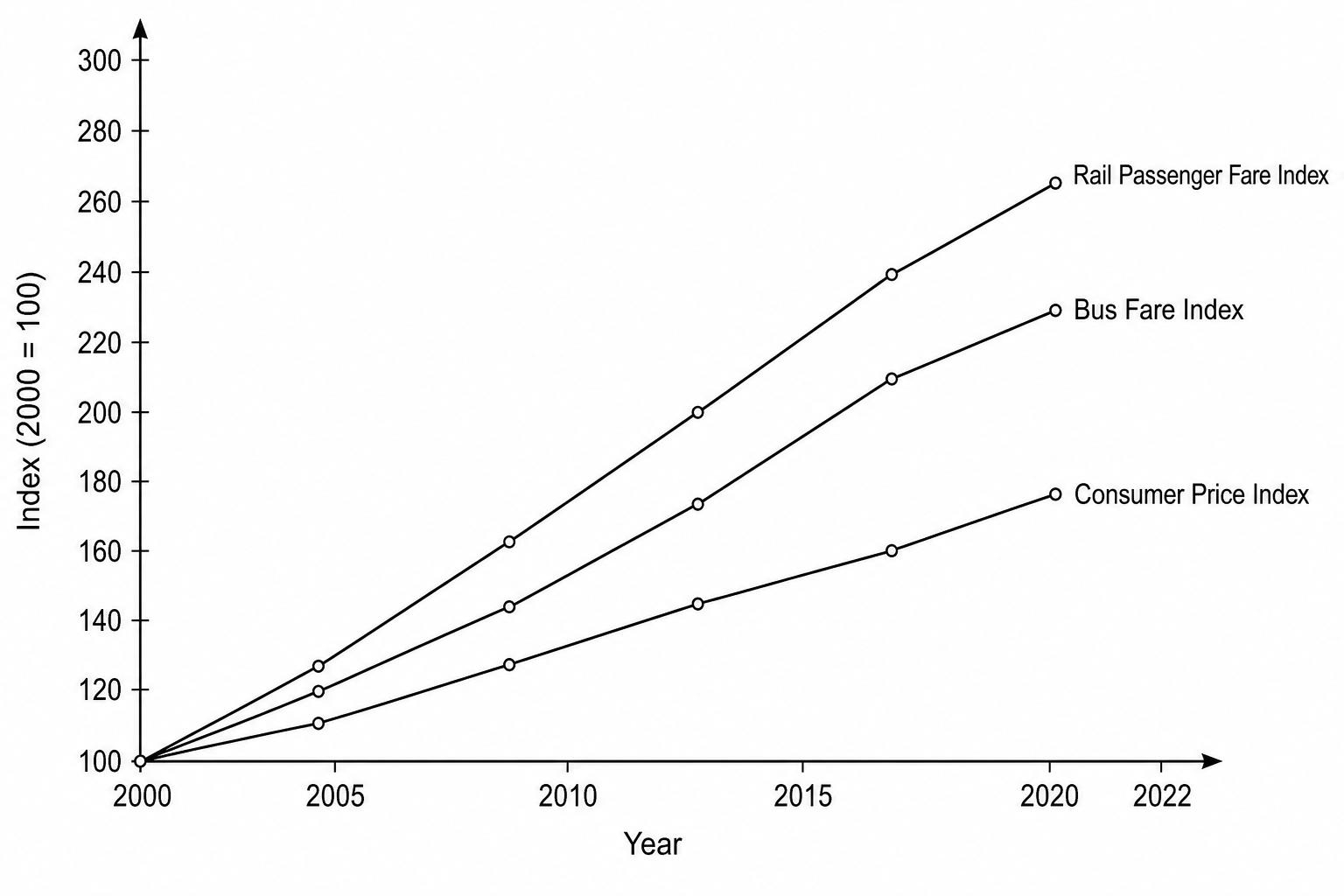
| Year | Rail Passenger Fare Index | Bus Fare Index | Consumer Price Index |
|---|---|---|---|
| 2000 | 100 | 100 | 100 |
| 2005 | 125 | 120 | 112 |
| 2010 | 160 | 145 | 128 |
| 2015 | 200 | 175 | 145 |
| 2020 | 240 | 210 | 160 |
| 2022 | 265 | 230 | 175 |
Advocates for public ownership suggest that state-run transport systems can prioritize public benefit, coordinate timetables logically, and subsidise unprofitable social lines. Conversely, opponents point to potential government failure, lack of profit-driven efficiency incentives, and the massive fiscal cost of buyout and direct operation.
Explain the likely objective of a passenger rail or public transport firm if it operated in the public sector.

