

What you'll learn
- The main types of pathogen that cause communicable diseases in animals and plants.
- How pathogens are transmitted, and how plant and animal defences reduce infection.
- How phagocytes, B lymphocytes, T lymphocytes and antibodies work together in immunity.
- Why vaccination, medicines and antibiotics are powerful but must be used carefully.
1. Pathogens and communicable disease
Communicable disease
A communicable disease is a disease that can be transmitted from one organism to another. A pathogen is an organism or infectious agent that causes disease.
You do not need the binomial names of the pathogens in this topic. For OCR, focus on the type of pathogen, the example disease, and the broad method of transmission or defence.
Types of pathogen
| Pathogen type | What it is | OCR examples |
|---|---|---|
| Bacteria | Prokaryotic cells that can reproduce rapidly and may produce toxins | Tuberculosis, TB; ring rot in potatoes |
| Viruses | Acellular infectious particles that replicate inside host cells | HIV/AIDS in humans; influenza in animals; Tobacco Mosaic Virus in plants |
| Protocista | Eukaryotic organisms; many are single-celled or have complex life cycles | Malaria; potato/tomato late blight |
| Fungi | Eukaryotic organisms that may grow as hyphae and produce spores | Black sigatoka in bananas; athlete’s foot in humans |
The big classification point
A pathogen is grouped by what kind of biological agent it is: bacterium, virus, protocistan or fungus. A communicable disease is grouped by the fact that it can spread between organisms.
2. Transmission of pathogens
Transmission means the movement of a pathogen from one host to another, or from the environment into a host.
A vector is a living organism that carries a pathogen between hosts. For example, mosquitoes act as vectors for malaria. In plants, insects can carry plant viruses between crops.
A spore is a resistant reproductive or dispersal structure made by some pathogens, especially fungi and some protocistan-like plant pathogens. Spores can be spread by wind, water splash, contaminated soil, animals, clothing or farming equipment.
Common transmission routes
Animal pathogens may spread through:
- droplets from coughing or sneezing, as in TB or influenza
- body fluids, as in HIV
- contaminated food, water or surfaces
- vectors, such as mosquitoes carrying malaria
Plant pathogens may spread through:
- wind-blown spores, as in some crop diseases
- rain splash between leaves
- infected seeds, tubers or cuttings
- contaminated tools, machinery or soil
- insect vectors feeding on plant tissues
Living conditions strongly affect transmission. Warm, wet climates often favour fungal and protocistan plant pathogens because spores germinate more easily. Overcrowding and poor ventilation increase spread of respiratory infections. Poor sanitation, limited healthcare, conflict, travel and farming monocultures can also increase disease spread.
Tracing a transmission route
A potato crop develops late blight after several warm, wet days with strong winds.
- Late blight is caused by a protocistan-type pathogen, so the key transmission idea is likely to involve spores rather than bacterial toxins or viral replication alone.
- Warm, wet conditions help spores survive and germinate on plant surfaces, while wind can move spores between plants or fields.
- The most likely explanation is that weather conditions increased both dispersal and successful infection, so prevention could include removing infected plants, improving spacing and using resistant varieties where available.
Using disease data
When you see graphs or tables about disease incidence, look for patterns in climate, population density, vaccination coverage, travel or living conditions. A correlation can suggest a link, but it does not prove causation by itself.
3. Plant defences against pathogens
Plants do not have circulating immune cells, but they do have effective defences.
Chemical defences
Plants can produce antimicrobial chemicals that inhibit pathogen growth. Some chemicals are always present; others are produced after infection. These chemicals may damage pathogen cell membranes, inhibit enzymes or reduce pathogen reproduction.
Responses that limit spread
Plants can also seal off infected areas. A key example is callose deposition.
Callose deposition
Callose is a carbohydrate deposited in plant cell walls, around plasmodesmata and sometimes in sieve plates. It helps block pathogen movement from cell to cell.
Callose can strengthen cell walls, block plasmodesmata and isolate infected tissue. This slows the spread of viruses, bacteria, fungi or protocistan pathogens through the plant.
4. Primary non-specific defences in animals
Non-specific defence
A non-specific defence acts against many pathogens in the same general way. It does not depend on recognising one unique antigen.
Important primary non-specific defences include:
- Skin: a physical barrier that prevents pathogen entry.
- Blood clotting: platelets release substances that trigger a cascade of events, resulting in formation of fibrin. Fibrin forms a network that traps platelets and forms a clot.
- Wound repair: damaged tissue is replaced, restoring the barrier.
- Inflammation: chemical signals increase blood flow and make capillaries more permeable, helping phagocytes reach infected tissue.
- Expulsive reflexes: coughing, sneezing, vomiting and diarrhoea help remove pathogens.
- Mucous membranes: mucus traps pathogens; cilia can move mucus away from vulnerable surfaces.
Non-specific does not mean unimportant
Non-specific defences are often fast and highly effective. The specific immune response is more targeted, but it usually takes longer to develop during a first infection.
5. Phagocytes and blood smears
A phagocyte is a white blood cell that engulfs and digests pathogens. The two key phagocyte ideas here are neutrophils and antigen-presenting cells.
Neutrophils have a flexible cell surface, a multi-lobed nucleus and many lysosomes containing digestive enzymes. Antigen-presenting cells, such as macrophages, engulf pathogens and display pathogen antigens on their surface to help activate lymphocytes.
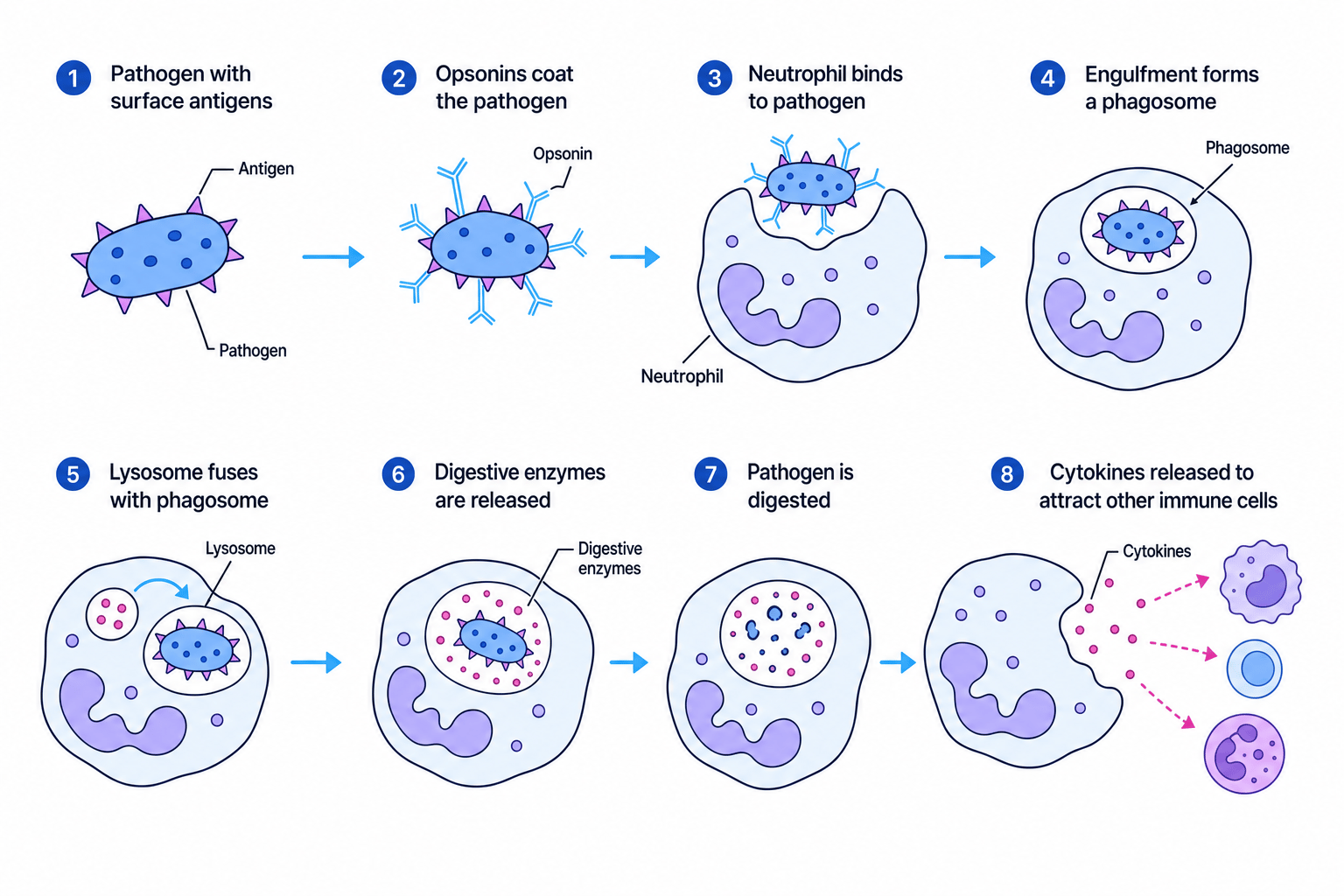
Key terms in phagocytosis:
- Cytokines are signalling molecules released by cells. They help attract and activate other immune cells.
- Opsonins coat pathogens and make them easier for phagocytes to bind.
- A phagosome is the vesicle formed around an engulfed pathogen.
- Lysosomes contain digestive enzymes and fuse with the phagosome.
Drawing blood smear cells
In microscopy work, you may examine and draw cells from blood smears. Neutrophils usually have a multi-lobed nucleus. Lymphocytes usually have a large, round nucleus with only a thin layer of cytoplasm. Red blood cells are numerous, biconcave and lack nuclei in mammals.
Biological drawings
Use clear single lines, no shading, accurate proportions, labels with ruled label lines, and a title. If magnification or a scale bar is provided, include it carefully.
Identifying a neutrophil in a blood smear
A white blood cell in a smear has a lobed nucleus and granular cytoplasm.
- Compare the nucleus shape: a multi-lobed nucleus is characteristic of a neutrophil, not a lymphocyte.
- Compare the cytoplasm: visible granules support the identification because neutrophils contain many lysosomes.
- Conclude that the cell is a neutrophil, so its likely role is phagocytosis of pathogens.
6. The specific immune response
Antigen
An antigen is a molecule, often a protein or glycoprotein, that is recognised by the immune system and can trigger a specific immune response.
The specific immune response targets particular antigens. It depends mainly on B lymphocytes and T lymphocytes.
B lymphocytes
B lymphocytes have specific receptors on their cell surface. If a B cell’s receptor is complementary to an antigen, that B cell can be selected and activated.
Activated B cells divide by mitosis in clonal expansion, producing many genetically identical cells. Some become plasma cells, which secrete antibodies. Others become B memory cells, which remain in the body for a faster future response.
T lymphocytes
T lymphocytes also have specific receptors. T helper cells release signalling molecules called interleukins, a type of cytokine. Interleukins stimulate B cells, T killer cells and phagocytes.
T killer cells destroy infected host cells, especially cells displaying foreign antigens on their surface. T memory cells remain after infection and help produce a faster secondary response.
Clonal selection and clonal expansion
Clonal selection is when an antigen activates the lymphocyte with a complementary receptor. Clonal expansion is the mitotic division of that selected lymphocyte to produce many identical cells.
7. Primary and secondary immune responses
The primary immune response happens after first exposure to an antigen. It has a lag phase while the correct lymphocytes are selected and cloned.
The secondary immune response happens after later exposure to the same antigen. Memory B and T cells allow a faster, larger and longer-lasting response.
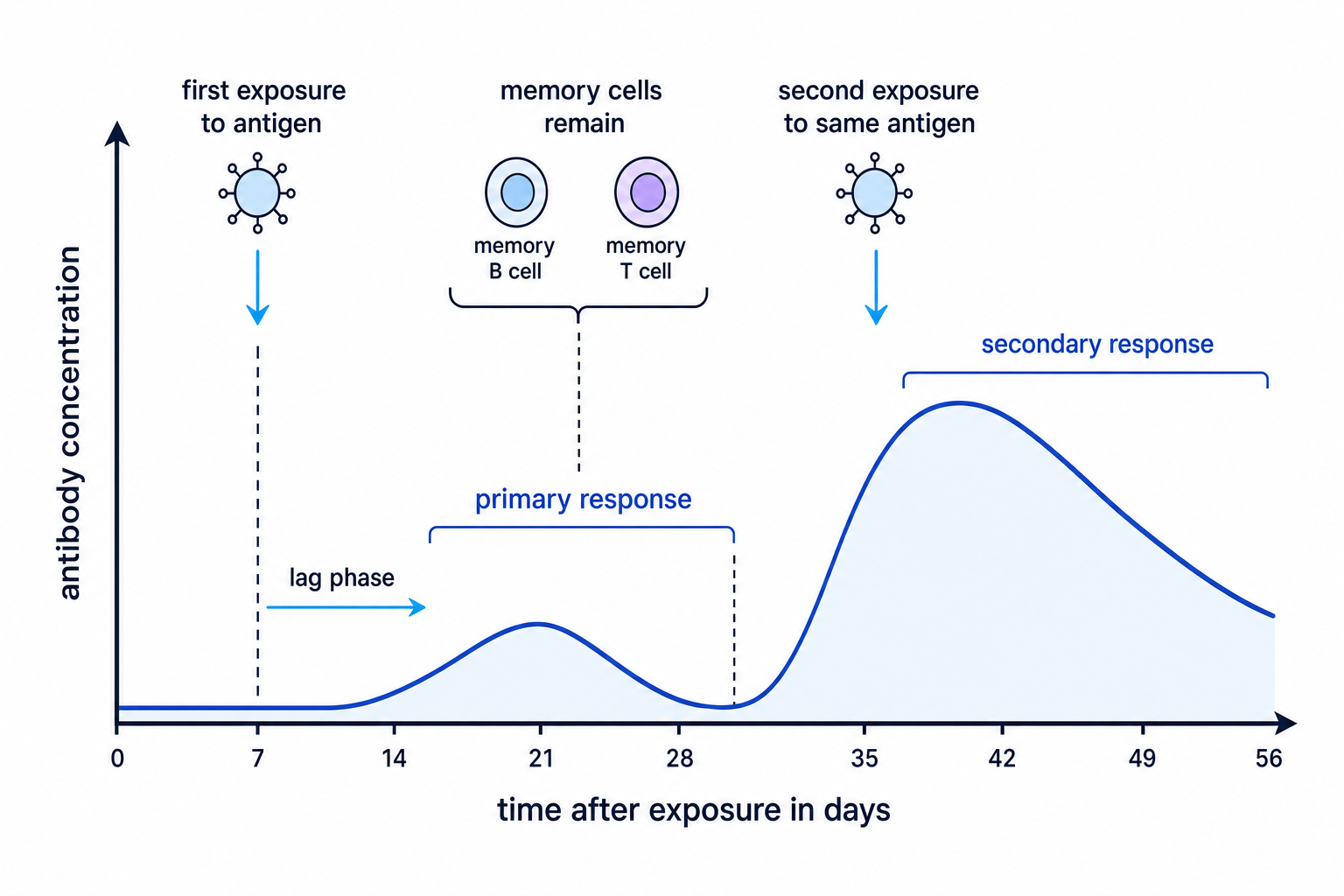
Interpreting an immune-response graph
A graph shows a small antibody peak after first exposure and a much larger peak after second exposure to the same antigen.
- Compare the lag phases: the second response begins sooner, showing that memory cells were already present.
- Compare peak antibody concentration: the secondary peak is higher because memory B cells rapidly divide and form many plasma cells.
- Link this to protection: the pathogen is likely to be destroyed before it causes serious disease, which is the principle behind vaccination.
8. Antibodies and their actions
An antibody is a specific protein made by plasma cells. It has a Y-shaped structure made from polypeptide chains. The variable regions form antigen-binding sites that are complementary to a specific antigen.
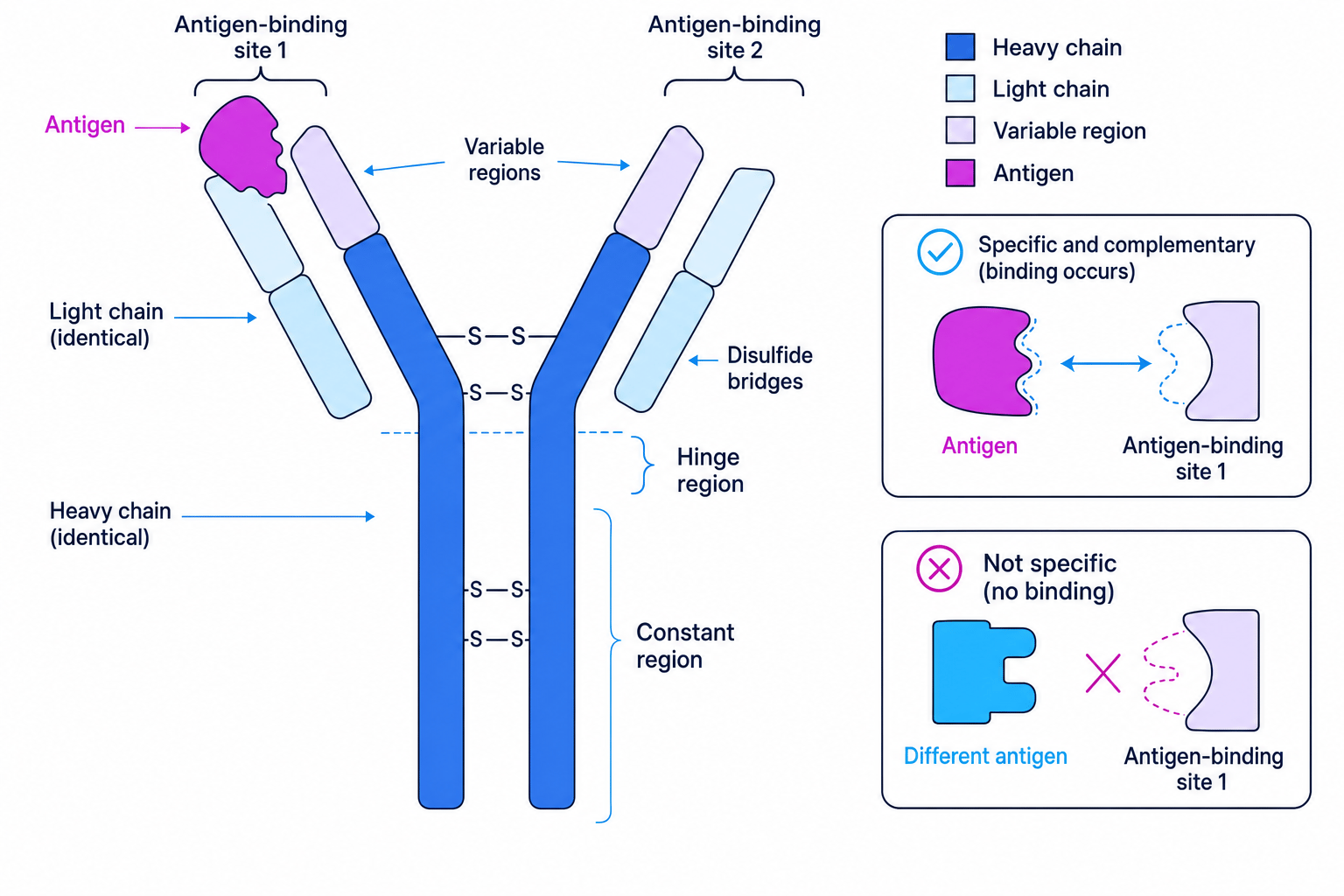
Antibodies form antigen-antibody complexes. Their general functions include:
- helping phagocytes recognise pathogens
- clumping pathogens together
- neutralising toxins or viruses
- preventing pathogens attaching to host cells
Opsonins, agglutinins and anti-toxins
Opsonins coat pathogens, making them easier for phagocytes to bind and engulf.
Agglutinins cause pathogens carrying the same antigen to clump together. This makes them easier for phagocytes to find and digest.
Anti-toxins bind to toxins released by pathogens, neutralising them so they cannot damage host cells.
9. Active, passive, natural and artificial immunity
Immunity means protection against a pathogen or toxin.
| Type | How it is gained | Memory cells? | Example |
|---|---|---|---|
| Natural active | Infection triggers your own immune response | Yes | Recovering from chickenpox |
| Artificial active | Vaccination triggers your own immune response | Yes | MMR vaccination |
| Natural passive | Antibodies pass naturally from another individual | No | Antibodies crossing the placenta or in breast milk |
| Artificial passive | Antibodies are given medically | No | Injection of antitoxin antibodies |
Classifying immunity
A baby is protected by antibodies received in breast milk.
- The baby did not make the antibodies, so the immunity is passive rather than active.
- The antibodies were transferred by a natural biological process, so it is natural rather than artificial.
- The correct classification is natural passive immunity, and it will be temporary because no memory cells are formed.
10. Autoimmune diseases
Autoimmune disease
An autoimmune disease occurs when the immune system responds to self antigens and attacks the body’s own tissues.
A named example is arthritis, especially autoimmune forms such as rheumatoid arthritis, where immune responses damage joint tissues and cause inflammation.
11. Vaccination and vaccination programmes
A vaccine contains antigenic material that stimulates an immune response without causing the full disease. This produces memory B cells and memory T cells, so later exposure to the real pathogen produces a rapid secondary response.
Vaccination programmes aim to reduce disease spread across a population. If enough people are immune, transmission becomes less likely, helping protect people who are not immune. This population-level protection is often called herd immunity.
Routine vaccinations are planned to protect individuals before they are likely to meet dangerous pathogens. Programmes may change because of:
- new strains or variants, such as changing influenza strains
- evidence that immunity is waning and boosters are needed
- outbreaks or changes in disease incidence
- safety and effectiveness data
- global travel and migration
- unequal access to healthcare, cold storage and vaccine supply
- climate change affecting vector distributions
Explaining a vaccine update
A flu vaccine is updated before winter because surveillance data shows a new strain is spreading globally.
- Influenza viruses can change their surface antigens, so memory cells from an older vaccine may bind less effectively.
- Updating the vaccine increases the chance that antibodies and memory cells are specific to the circulating strain.
- Rolling out the updated vaccine before peak transmission reduces severe disease and lowers the risk of an epidemic.
12. Sources of medicines and personalised medicine
Medicines can come from living organisms. Microorganisms have produced important antibiotics, including penicillin, which became widely used from the mid-20th century. Plants are also valuable sources of medicinal compounds, such as pain-relieving or anti-malarial drugs.
This is one reason biodiversity matters: species that become extinct may contain chemicals with future medical uses.
Personalised medicine means tailoring treatment to an individual’s genes, proteins, disease markers or pathogen strain. It could make treatments more effective and reduce side effects, but it may be expensive and raises issues about access and data privacy.
13. Antibiotics: benefits and risks
Antibiotics are medicines used to treat bacterial infections. They do not treat viral infections because viruses do not have bacterial cell structures or bacterial metabolism.
Benefits of antibiotics include:
- treating serious bacterial infections
- reducing deaths from infections
- making surgery, childbirth and cancer treatment safer by controlling bacterial infection risk
- treating diseases such as TB when the bacteria are susceptible
The major risk is antibiotic resistance. If antibiotics are overused or misused, resistant bacteria are more likely to survive, reproduce and spread. This can lead to infections that are harder, more expensive or sometimes impossible to treat.
Antibiotics and viruses
Do not say antibiotics kill viruses. Antibiotics act against bacteria, so they are not used to manage viral infections such as influenza or HIV.
Explaining antibiotic resistance
A patient stops taking an antibiotic as soon as they feel better, and the infection later returns.
- The most susceptible bacteria may have been killed first, reducing symptoms before every bacterium was eliminated.
- Any bacteria with resistance are more likely to survive the shortened treatment and reproduce.
- The returning infection may contain a higher proportion of resistant bacteria, making the same antibiotic less effective.
In the exam
- When asked about disease examples, link the disease to the correct pathogen type and host: human, animal or plant.
- For immunity questions, use the sequence: antigen recognition, clonal selection, clonal expansion, effector cells, memory cells.
- For vaccination or antibiotic questions, balance individual effects with population-level consequences such as herd immunity or resistance.
Check yourself
- Can you give one OCR example for each pathogen type: bacterium, virus, protocistan and fungus?
- Why is the secondary immune response faster and larger than the primary response?
- How are active, passive, natural and artificial immunity different?
