Escherichia coli is a bacterial species that lives in the human digestive system. Resistant strains, such as ESBL-producing E. coli, have become a common cause of infections acquired both in hospital and community settings.
Explain how the widespread use of cephalosporin antibiotics has led to antibiotic-resistant strains of E. coli becoming a common cause of infection.
Lactose is a disaccharide. Name another disaccharide that contains a glucose monomer.
Describe how scientists could use aseptic techniques to transfer 0.2 cm30.2\text{ cm}^30.2 cm3 of E. coli in liquid culture from a flask onto a sterile agar plate.
Scientists investigated the effect of lactose on the growth rate of E. coli. They grew populations of non-resistant and ESBL-producing strains on separate agar plates with:
They measured the growth rate of the bacteria. Figure 1 shows the scientists' results.
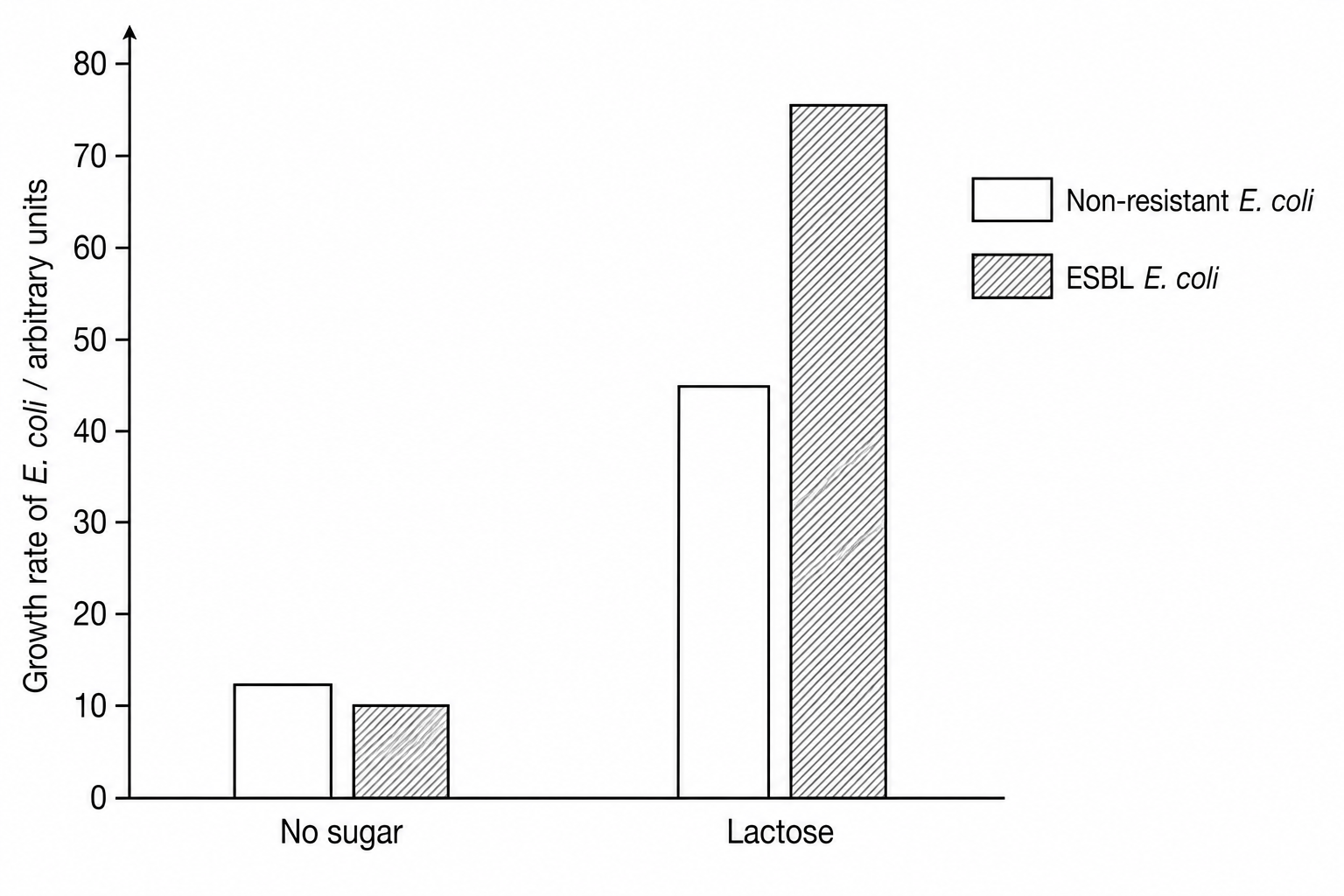
Use Figure 1 to evaluate whether increased lactose in the diet could be a factor in the increased number of ESBL E. coli infections.
Practise AQA A Level Biology Evolution may lead to speciation (A-level only) with exam-style questions for A Level Biology. 9 questions, matched to the AQA A Level Biology (7402) specification and written in Paper 1, Paper 2 and Paper 3 style. Every question includes a full worked solution and mark scheme, so you can see where marks are awarded rather than just whether you got the answer right.

