Adenosine deaminase (ADA) deficiency is an inherited metabolic disease. People with ADA deficiency lack a functional ADA enzyme, which is crucial for the development of healthy T-lymphocytes in the immune system. A single base substitution mutation in the ADA gene can cause this disorder, altering the conformation of the polypeptide chain in the ADA enzyme.
Explain how a single base substitution causes a change in the structure of this polypeptide. Do not include details of transcription and translation in your answer.
Hematopoietic stem cell transplantation (HSCT) is a long-term treatment for ADA deficiency. In HSCT, the patient receives stem cells from the bone marrow of a healthy, compatible donor (often a sibling). Before the treatment starts, the patient's own faulty bone marrow cells must be destroyed (such as through chemotherapy). Use this information to explain how HSCT is an effective long-term treatment for ADA deficiency.
A newer treatment option for ADA deficiency involves the use of gene therapy.
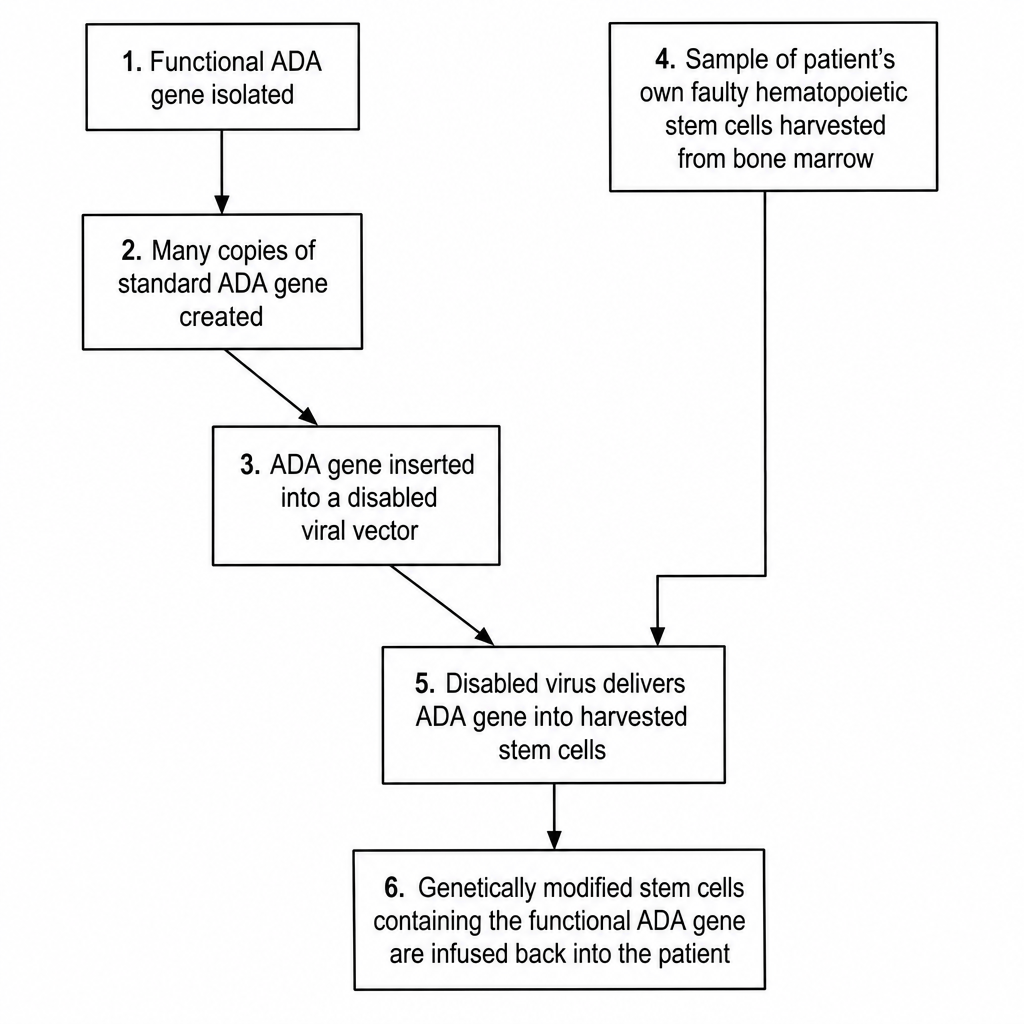
Some scientists have concluded that this method of gene therapy is a more effective long-term treatment for ADA deficiency than HSCT. Use all the information provided to evaluate this conclusion.