Reducing inflation
Match the policy to the cause
- Demand-pull inflation comes from excess aggregate demand, so demand-reducing policies (higher rates, tighter fiscal policy) suit it.
- Cost-push inflation comes from rising costs, so supply-side and cost-reducing measures suit it.
- Diagnosing the cause first is essential, because the wrong policy can worsen the problem: cutting aggregate demand against cost-push inflation deepens a recession without curing the price rises.
Key Idea
- Using contractionary demand policy against cost-push inflation can deepen a recession without curing the price rises.
Contractionary monetary policy
Definition
Quantitative tightening: reducing the money supply by reversing quantitative easing, as the central bank sells previously purchased bonds or lets them mature.
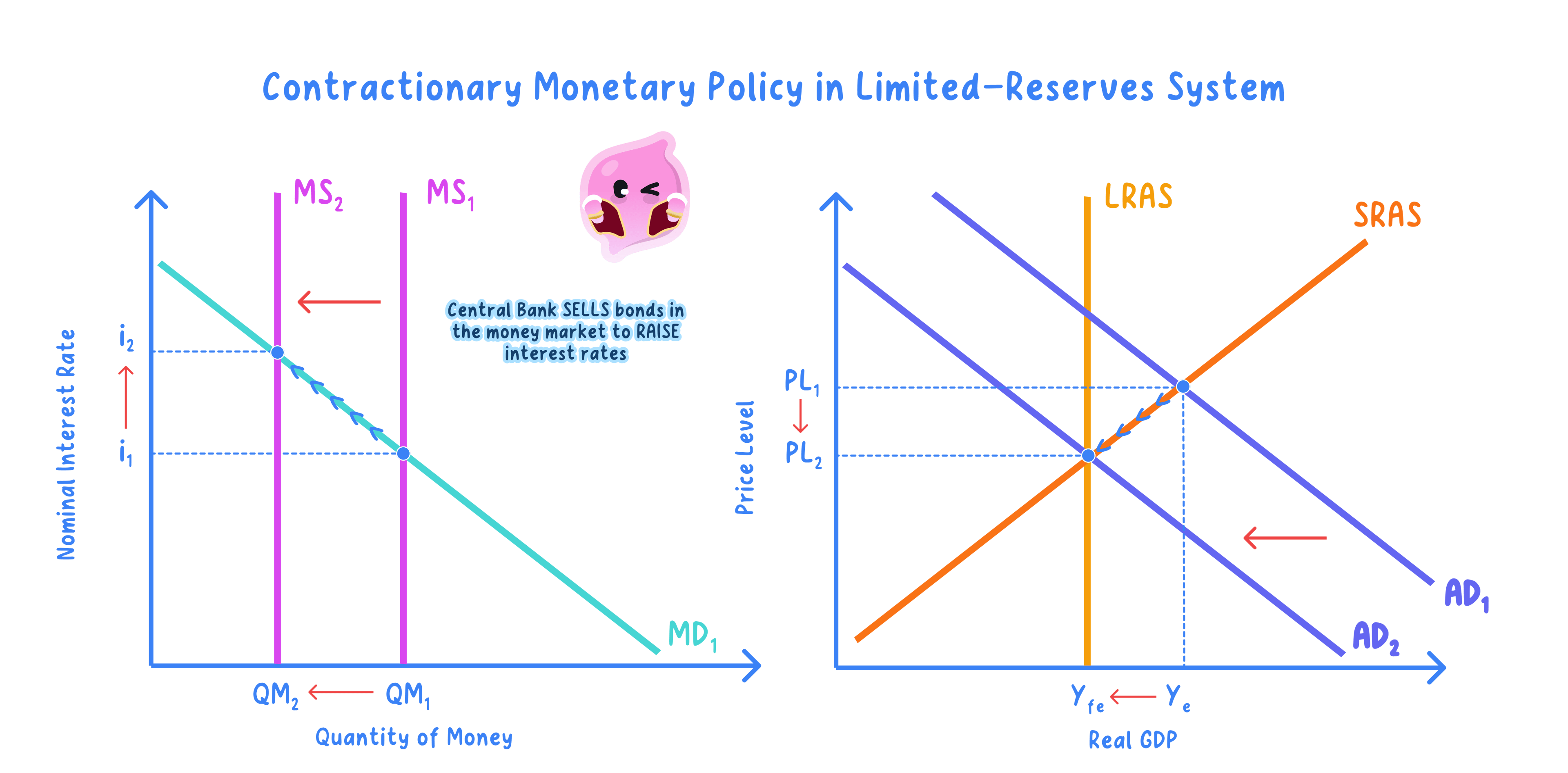
- Raising the policy interest rate is the main tool.
- Higher rates raise the cost of borrowing and reward saving → consumption and investment fall → aggregate demand falls → demand-pull pressure on the price level eases.
- The central bank can also cut the money supply or use quantitative tightening to withdraw liquidity.
- Higher rates attract capital inflows and appreciate the currency, which lowers import prices and eases imported inflation.
Example
- The Bank of England raised Bank Rate from 0.1% to 5.25% between December 2021 and August 2023 to bring CPI inflation back towards its 2% target.
Note
- A stronger currency reduces the price of imported raw materials and finished goods, which can also ease inflation.
Contractionary fiscal policy
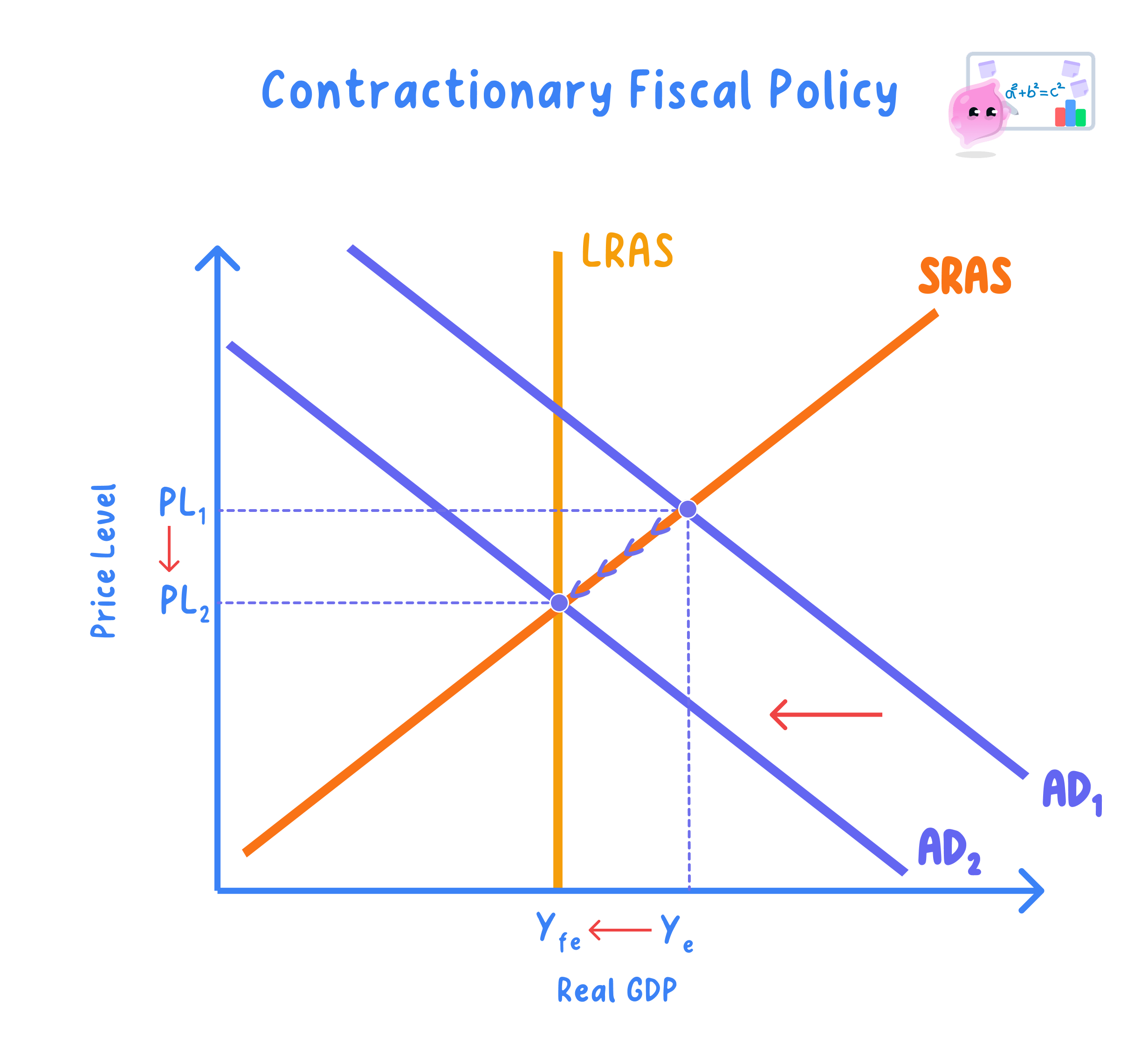
- The government can raise direct or indirect taxes, reducing disposable income and spending.
- It can cut government spending, reducing aggregate demand directly.
- A smaller budget deficit reduces the injection into the circular flow of income, lowering aggregate demand and demand-pull inflation.
- The trade-off is slower growth and higher unemployment, and raising indirect taxes can even push measured prices up in the short run.
Supply-side policies
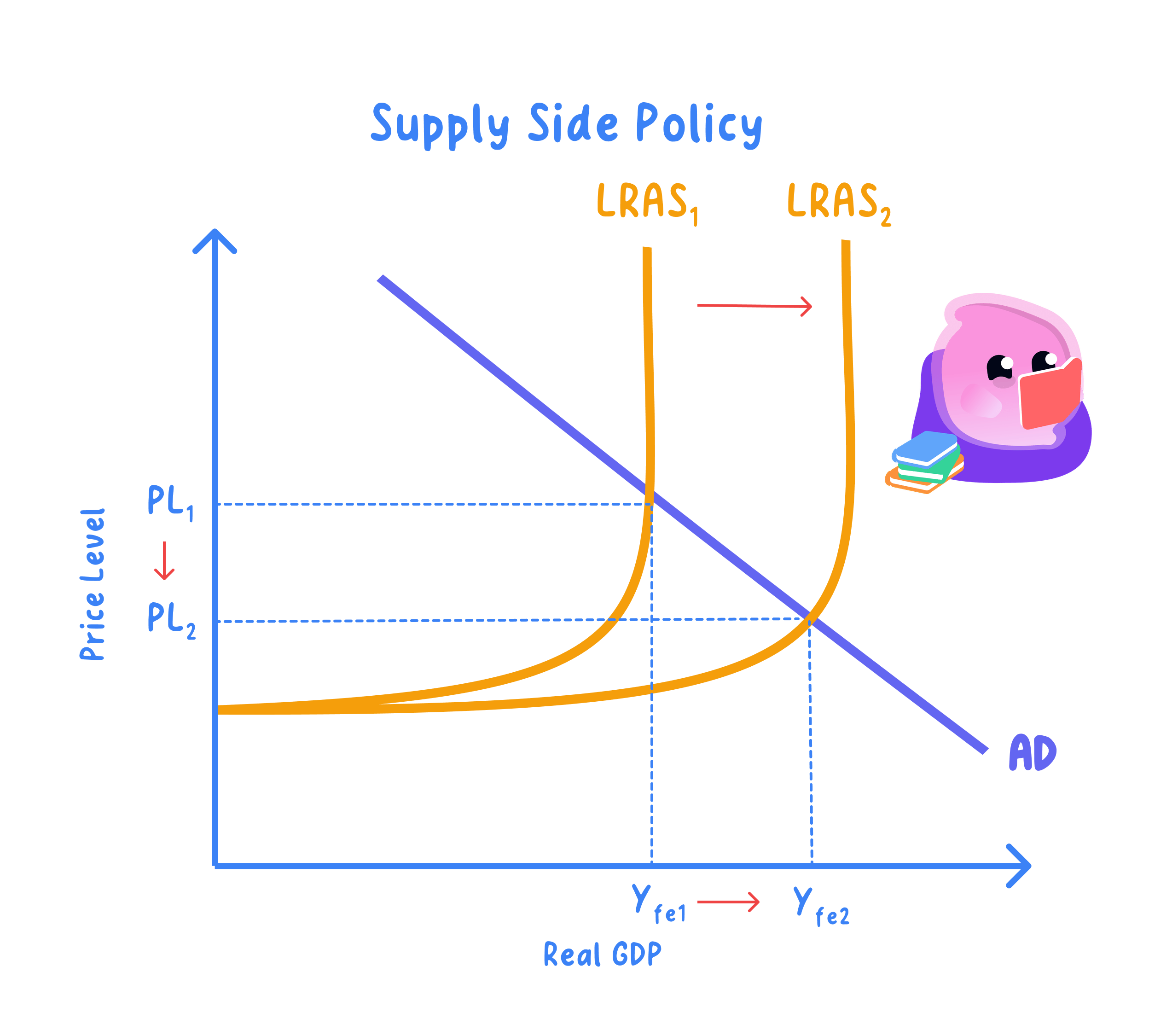
- Supply-side measures raise productivity and capacity, shifting long-run aggregate supply to the right → a lower price level for any given aggregate demand.
- Lower business taxes or energy costs directly reduce firms' costs, easing cost-push inflation.
- Training, deregulation and competition policy work over the long run to hold down costs and prices.
- Their advantage is reducing inflation without sacrificing growth or employment; their drawback is that they are slow and do little in the short run.
Exchange rate and direct measures
Definition
Prices and incomes policy: direct government limits on how fast wages and prices are allowed to rise, used to control inflation without cutting demand.
- Allowing or engineering a stronger exchange rate lowers the price of imports, easing imported and cost-push inflation.
- Prices and incomes policies try to limit wage and price rises directly.
- Direct controls are hard to enforce and can create shortages and distortions, so they tend to fail once relaxed.
How effective are they
Definition
Central bank credibility: the extent to which the public believes the central bank will act to hit its inflation target, which anchors expectations of future inflation.
- These policies can bring inflation back to target when applied credibly.
- Time lags mean the effects arrive slowly, so policy can overshoot and cause an unnecessary downturn.
- Contractionary policy risks higher unemployment and slower growth, the short-run inflation–unemployment trade-off.
- Supply-side measures are slow and costly and do little in the short run.
- Effectiveness ultimately depends on the cause of inflation, the output cost society will accept, and whether expectations are anchored by a credible, independent central bank.
Key Idea
- A credible inflation target lowers expected inflation, so inflation can fall with a smaller loss of output.
Exam technique
- Identify whether inflation is demand-pull or cost-push before choosing a policy.
- Trace the transmission from the policy through aggregate demand or supply to the price level.
- Evaluate using time lags, the unemployment trade-off and central bank credibility.
Common Mistake
- Do not assume one policy cures every kind of inflation.
- Do not ignore the output and unemployment cost of contractionary policy.
Self review
- Which type of inflation does contractionary monetary policy best address?
- How do higher interest rates reduce inflation?
- Name a supply-side policy that reduces cost-push inflation.
- Why do time lags limit anti-inflation policy?
- Why does central bank credibility matter for disinflation?
