Demand for money
The three motives
Definition
Liquidity preference: the desire to hold wealth as money (fully liquid) rather than in less liquid, interest-bearing assets.
Transactions motive: holding money to finance planned, everyday purchases.
Precautionary motive: holding money as a buffer against unexpected needs or emergencies.
Speculative motive: holding money rather than bonds when interest rates, and so bond prices, are expected to move unfavourably.
- The transactions and precautionary motives depend mainly on income: higher income and spending mean more money is needed for both, so both rise with national income.
- Wages arrive periodically but spending is continuous, so households and firms keep transactions balances to bridge the gap.
- Precautionary balances rise when the future feels uncertain, for example ahead of a recession.
- The speculative motive depends on the interest rate, because it is a choice between holding money and holding bonds.
Key Idea
- The transactions and precautionary motives depend mainly on income.
- The speculative motive depends on the rate of interest.
Why speculative demand falls as rates rise
- The interest rate is the opportunity cost of holding money rather than an interest-bearing asset.
- When rates are high, the reward given up is large, so people hold bonds rather than money → speculative demand for money is low.
- When rates are low, the reward given up is small → they hold more money → speculative demand is high.
- Bond prices and interest rates move inversely, so when rates are low bond prices are high and people expect a capital loss, which pushes them to hold money.
Example
- A bond pays a fixed £5 coupon each year; at a price of £100 the yield is:
- If the price rises to £125 the same coupon gives a lower yield:
- So interest rates and bond prices move inversely; when rates are low and bond prices high, people expect a capital loss on bonds and prefer to hold money.
The demand-for-money curve
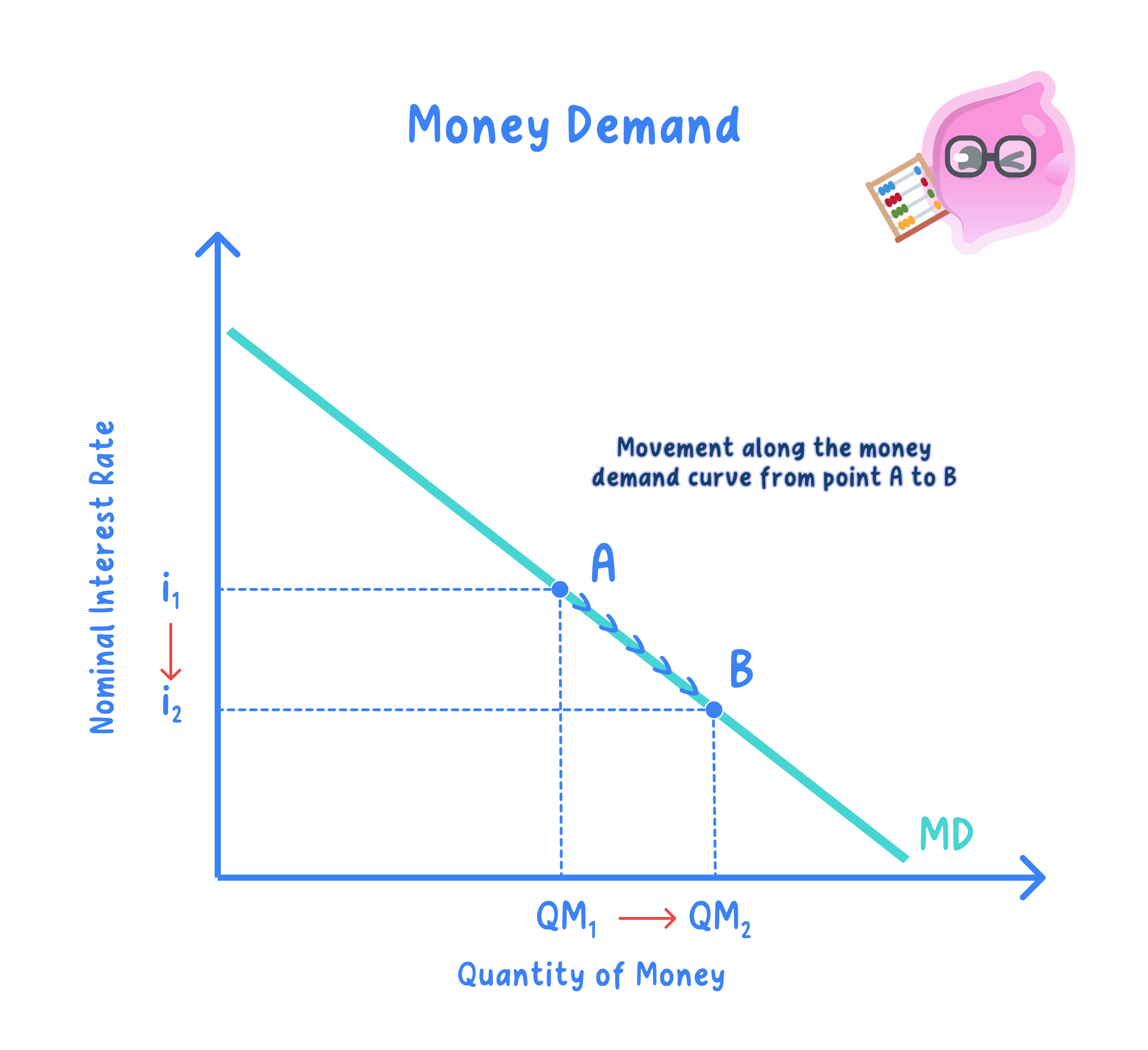
- Put the rate of interest on the vertical axis and the quantity of money on the horizontal axis.
- Total money demand adds the three motives together.
- Because speculative demand falls as the rate rises, the total demand-for-money curve slopes downward.
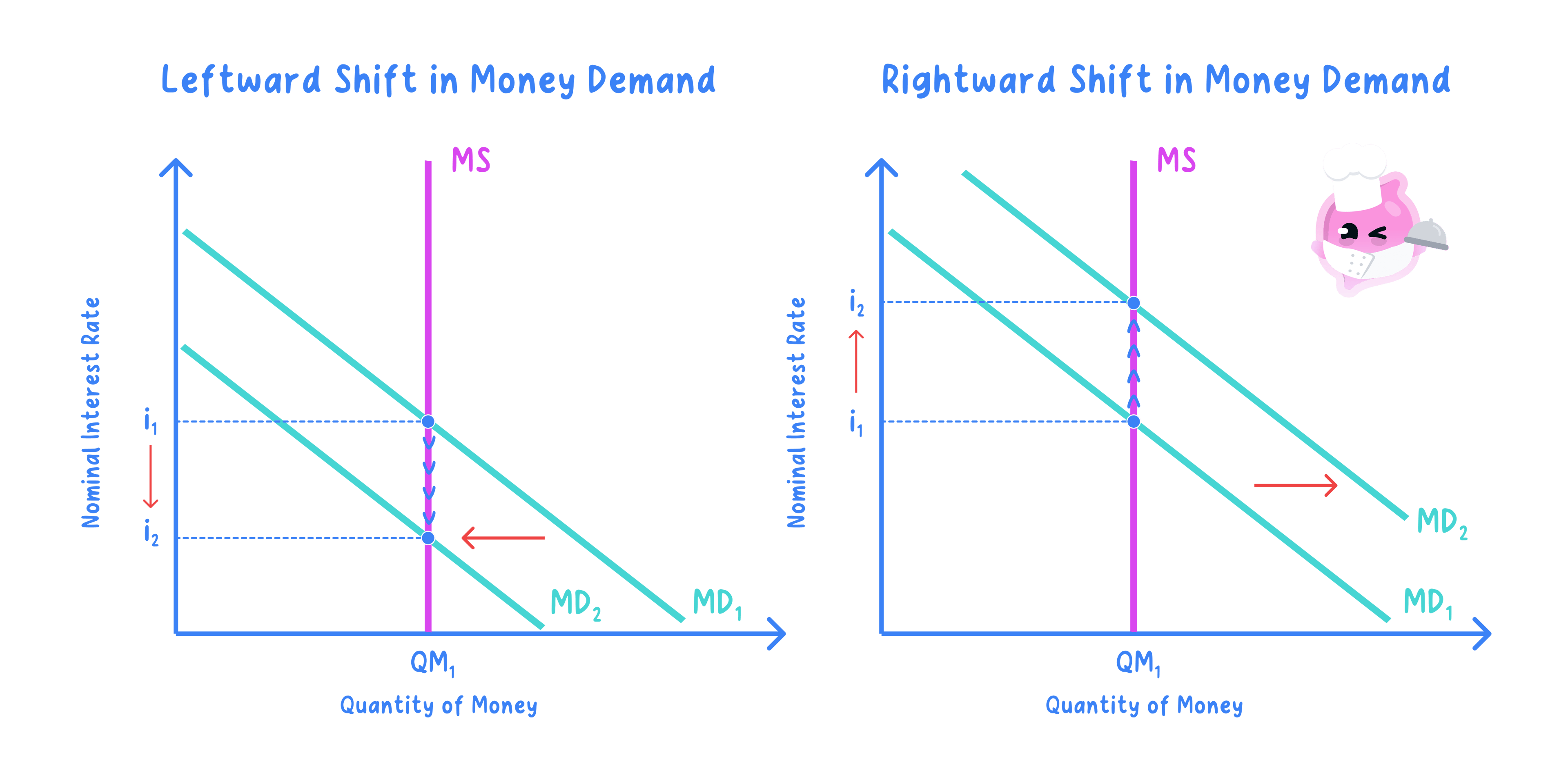
- A rise in income raises transactions and precautionary demand, shifting the whole curve to the right.
Note
- The demand for money is the wish to hold wealth in its most liquid form.
- It is not the demand for goods, nor the same as saving in an interest-bearing account.
Exam technique
- Put the rate of interest on the vertical axis and the quantity of money on the horizontal.
- Name the three motives for holding money.
- Explain the downward slope through the speculative motive.
Common Mistake
- Do not confuse the demand for money with the demand for goods or with saving.
- Remember it is the wish to hold wealth in liquid form.
Self review
- What is liquidity preference?
- Name the three motives for holding money.
- Why is speculative demand inversely related to interest rates?
- What are the axes of the demand-for-money curve?
- How does the demand for money differ from saving?
