The Parasympathetic Nervous System
- The parasympathetic nervous system is the network of nerves that returns the body to a calm state.
- It runs the rest-and-digest response.
- It is most active when you are resting, especially just after eating.
Key Idea
- The parasympathetic branch conserves and restores energy.
- It brings the body back down after the sympathetic branch has fired.
What the Parasympathetic System Does to Your Body
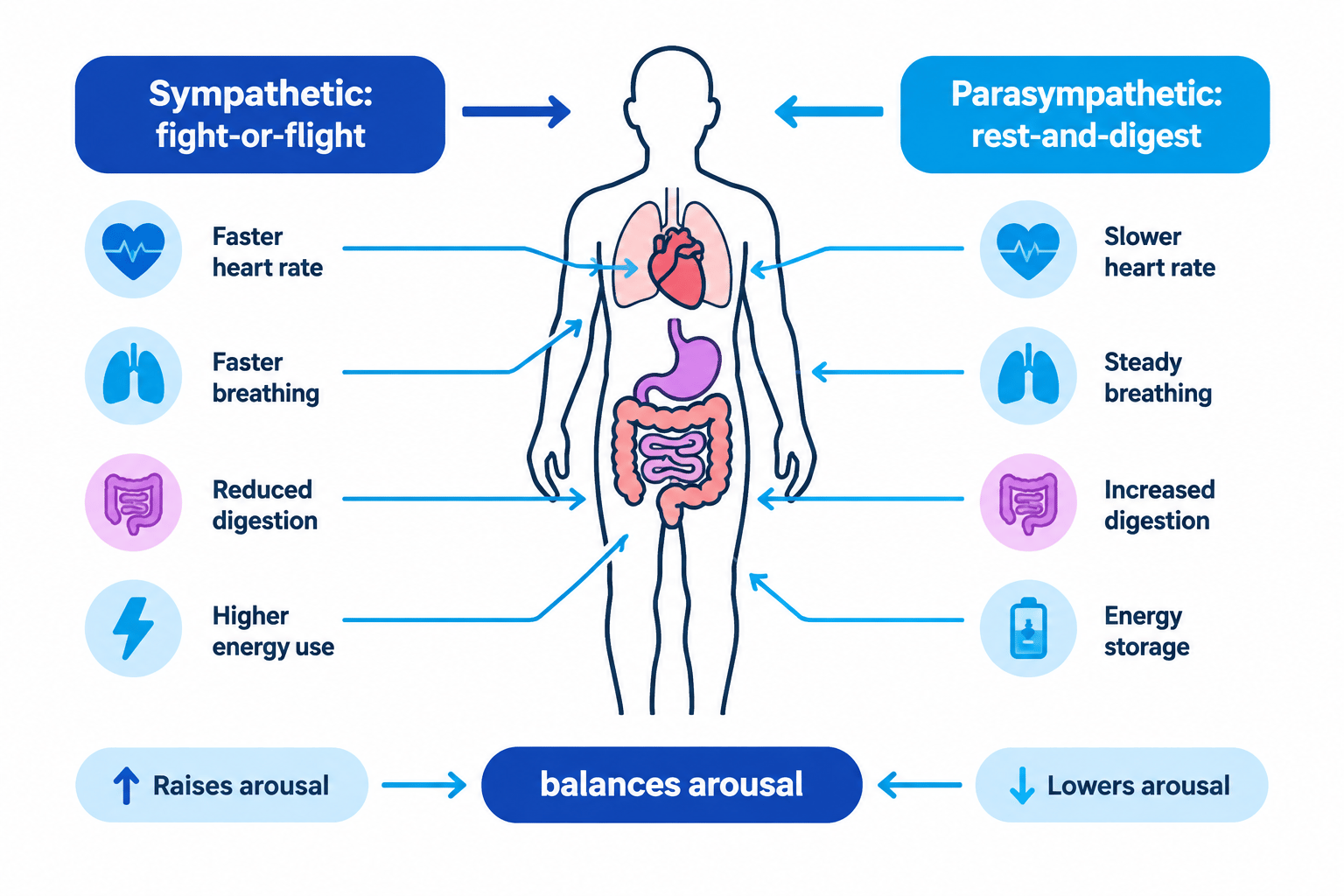
- It slows your heart rate so the body works more gently.
- It slows your breathing back to a steady, restful rhythm.
- It boosts digestion, sending blood to the stomach and intestines to process food.
- It stores energy rather than burning it, letting the body recover.
Example
- You finish a big Sunday roast and sink into the sofa feeling heavy and sleepy.
- That drowsy, settled feeling is the parasympathetic system taking over.
- Your heart slows, your body relaxes, and blood gets busy digesting the meal.
How It Differs From the Sympathetic Branch
- The sympathetic system speeds the body up for action.
- The parasympathetic system slows it back down for recovery.
- Together they keep arousal balanced, one raising it and the other lowering it.
Common Mistake
- Do not mix up rest-and-digest with fight-or-flight.
- A slowing heart and active digestion point to the parasympathetic branch.
- If arousal is dropping rather than rising, it is the parasympathetic system at work.
Linking the Parasympathetic System to Motivation
- The low arousal it produces is the calm baseline the body returns to.
- From that restful state, a fresh need can build a new drive later on.
Self review
- What does the parasympathetic nervous system do?
- When is it most active?
- Give two of its effects on the body.
- How does it differ from the sympathetic system?