The Sympathetic Nervous System
Definition
Autonomic nervous system
The branch of the peripheral nervous system that controls automatic bodily functions you do not think about, such as heart rate, breathing and digestion.
- The sympathetic nervous system is the branch of the autonomic nervous system that switches the body into fight or flight.
- It fires when the brain detects stress, danger or hard physical activity.
- Its job is to get the body ready to act fast.
Key Idea
- The sympathetic branch prepares the body for sudden action.
- It produces high physiological arousal to power that action.
What the Sympathetic System Does to Your Body
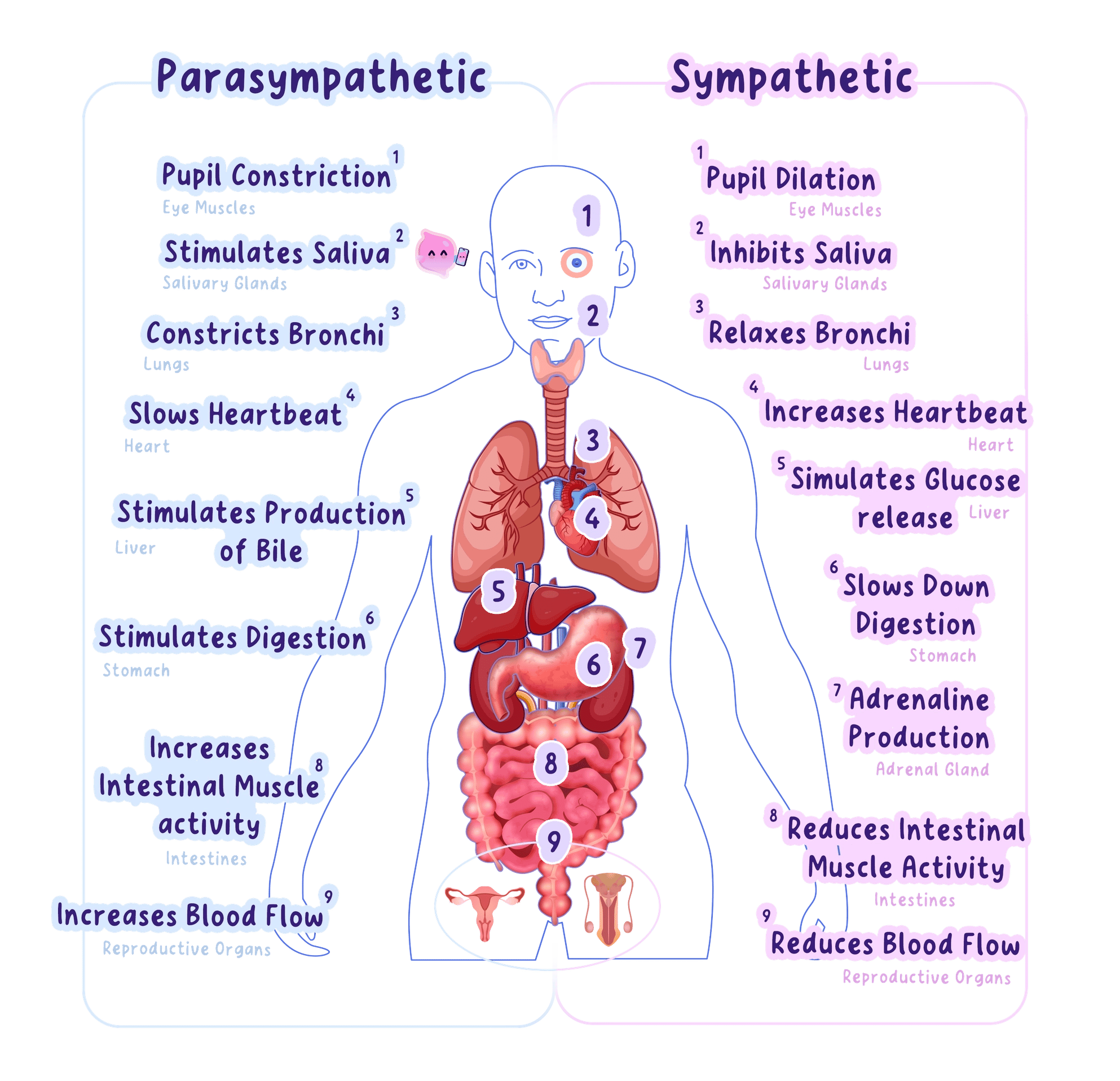
- It speeds up your heart rate so more blood reaches the muscles.
- It quickens your breathing so more oxygen enters the blood.
- It triggers the release of adrenaline, which gives a sudden burst of energy.
- It widens the pupils and diverts blood away from digestion towards the muscles.
Example
- Line up for the 100m final on sports day and your heart is already pounding.
- That is the sympathetic system acting like an accelerator, revving the body before the gun.
- Adrenaline floods in, your breathing quickens and your legs feel primed to sprint.
How It Differs From the Parasympathetic Branch
- The sympathetic system speeds the body up for action.
- The parasympathetic system does the opposite, calming the body back down afterwards.
- The next guide covers that calming branch in full.
Common Mistake
- Do not muddle the two branches.
- The sympathetic branch raises arousal; the parasympathetic branch lowers it.
- If a question describes a racing heart and adrenaline, that is the sympathetic branch, not the parasympathetic one.
Linking the Sympathetic System to Motivation
- High sympathetic activity produces the arousal that can energise motivated behaviour.
- That is why a burst of nerves before a challenge can sharpen your performance.
Self review
- What does the sympathetic nervous system do?
- Give two bodily effects of sympathetic activation.
- When does the sympathetic system switch on?
- How does it differ from the parasympathetic system?
