What a Hormone Is
Definition
Hormone
A chemical messenger made by a gland and carried in the blood to change the activity of target cells elsewhere in the body.
- A hormone is a chemical messenger made by a gland.
- It is released into the blood, which carries it around the body.
- It only acts on its target cells, the ones built to respond to it, where it triggers a change.
Key Idea
- The pattern is always the same: a gland makes it, blood carries it, target cells respond.
- One hormone, melatonin, runs the sleep-wake side of things.
How a Hormone Reaches Its Target
- A gland releases the hormone straight into the bloodstream.
- Blood carries it all round the body, so it works more slowly than a nerve signal but reaches far.
- Only cells with the matching receptor respond, so the message lands where it is meant to.
Example
- Melatonin works like a group text rather than a phone call: the pineal gland posts it into the blood, it reaches the whole body, but only the cells tuned to it act.
- That is why the drowsy feeling before bed builds gradually rather than arriving in an instant.
Melatonin and the Sleep-Wake Cycle
Definition
Melatonin
A hormone released by the pineal gland when it gets dark, which makes you feel sleepy and helps control the sleep-wake cycle.
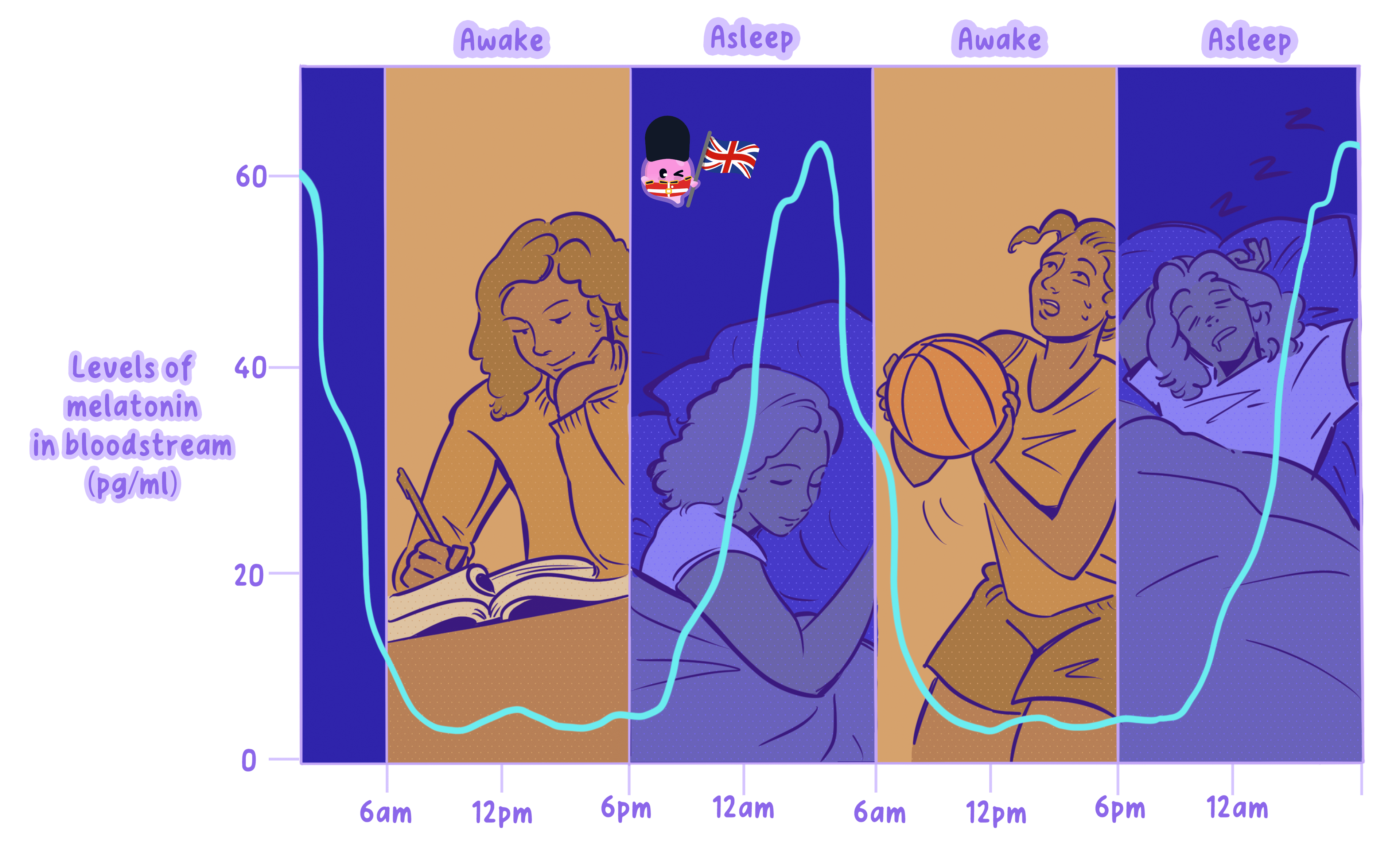
- As night falls and light drops, melatonin levels rise, and this makes you feel sleepy.
- As morning light returns, melatonin levels fall, and you wake and feel more alert.
- This daily rise and fall is what ties melatonin to the sleep-wake cycle.
Common Mistake
- Hormones travel in the blood, not along nerves, so never describe them as nerve signals.
- Rising melatonin brings on sleep, so do not say it keeps you awake.
Explaining a Hormone in an Answer
- Define the hormone: a gland makes it, blood carries it, only target cells respond, three separate marks.
- Apply it to melatonin, naming the pineal gland as the gland that releases it.
- Link rising melatonin in the dark to feeling sleepy and falling melatonin in the light to waking; that causal direction is where the mark sits.
Self review
- What is a hormone?
- How is a hormone carried around the body?
- What does melatonin do in the sleep-wake cycle?
- When do melatonin levels rise?
