What Endogenous Pacemakers Are
Definition
Endogenous pacemaker
An internal body clock that controls biological rhythms from inside the body, such as the suprachiasmatic nucleus in the brain.
- Endogenous pacemakers are internal body clocks that control the sleep-wake cycle from inside the body.
- Endogenous means coming from inside, so the clock keeps running even in the dark, though it still takes its cue from light.
- For sleep, the pacemaker is a chain of three parts: the SCN, the pineal gland and melatonin.
Key Idea
- The three parts are the suprachiasmatic nucleus, the pineal gland and the hormone melatonin.
- Light input drives the whole chain, so the clock stays tied to day and night.
The Three Key Parts
Definition
Suprachiasmatic nucleus (SCN)
A tiny region in the brain's hypothalamus that acts as the body's master clock, using light information from the eyes to control the sleep-wake cycle.
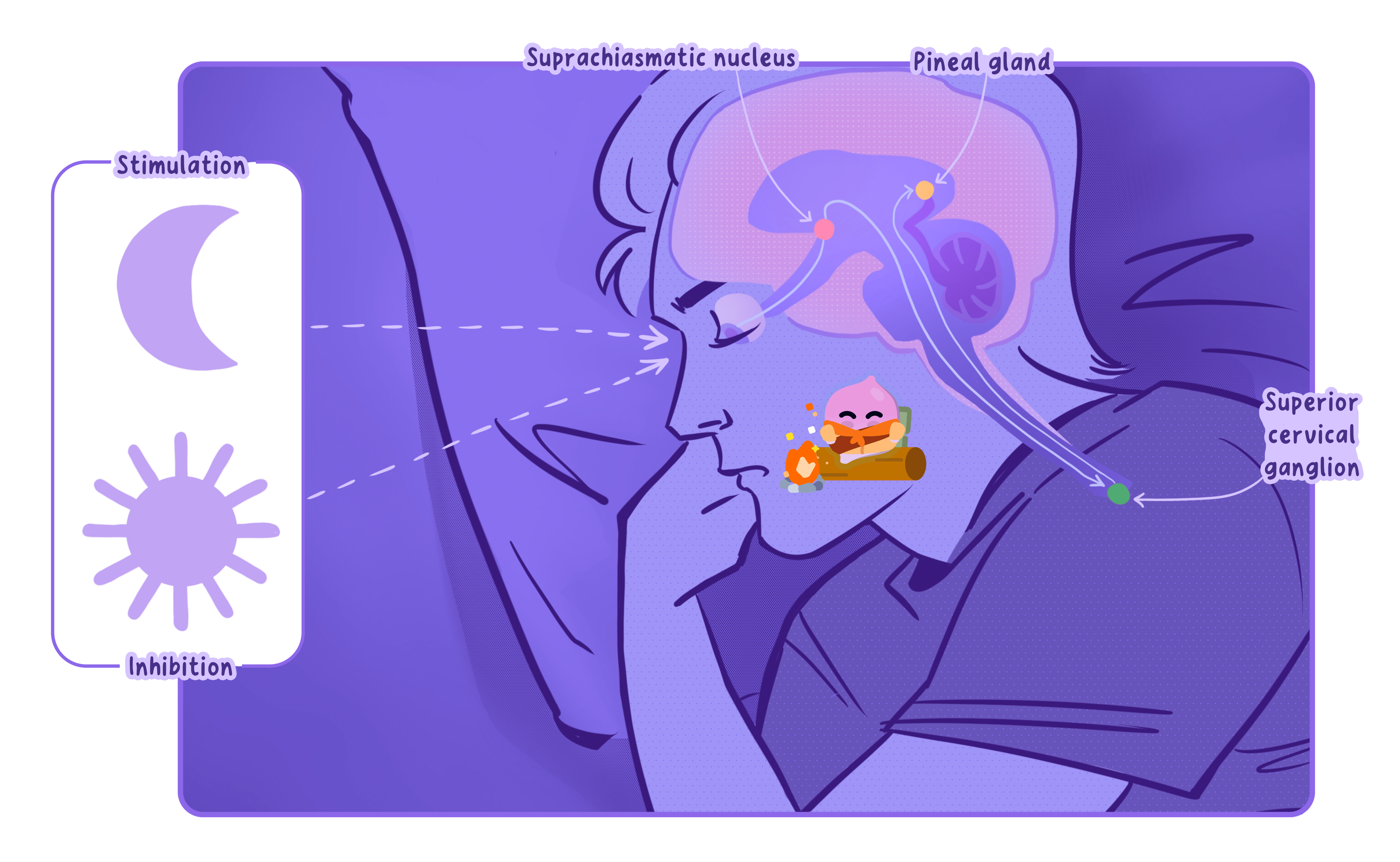
- Suprachiasmatic nucleus (SCN)
- A tiny area in the hypothalamus that acts as the master clock and receives information about light from the eyes.
- Pineal gland
- A small gland in the brain that releases melatonin when the SCN signals that it is dark.
- Melatonin
- The hormone that builds up in the dark and makes you feel sleepy.
Example
- On a bright June morning light floods your eyes, the SCN reads daytime and tells the pineal gland to hold back melatonin, so you wake easily.
- On a dark December evening the SCN reads night, melatonin climbs, and you feel ready for bed earlier.
From Light to Sleep
Definition
Pineal gland
A small gland in the brain that releases the hormone melatonin in response to signals from the suprachiasmatic nucleus.
- Light enters the eyes, and the retina sends that information straight to the SCN.
- The SCN reads how much light there is and uses it to judge the time of day.
- When light falls, the SCN signals the pineal gland to release more melatonin.
- The rising melatonin travels in the blood and makes you feel sleepy, bringing on sleep.
- When light returns in the morning, the SCN tells the pineal gland to cut melatonin, so you wake and feel alert.
Common Mistake
- The SCN is the clock and the pineal gland is the melatonin source, so keep the two apart.
- Light is the input that sets this internal system, and without it the clock drifts.
Describing the System in an Answer
- Name all three parts, SCN, pineal gland and melatonin; each named part is a separate describe mark.
- Trace the chain in order: light to SCN to pineal gland to melatonin.
- End by linking rising melatonin to sleep and falling melatonin to waking; this is Describe, so add no evaluation.
Self review
- What is an endogenous pacemaker?
- What is the role of the SCN?
- Which gland releases melatonin?
- Trace how light leads to melatonin release.
