External Cues That Reset the Body Clock
Definition
Exogenous zeitgeber
An external cue, such as light or a set mealtime, that resets the body clock and keeps it in time with the outside world.
- Exogenous zeitgebers are cues from outside the body that help set your biological rhythms.
- Exogenous means coming from outside, and zeitgeber is German for time-giver.
- Their job is to reset the internal clock each day so it stays in step with the 24-hour world.
Key Idea
- A zeitgeber is a time-giver: an outside cue that resets the body clock.
- The most powerful one is light; social routines like mealtimes help too.
Light and Social Cues
- Light
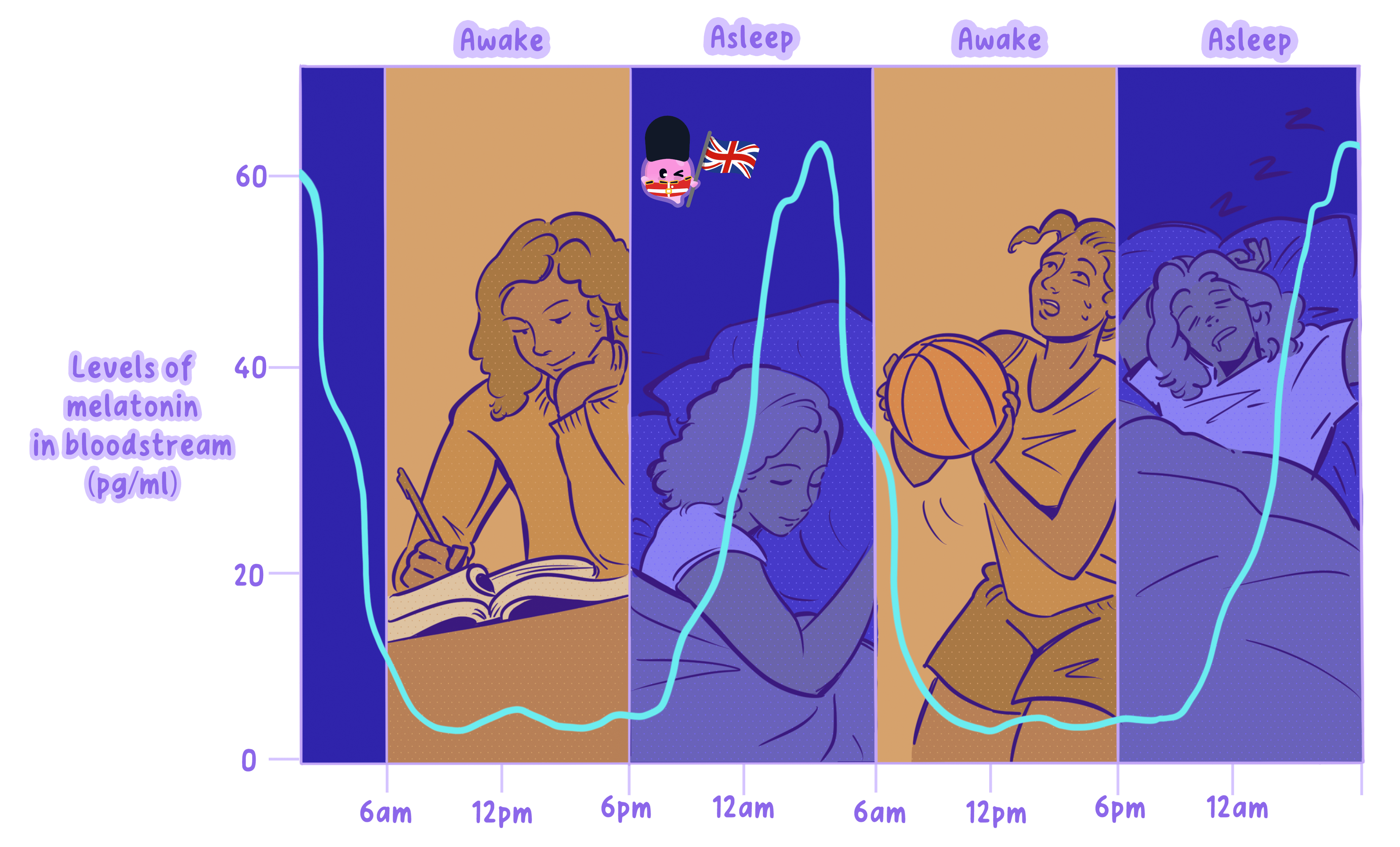
- Bright daylight signals it is time to be awake, while darkness signals it is time to sleep.
- Light is the strongest zeitgeber, which is why a bright phone screen late at night can push your clock later.
- Social cues
- Fixed routines such as mealtimes, school hours and bedtimes also nudge the clock.
- These matter most when light is unreliable, such as on dark winter mornings.
Example
- Fly to Spain for a summer holiday and the later sunset keeps you up; a week of that new light pattern shifts your body clock across.
- Back home, pitch-dark 7am starts in December make it hard to wake, so your alarm and breakfast routine become the cues doing the work.
How Cues Reset the Clock
- Left alone, the internal body clock drifts slightly longer than 24 hours.
- Daily cues, above all morning light reaching the eyes, nudge the clock back into line with the day.
- This keeps your sleep and waking locked to the right times.
Common Mistake
- Exogenous cues come from outside, while endogenous pacemakers sit inside the body, so keep the two apart.
- Light is the single most important zeitgeber, so always name it first.
Explaining Zeitgebers in an Answer
- Define a zeitgeber as an exogenous (external) cue that resets the body clock, not an internal pacemaker.
- Name light as the strongest, then add a social cue such as regular mealtimes; each is a separate mark.
- State the function: they reset the drifting clock to keep sleep in step with the 24-hour day, the mark most often missed.
Self review
- What is an exogenous zeitgeber?
- What is the most important zeitgeber?
- Give an example of a social cue.
- How do zeitgebers keep the body clock accurate?
