A high-precision rotary actuator inside a robotic joint contains a rectangular coil of wire positioned in a magnetic field between two permanent magnetic poles.
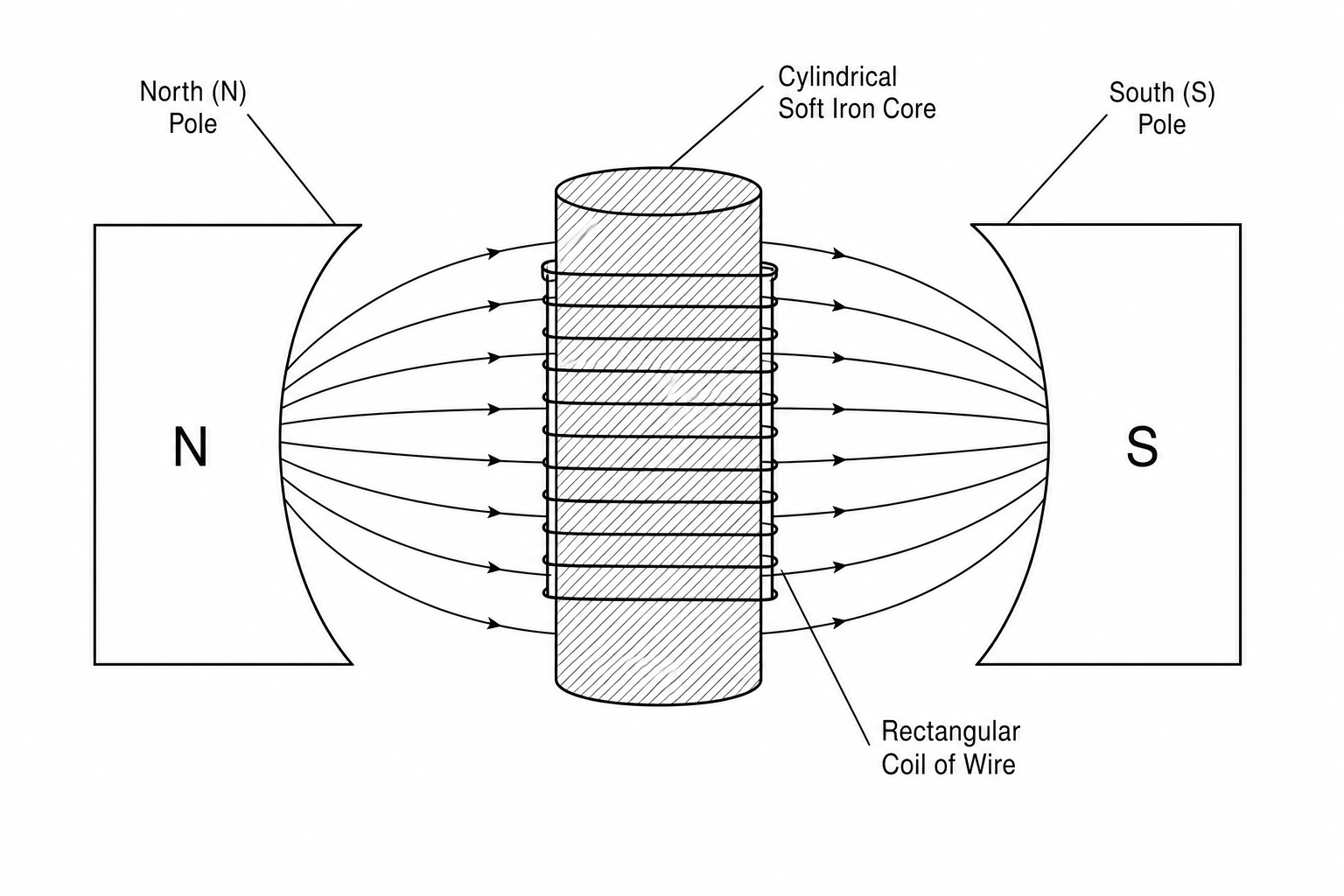
When a direct current (d.c.) is passed through the coil, it begins to rotate.
Explain, in terms of magnetic fields and forces, how the current in the coil causes it to rotate.
State two modifications that could be made to the electrical control circuit or the design of the coil to increase the rotational speed of the actuator.
Describe how the direction of rotation of the actuator can be reversed.
In a high-efficiency version of this design, the permanent magnets are shaped to have curved pole faces, and a cylindrical soft iron core is placed inside the rotating coil. Explain how these two design features improve the performance of the actuator.

