Skip to content
MathsGenie logo
Quick links
Open app

Course home

  1. IGCSE
  2. Physics Edexcel
  3. Question bank

Electric charge

EasyMediumHard
12345678910111213141516171819202122232425262728293031323334
Question 33

This question is about electric charge.

a.

When an insulating acetate rod is rubbed with a dry silk cloth, the acetate rod becomes positively charged.

Identify the two correct statements from the list below:

  • Statement A: Negatively charged electrons are transferred from the acetate rod to the silk cloth.
  • Statement B: Positively charged protons are transferred from the silk cloth to the acetate rod.
  • Statement C: The silk cloth becomes negatively charged.
  • Statement D: The acetate rod gains positive protons to become positively charged.
[2]
b.

When dry flour particles flow at high speed down a metal chute in a food packaging plant, electrostatic charge can build up.

Give a reason why a build-up of electrostatic charge in this environment can be dangerous.

[1]
c.

State how this build-up of electrostatic charge on the chute and machinery is prevented.

[1]
d.

An electrostatic powder-coating system is used to coat a household appliance panel. As the fine plastic powder particles leave the nozzle, they gain a negative electrostatic charge and spread out in a wide cloud.
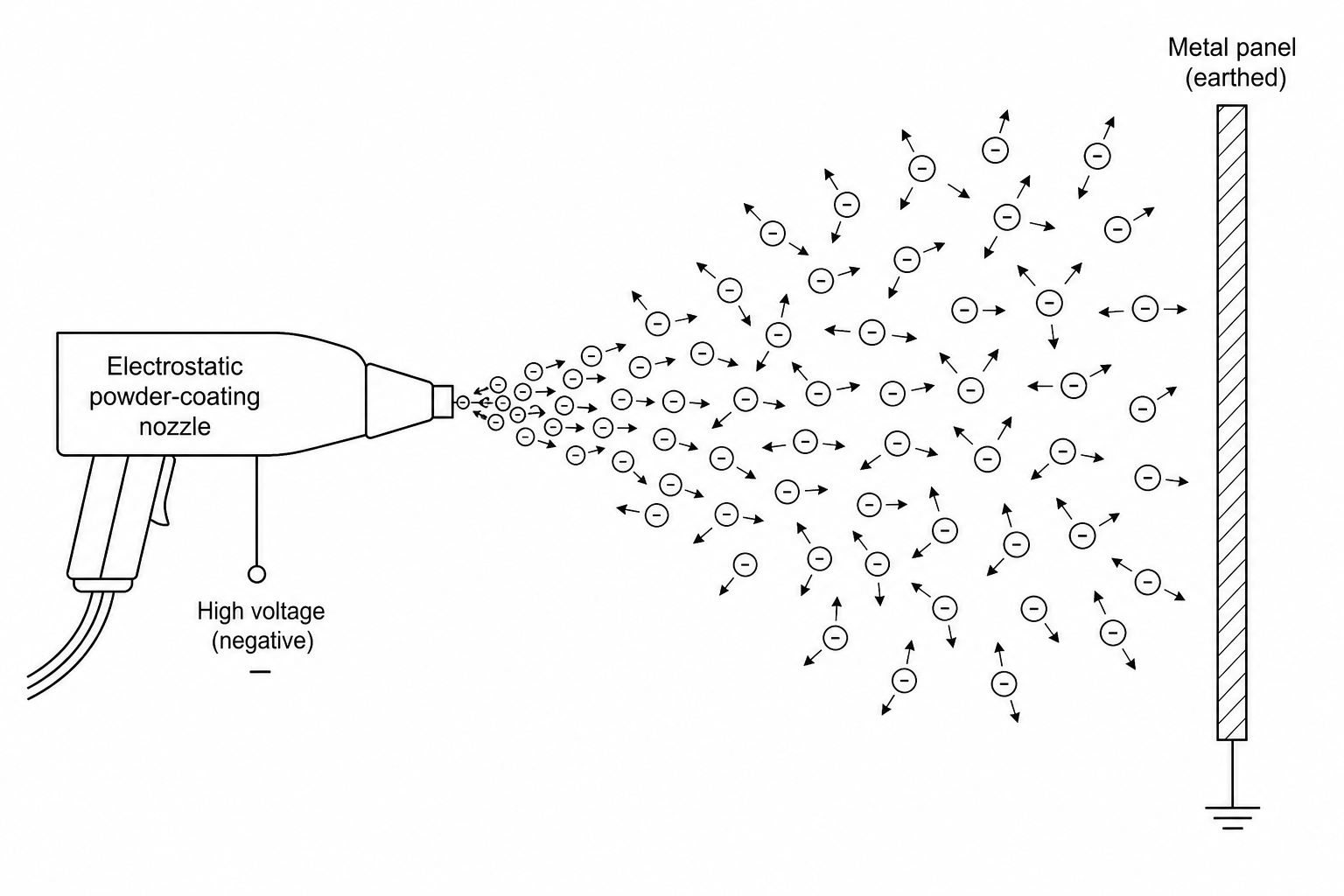
An electrostatic powder-coating system showing negative plastic powder particles dispersing as they travel from the nozzle to a metal panel.

Explain, in terms of charges, why the powder particles spread out.

[2]

Electric charge Questions

  1. IGCSE
  2. /Physics
  3. /Electric charge
