Secondary research uses information that already exists
Definition
Secondary research: information that already exists and was originally collected for another purpose.
- Because the information has already been collected, secondary research is usually faster and cheaper than primary research. The limitation is that it may be old, too general or not designed for the business's exact question.
- Businesses often start with secondary research to understand the market cheaply, then use primary research only for the important questions that existing information cannot answer.
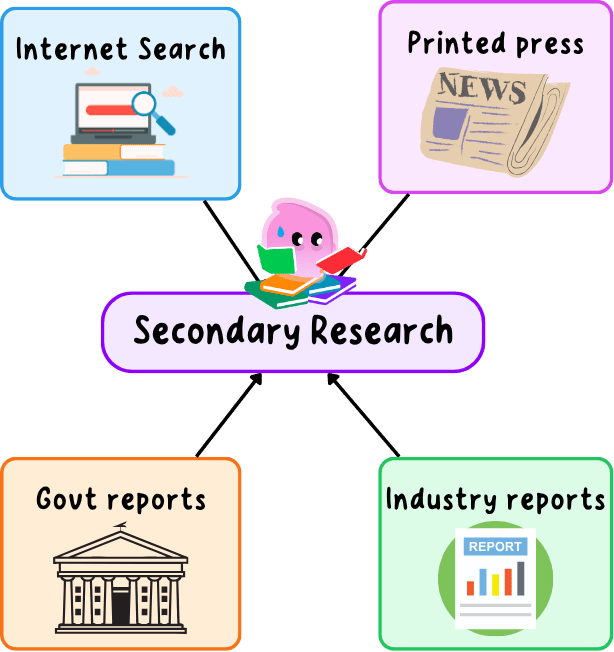
The internet is fast and wide-ranging but quality varies
- Websites, online articles, customer reviews and competitors' pages can reveal prices, product features, complaints and market trends very quickly and often at little or no cost.
- The drawback is reliability: some sources are biased, inaccurate or out of date, and the same public information is available to competitors, so it rarely provides an advantage by itself.
Market reports provide professional detail at a price
- Market reports are detailed studies produced by specialist research organisations. They can provide professionally collected information on market size, trends, competitors and customer segments without the business gathering it all itself.
- The disadvantage is that good reports can be expensive and still describe the market in general rather than answering a very specific question about one business's product.
Example
A new drinks business could use an industry report to estimate the size and growth of the UK soft-drinks market before deciding which customer group needs further primary research.
Government reports provide broad official data
- Government sources can provide population, income, employment and spending information. This data is usually free and produced using large-scale official collection, making it useful for understanding the wider market.
- The information can be broad or several years old, so it may not describe a fast-changing product market or the exact customers a business wants to target.
Common Mistake
Do not assume secondary research is reliable simply because it already exists. Check who produced it, when it was collected and whether it is relevant to the decision.
The best source depends on the decision and the budget
- A small business may begin with free internet and government data, while a larger business making a high-cost decision may be willing to buy a specialist market report for greater depth.
Exam technique
- Match the secondary source to the information the business needs.
- Balance speed and cost against relevance, age and reliability.
- Explain when primary research would still be needed to answer a more specific question.
Self review
- What is secondary research?
- Give one advantage and one disadvantage of using internet sources.
- Why might a business pay for a market report?
- Why can government data be useful but still too broad?
- Why do businesses often use secondary research before primary research?