Organisational charts show the shape of a business and where decisions are made
Definition
Organisational chart: a diagram showing the structure of a business, including its different roles and levels of authority.
- An organisational chart helps you see how many management levels a business has and whether important decisions are kept at the top or shared more widely.
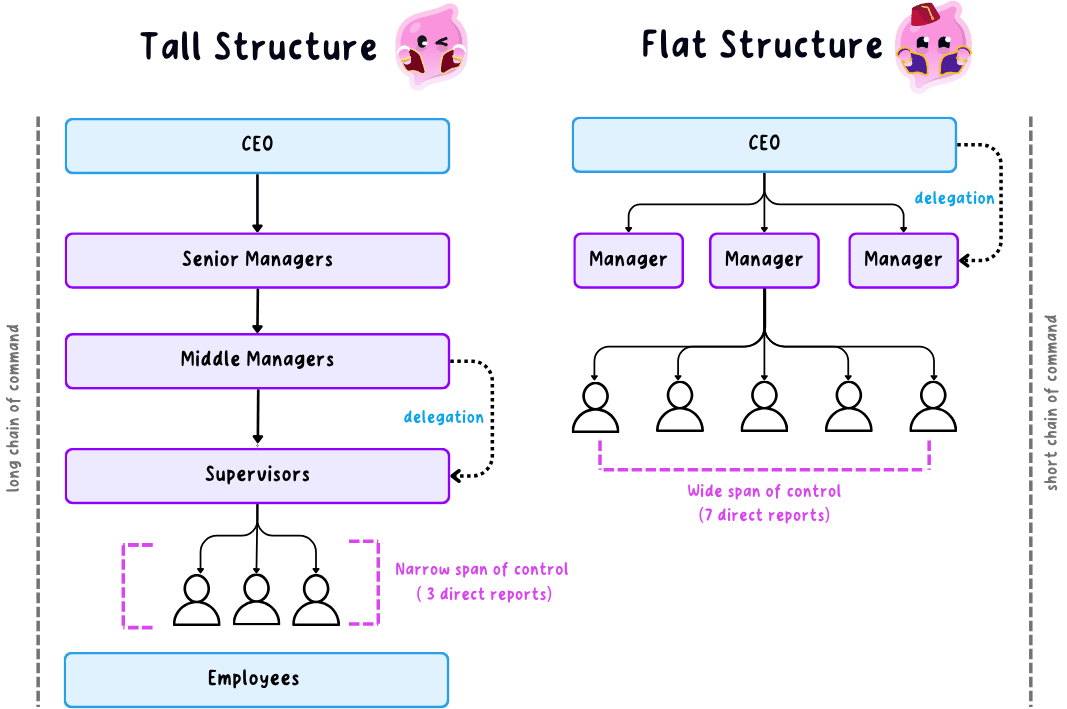
Hierarchical structures have more management levels than flat structures
Definition
Hierarchical structure: an organisational structure with several levels of management between senior managers and employees lower in the organisation.
Flat structure: an organisational structure with relatively few levels of management.
- Hierarchical structure: several management levels can create clear authority and more stages for promotion.
- Advantage: employees can see who has authority and may have a clearer route for career progression.
- Disadvantage: information and decisions may take longer to pass through the organisation and extra management layers increase cost.
- Flat structure: fewer management levels can make communication more direct and reduce management costs.
- Advantage: communication can be faster and employees may have more direct access to managers.
- Disadvantage: managers may have more people and issues to deal with and there are fewer management levels available for promotion.
Centralisation and decentralisation describe where decisions are made
Definition
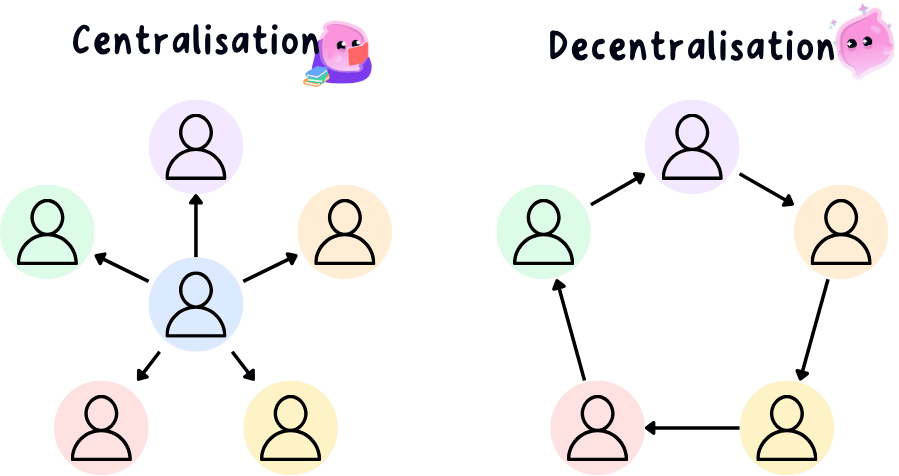
Centralised: important decisions are mainly made by senior managers at the top of the organisation.
Decentralised: decision-making authority is shared with managers or employees lower down or in different parts of the organisation.
- Centralised decision-making: senior managers keep important decisions at the top of the organisation.
- Advantage: the business can keep tighter control and make more consistent decisions across departments or locations.
- Disadvantage: local managers may have to wait for approval and have less freedom to respond quickly to local conditions.
- Decentralised decision-making: decision-making authority is shared with people closer to particular departments, customers or locations.
- Advantage: local decisions can be faster and can use the knowledge of managers closer to customers or operations.
- Disadvantage: different parts of the business may make less consistent decisions and senior managers give up some direct control.
Exam technique
- Use the number of management levels to identify whether the structure is hierarchical or flat.
- Use where important decisions are made to identify whether the business is centralised or decentralised.
- Treat these as separate judgements because the shape of the chart does not by itself tell you where decisions are made.
Self review
- What does an organisational chart show?
- Give one advantage and one disadvantage of a hierarchical structure.
- Give one advantage and one disadvantage of a flat structure.
- Give one advantage and one disadvantage of centralised decision-making.
- Why might a business decentralise some decisions to local managers?