Economies of scale make each unit cheaper as the business or industry grows
Economies of scale: reductions in average cost per unit that occur as production is carried out on a larger scale.
Average cost: total cost divided by the number of units produced.
- The key is the cost per unit, not total spending. A larger business can spend more overall while still producing each unit more cheaply if output rises faster than cost.
A firm makes 10,000 units for £40,000, giving an average cost of £4 per unit.
After expanding, it makes 40,000 units for £120,000, giving an average cost of £3 per unit. Total cost rises, but average cost falls.
Do not say economies of scale mean a large business spends less in total. They mean the average cost of producing each unit falls.
Internal economies come from the growth of the business itself
- Purchasing economies: larger orders can earn bulk discounts, reducing the input cost carried by every unit produced.
- Technical economies: high-capacity machinery, automation or specialised production systems can produce large volumes efficiently, spreading their cost over many units.
- Managerial economies: a larger business can employ specialist managers whose expertise improves purchasing, production, logistics or other decisions, while their salaries are spread across a large output.
- Financial economies: established large firms may obtain finance at lower interest rates because lenders judge them to be lower risk, reducing financing cost relative to their scale.
- Marketing economies: the cost of campaigns, packaging design or sales teams can be spread over many more units, reducing marketing cost per unit sold.
Most internal economies either reduce a particular cost because the business has greater bargaining power or spread a cost over more units. Always explain the mechanism that makes average cost fall.
External economies come from growth outside the individual business
- When an industry becomes concentrated in an area, a larger pool of trained workers can develop, reducing recruitment and training difficulties for businesses in that industry.
- Specialist suppliers and services may locate nearby, reducing transport, delivery or support costs, while improved infrastructure can make moving goods and employees easier.
- These benefits are external because one firm does not create them alone: several businesses in the industry can gain from the same labour pool, suppliers or infrastructure.
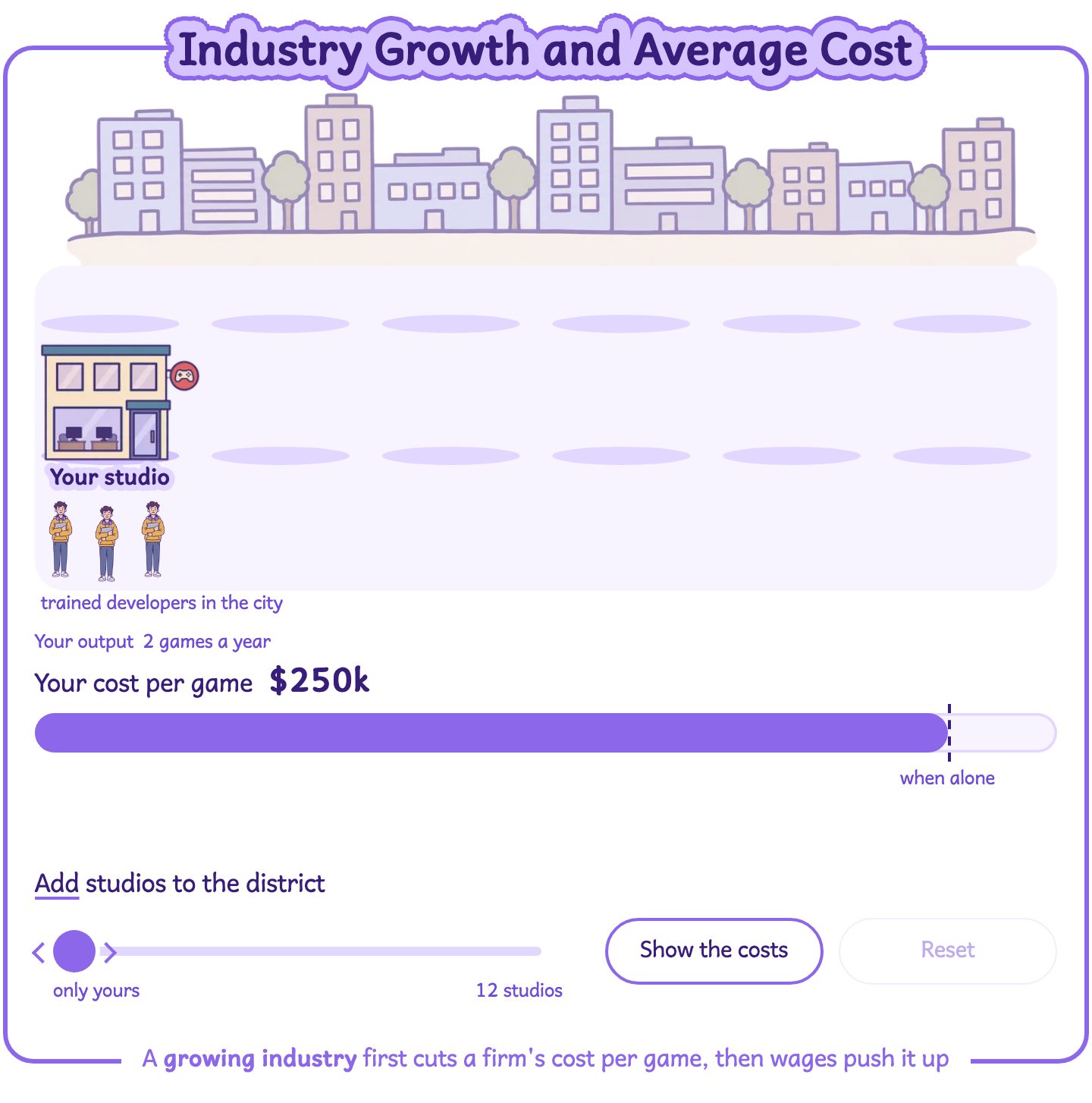
Grow the industry and watch the firm's cost per unit fall, then rise as wages are pushed up.
Lower average costs can strengthen competitiveness
- A business can pass some of the cost saving to customers through lower prices, keep the selling price unchanged and earn a larger margin, or use the saving to finance investment and promotion.
- The advantage is not automatic: growth has to create genuine cost savings, and the next article explains why becoming too large can eventually push average costs back up.
- Name the economy of scale, then explain exactly which cost is reduced or spread.
- Finish the chain by stating that average cost per unit falls.
- Keep internal economies from the firm's own growth separate from external economies created by the wider industry or location.
- What are economies of scale?
- How is average cost calculated?
- Explain two different internal economies of scale.
- Give two examples of external economies of scale.
- How can lower average cost improve a business's competitive position?
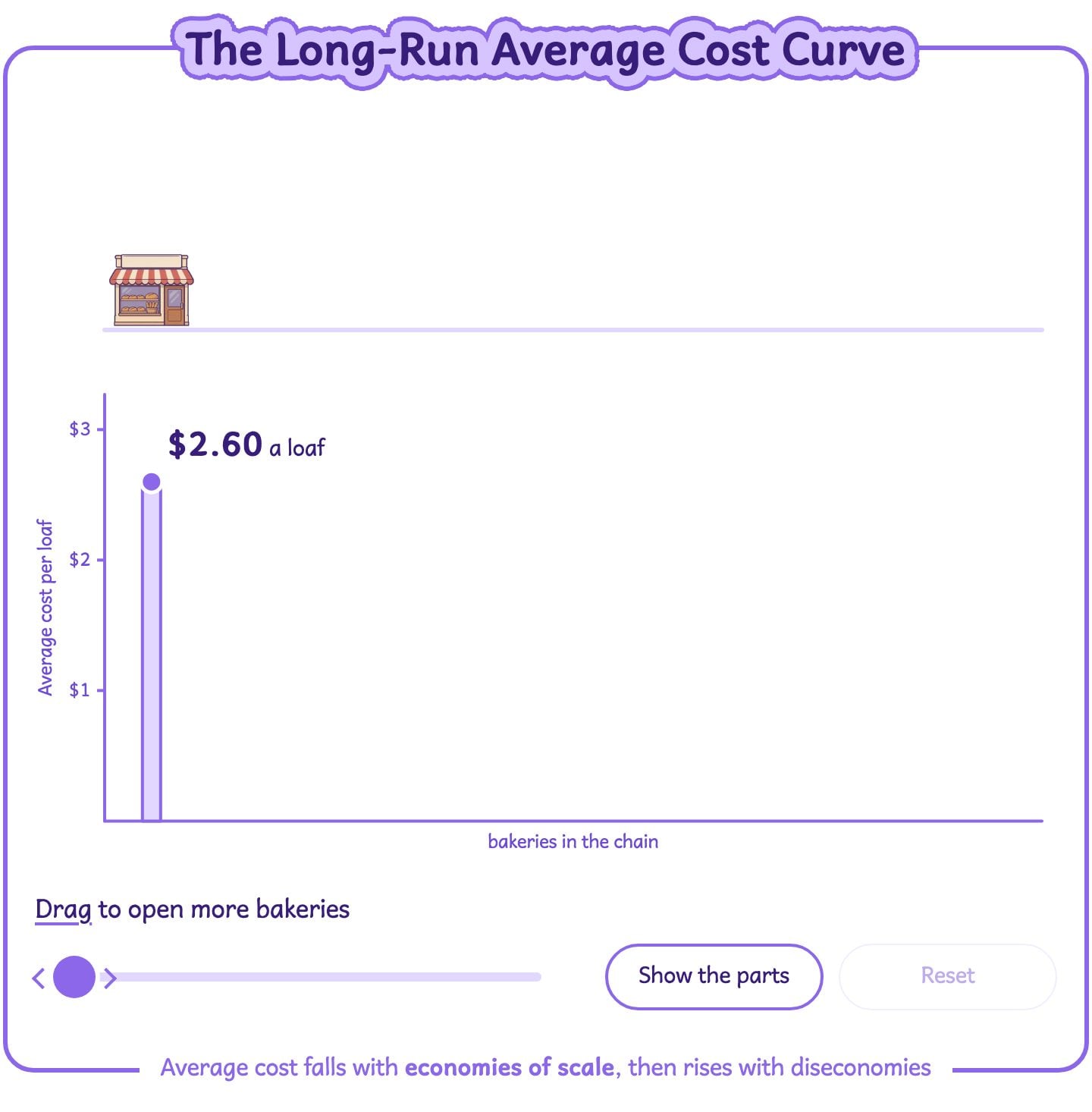
Increase output and watch average cost fall with economies of scale, then rise with diseconomies.