A cross-section of a typical leaf reveals distinct layers adapted for photosynthesis and gas exchange.
Name the cell layer located directly under the upper epidermis and explain two structural adaptations of this layer that help maximize photosynthesis.
Name the cells that regulate the opening and closing of the stomata and describe how they perform this function.
Xerophytes are plants adapted to arid environments. Explain how having stomata sunken in pits or covered with hairs on the lower leaf surface helps these plants survive.
A student used a microscope to examine the lower epidermis of a leaf. The circular field of view has a diameter of 0.4 mm0.4\text{ mm}0.4 mm.
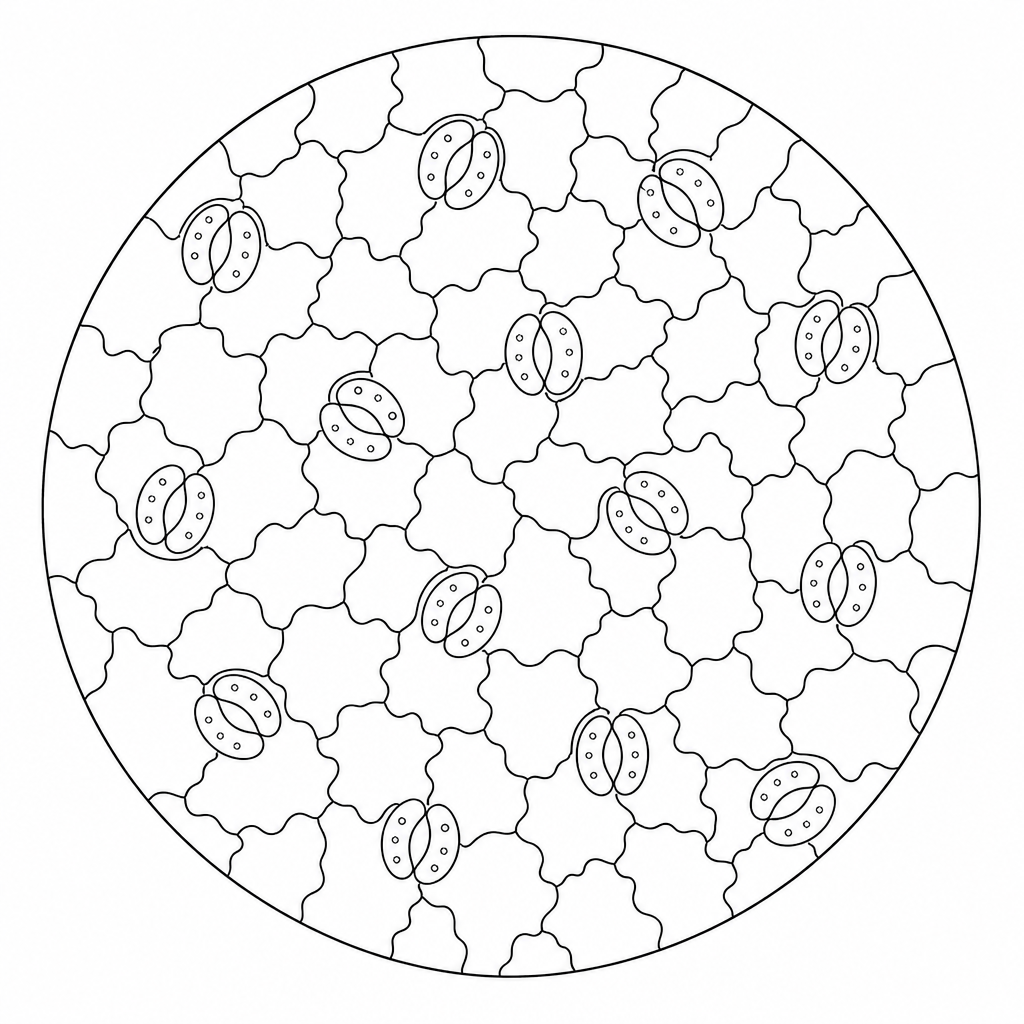
Use the diagram to calculate the stomatal density of the lower epidermis in stomata per mm2\text{stomata per mm}^2stomata per mm2. Give your answer to 1 decimal place. Show your working.
State how the stomatal density on the upper epidermis of this land plant would likely compare to that on the lower epidermis, and suggest why.