The diagram below shows a schematic of the terrestrial nitrogen cycle, showing six pools (labeled A to F) and several biochemical pathways (labeled 1 to 8).
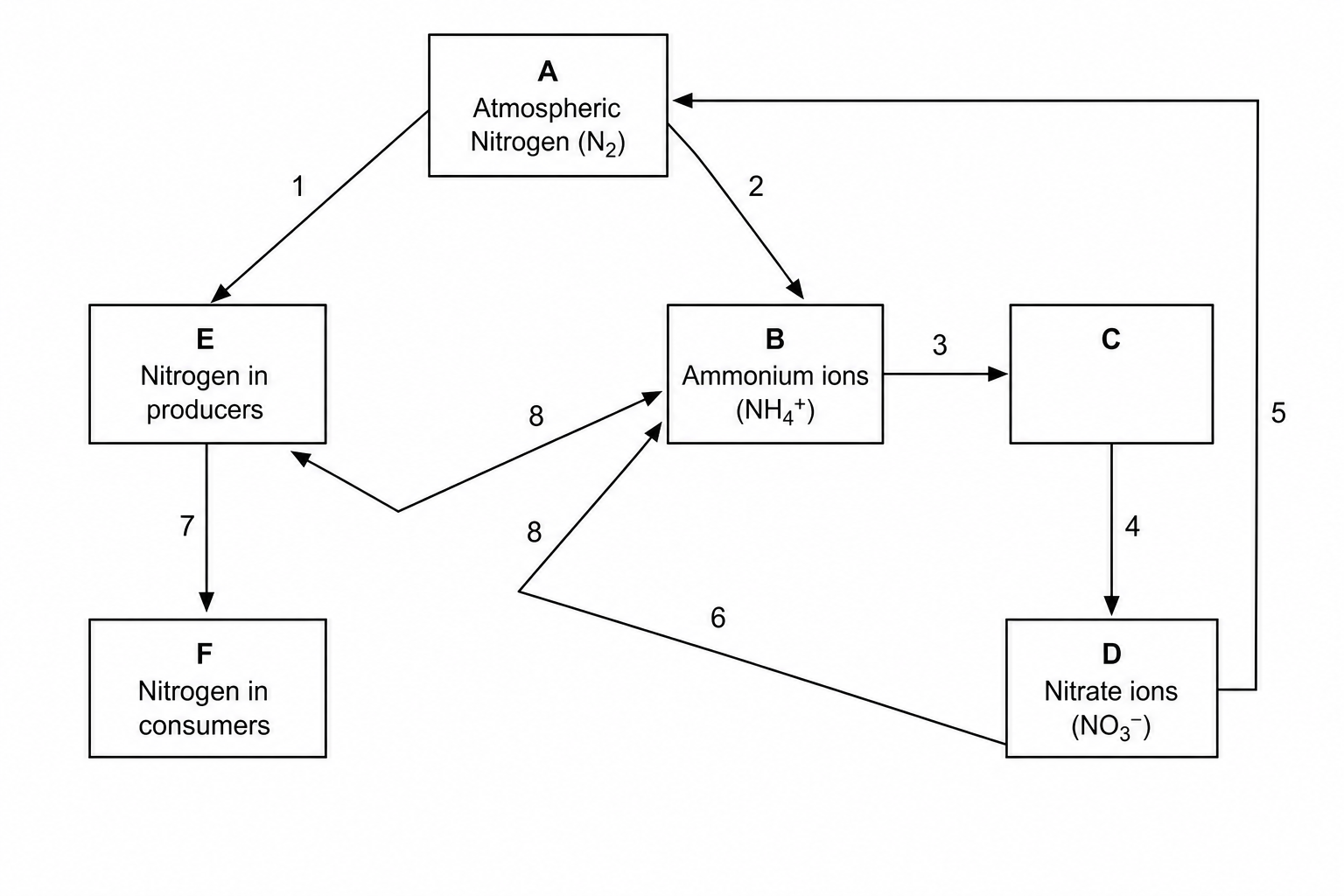
Identify the chemical ion represented by Box C and name the biological processes represented by the following arrows:
Name two different groups of organisms that act as saprobionts to drive the process represented by Arrow 8.
Describe the journey of nitrogen from nitrate ions in the soil (Box D) to becoming part of a functional protein molecule inside a consumer (Box F).
Suggest two ecological or environmental advantages of utilizing a cover crop of legumes to perform the process represented by Arrow 1, rather than applying synthetic nitrate fertilizers to the soil.

