Sustainable resources
Definition
Sustainable resource
A resource that is produced as rapidly as it is removed from the environment, so that it does not run out.
- A sustainable resource is one that is produced as rapidly as it is removed from the environment, so that it does not run out.
- Using a resource sustainably means future generations can still use it.
- Forests and fish stocks are two resources that can be conserved and managed sustainably, provided they are not used up faster than they recover.
Note
How forests and fish stocks are actually managed sustainably is Supplement content, covered in article 20.4.2.
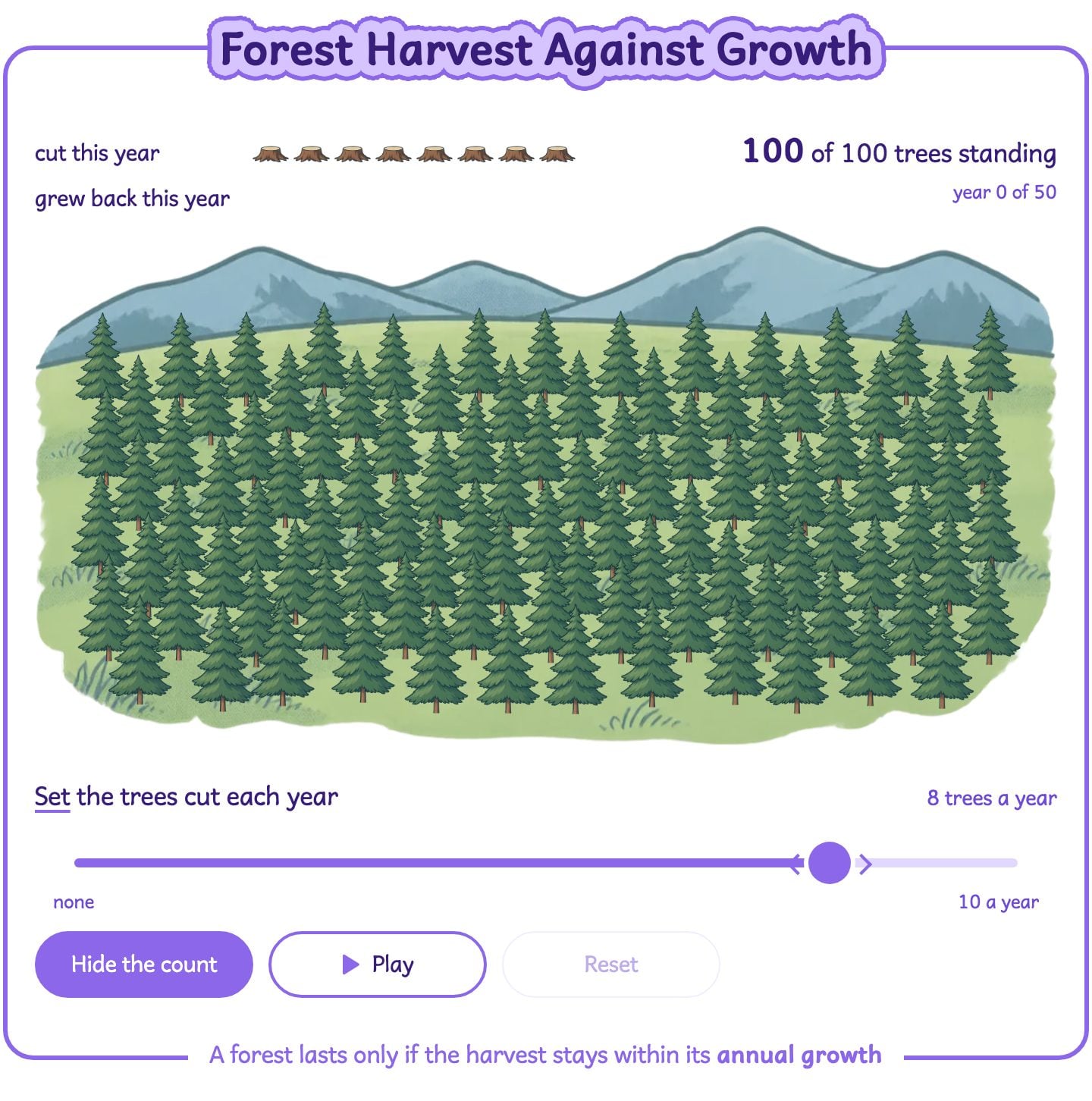
Change the harvest and notice that the forest lasts only while less is taken than regrows.
Why organisms become endangered or extinct
Definition
Extinction
The permanent loss of all members of a species, so that none remain alive anywhere.
- Extinction is the permanent loss of all members of a species, so that none remain alive anywhere.
- A species becomes endangered, and may then become extinct, for several reasons.
- Climate change can make a habitat too warm, too dry or otherwise unsuitable for a species to survive.
- Habitat destruction removes the place a species needs to live and feed.
- Hunting and overharvesting kill or remove individuals faster than the species can reproduce.
- Pollution poisons organisms or damages their habitats.
- Introduced species can prey on native species or outcompete them for food and space.
Example
The dodo became extinct after humans hunted it and introduced animals that ate its eggs, while also destroying its habitat.
Conserving endangered species
Definition
Endangered species
A species whose numbers have fallen so low that it is at risk of becoming extinct.
- An endangered species can be conserved in several ways that work together.
- Monitoring and protecting species and habitats, for example in nature reserves, keeps populations and the places they live safe.
- Education helps people understand why species matter and how to protect them.
- Captive breeding programmes breed endangered animals in zoos and wildlife parks to increase their numbers.
- Seed banks store the seeds of many plant species, so rare plants can be grown again in the future.
Balancing conservation with human needs
Definition
Conservation
The protection and careful management of species and habitats to maintain biodiversity.
- Conservation is the protection and careful management of species and habitats to maintain biodiversity.
- It can conflict with the human need for land, food and money, for example when protecting a habitat prevents building or farming there.
- Decisions therefore have to weigh the benefits of conservation against these costs.
Self review
- Define a sustainable resource.
- Give four reasons why a species may become endangered or extinct.
- Describe four ways an endangered species can be conserved.
- What is the difference between an endangered species and an extinct one?