How resistant bacteria develop
Mutation
A mutation is a random change in the base sequence of DNA that can produce a new characteristic, such as resistance to an antibiotic.
- A random mutation in a bacterium's DNA can, by chance, make it resistant to an antibiotic.
- When the antibiotic is used, the non-resistant bacteria are killed but the resistant one survives.
- The surviving resistant bacterium reproduces, passing the resistance on to its offspring.
- The antibiotic does not cause the mutation; it only selects the bacteria that were already resistant.
This topic is Supplement content, studied only by Extended candidates.
Resistance spreads by natural selection
Natural selection
Natural selection is the process by which organisms with characteristics best suited to their environment are more likely to survive, reproduce and pass on their alleles.
- Over many generations, the resistant bacteria increase until most of the population is resistant.
- This is natural selection acting on bacteria.
- A strain resistant to many antibiotics, such as MRSA, can spread quickly, especially in hospitals.
MRSA is dangerous because few antibiotics still work against it, and it often infects patients who are already ill or weak.
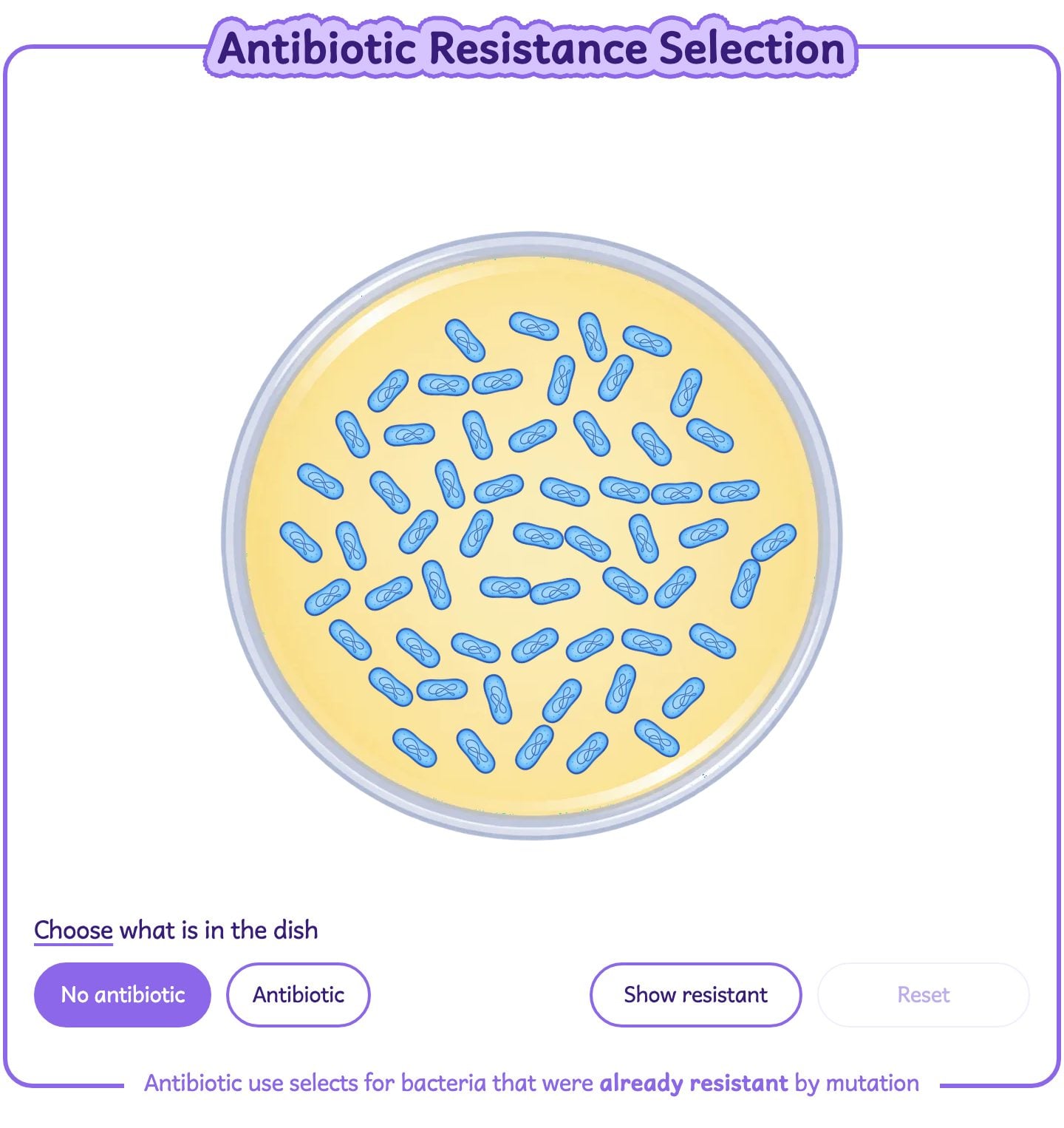
Apply the antibiotic and watch the resistant bacteria survive, reproduce and spread through the population.
Using antibiotics only when essential
Antibiotic resistance
Antibiotic resistance is the ability of some bacteria to survive and continue to grow in the presence of an antibiotic that would normally kill them.
- Antibiotics should be used only when essential, not for minor infections or viral illnesses.
- The less often bacteria meet an antibiotic, the fewer chances there are for resistant bacteria to be selected.
- So resistant strains such as MRSA develop more slowly.
- Doctors prescribe the correct antibiotic and ask patients to finish the full course, so no bacteria survive to pass on resistance.
- Good hospital hygiene, such as handwashing and isolating infected patients, limits the spread of resistant bacteria.
- Where does the resistance in a bacterium originally come from?
- Explain how an antibiotic selects for resistant bacteria.
- Why is it wrong to say the antibiotic causes bacteria to become resistant?
- Explain how using antibiotics only when essential limits the development of MRSA.
- Give two other measures that help slow the spread of resistant bacteria.