Antibiotics kill bacteria but not viruses
Definition
Virus
A virus is a non-cellular pathogen that can only reproduce inside the living cells of a host.
- Antibiotics kill bacteria by attacking their cell structures and the chemical processes they use to live.
- A virus is not a cell and does not have these structures, so an antibiotic has nothing to attack.
- Viruses reproduce inside the body's own cells, where they are hard to reach.
- A drug that reached a virus inside a cell would usually damage the host cell as well.
- For these reasons, antibiotics have no effect on viruses.
Common Mistake
- Do not expect antibiotics to cure a cold or flu.
- These illnesses are caused by viruses, which antibiotics cannot kill, so your immune system must clear them while a painkiller eases the symptoms.
Some bacteria are resistant to antibiotics
Definition
Antibiotic resistance
Antibiotic resistance is the ability of some bacteria to survive and continue to grow in the presence of an antibiotic that would normally kill them.
- Some bacteria are resistant, which means they are not killed by an antibiotic that normally works.
- This reduces the effectiveness of that antibiotic against the infection.
- A resistant infection is harder to treat and may need a different or stronger antibiotic.
- If many bacteria become resistant, once-reliable antibiotics can stop working altogether.
Practical
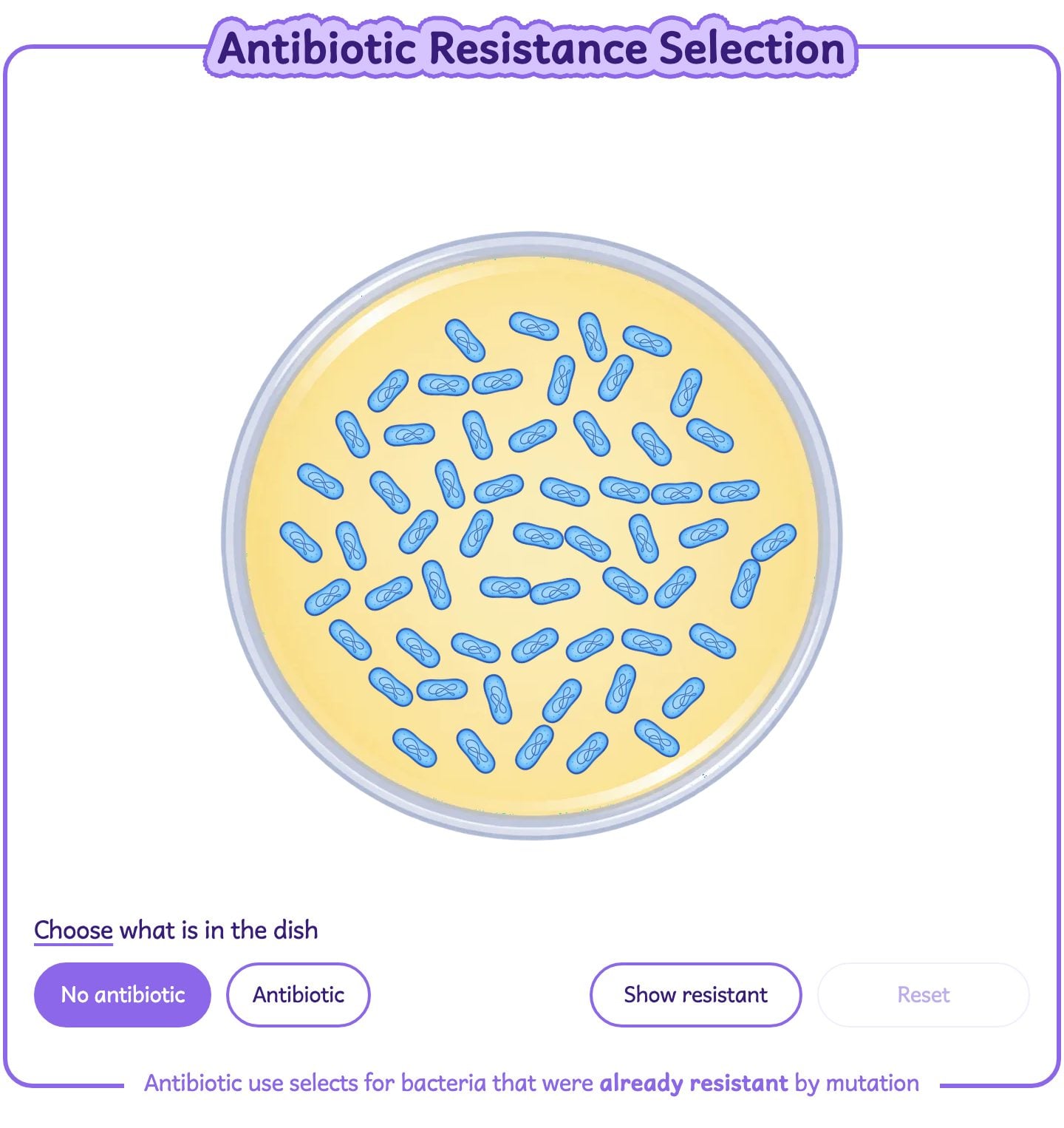
Apply the antibiotic and watch the resistant bacteria survive while the others are killed.
Comparing resistant and non-resistant bacteria
- Using aseptic technique near a Bunsen burner, spread each bacterial strain on its own plate of sterile nutrient agar.
- Add identical antibiotic discs to both plates, plus a sterile-water control disc on each.
- Tape, invert and incubate both plates at 25 °C for 24 to 48 hours.
- The non-resistant strain shows a clear zone around the antibiotic disc.
- The resistant strain shows little or no clear zone, because the antibiotic does not stop it growing.
- Comparing the clear zones shows which strain is resistant to the antibiotic.
Why resistance matters
- Resistance reduces the number of antibiotics that still work against an infection.
- Common infections could once again become dangerous if the antibiotics used to treat them fail.
- The next topic explains how resistant bacteria develop and how careful use of antibiotics can slow this down.
Self review
- Why do antibiotics have no effect on viruses?
- Why would a drug that attacked a virus inside a cell be a problem?
- What does it mean to say a bacterium is resistant to an antibiotic?
- How does antibiotic resistance affect the treatment of an infection?
- In the practical, why does the resistant strain show little or no clear zone?