Glucagon from the Pancreas
Definition
Glucagon
A hormone released by the pancreas when blood glucose is too low; it makes the liver break down glycogen into glucose and release it into the blood.
- Glucagon is a hormone secreted by the pancreas.
- It is released when the blood glucose concentration is low.
- It makes the liver break down stored glycogen into glucose.
- The glucose is released into the blood, raising the blood glucose concentration.
Note
This is Supplement (Extended) content in Cambridge IGCSE Biology (0610), Topic 14: Coordination and response.
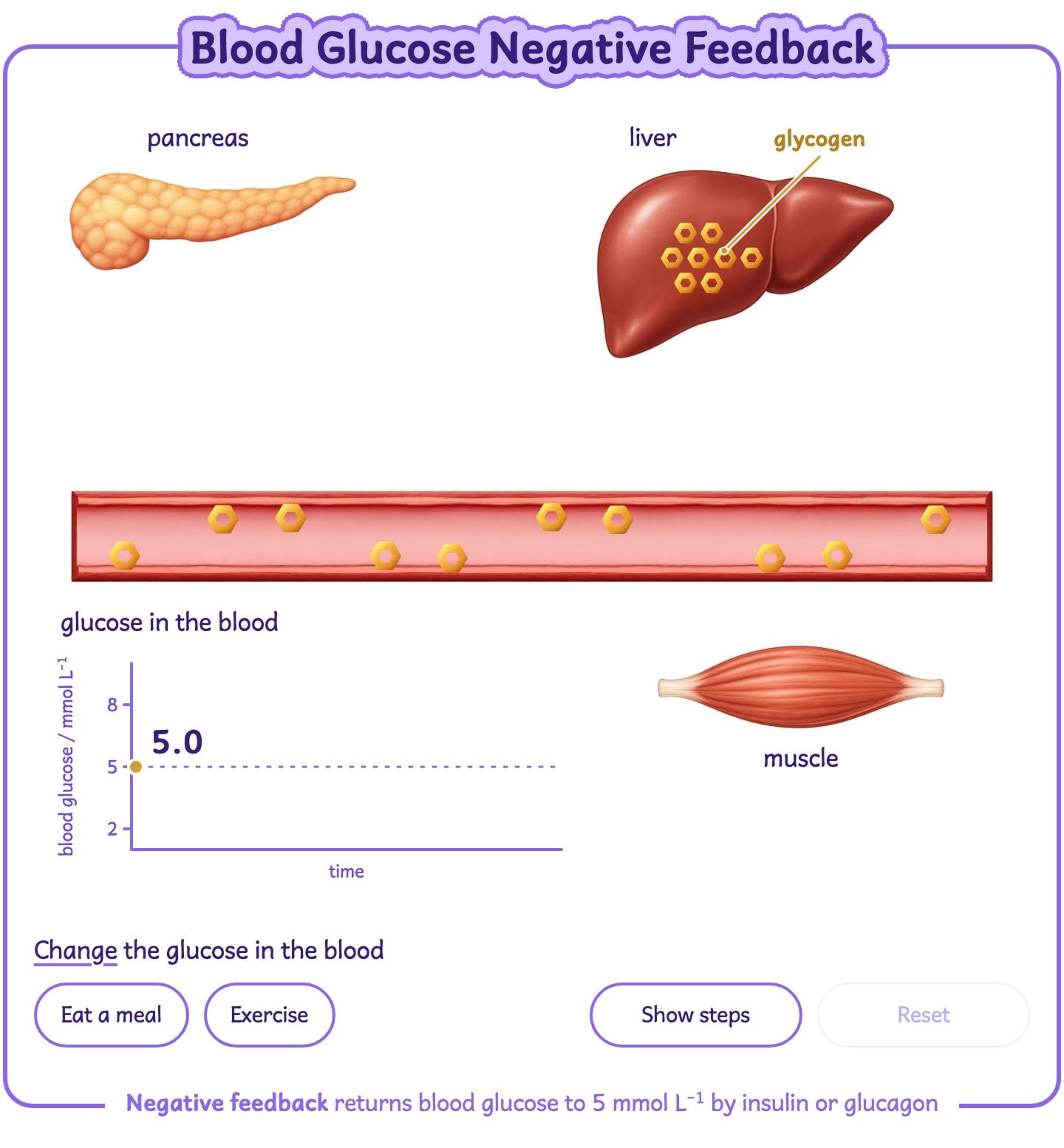
Make blood glucose fall and watch glucagon bring it back up to the normal level.
Adrenaline and Metabolic Activity
Definition
Adrenaline
A hormone released by the adrenal glands that prepares the body for action in the 'fight or flight' response.
- Adrenaline also helps control the body's metabolic activity.
- It increases the blood glucose concentration, giving cells more glucose for respiration.
- It increases the heart rate, so glucose and oxygen reach the muscles faster.
- Together these changes release more energy for the muscles during activity.
Note
Both glucagon and adrenaline act to raise the blood glucose concentration.
Self review
- Which gland secretes glucagon?
- When is glucagon released?
- What does glucagon make the liver do?
- Give two effects of adrenaline on metabolic activity.
- Name two hormones that raise blood glucose concentration.