Features of insomnia
Definition
Insomnia
A sleep disorder in which a person regularly struggles to fall asleep or to stay asleep, leaving them tired during the day.
- Insomnia is a persistent difficulty with sleep, so the problem has to run across weeks.
- Sleep onset insomnia is a long delay before sleep starts, so the person lies awake at the beginning of the night.
- Sleep maintenance insomnia is waking in the night, or very early in the morning, and being unable to settle again.
- Sleep ends up short, broken, or both, and it feels unrefreshing even on nights when the hours look about right.
- The day that follows brings tiredness, poor concentration, low mood and irritability.
- Those daytime effects are part of the definition, so a diagnosis takes account of the following day as well as the night.
Key Idea
- Insomnia is a difficulty starting or holding on to sleep that runs across weeks of nights and leaves the following day worse for it.
- Sleep begins once the parasympathetic branch has taken over from the sympathetic one, so anything holding arousal up at bedtime holds sleep off.
- Relaxation techniques bring that arousal down on the night, and improved sleep hygiene changes the routine and the room that were pushing it up.
The role of the nervous system
Definition
Autonomic nervous system
The branch of the peripheral nervous system that controls automatic bodily functions you do not think about, such as heart rate, breathing and digestion.
- Falling asleep needs the body to slow down, and that slowing is controlled by the autonomic nervous system.
- The sympathetic branch prepares the body for action by raising heart rate, breathing and alertness, and sleep is unlikely while it is dominant.
- The parasympathetic branch slows the heart and breathing and lets the muscles loosen, which is the state sleep starts from.
- Stress and worry keep the sympathetic branch active, partly through the release of adrenaline, so the body stays ready for action at bedtime.
- A person can be worn out and still unable to drop off, because tiredness and high arousal can be present at the same time.
- Waking in the night follows the same pattern, because a rise in arousal at 3am starts the process again.
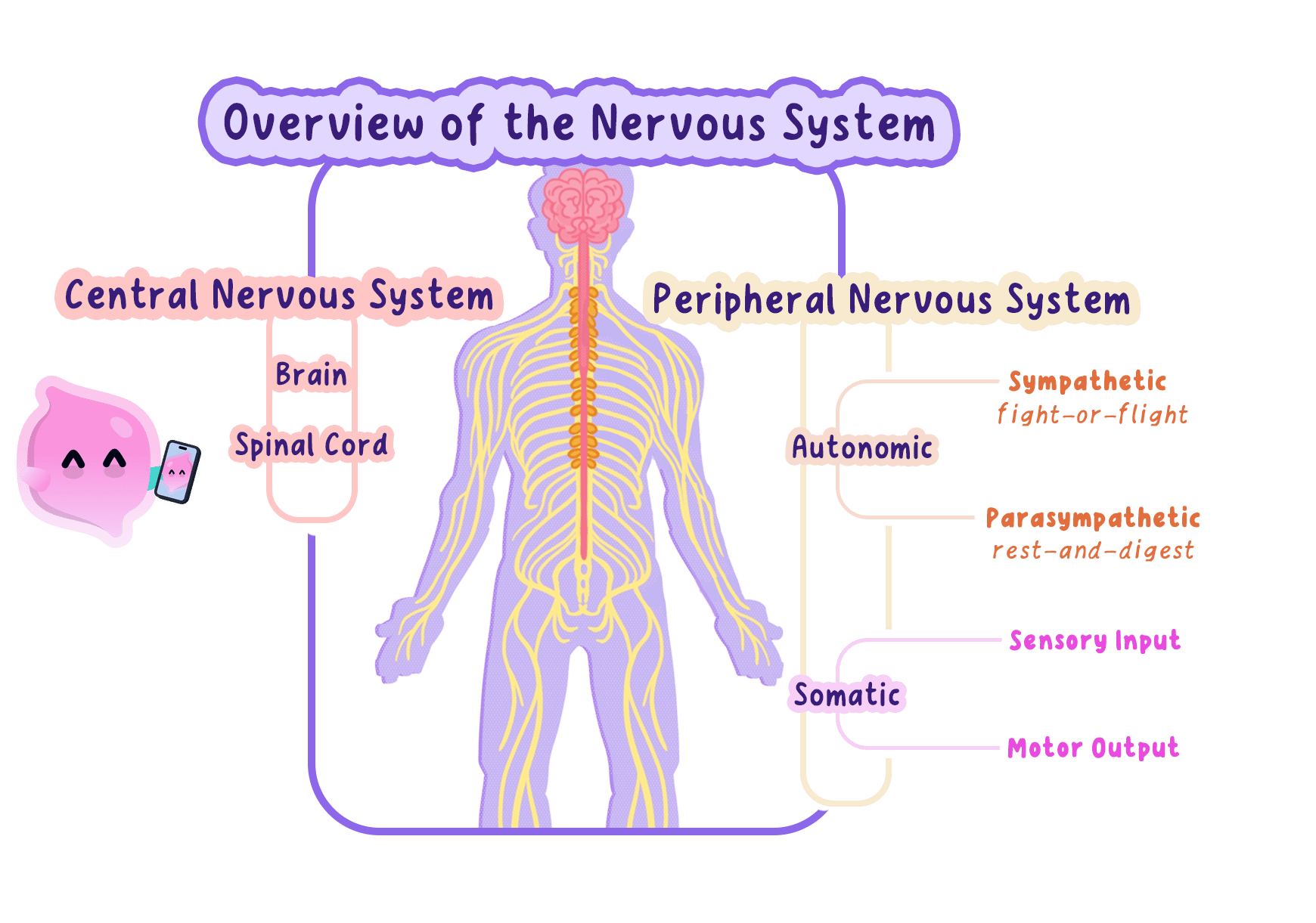
Note
- One restless night before an early start is not insomnia, because the pattern has to run across weeks and show up in the daytime.
- Neither branch is under direct voluntary control, so lowering arousal works by taking away what is holding the body ready for action.
Relaxation techniques
- Relaxation techniques are used to shift the balance from the sympathetic branch towards the parasympathetic one.
- Slow, controlled breathing brings heart rate down and gives attention something steady to hold on to.
- Progressive muscle relaxation works through the body, tensing then releasing each muscle group in turn, which takes out the physical tension arousal creates.
- Guided imagery holds a calm, detailed scene in mind so attention is occupied by something that does not raise arousal.
- All three run along the same chain, lowering arousal so that heart rate slows, muscles loosen and sleep can begin.
- They are learned skills, so they work better after weeks of practice than on the first night someone tries them.
- Strength: there are no drug side effects and nothing to become dependent on.
- Limitation: they take effort and repetition, and they do little when the cause of the broken sleep is pain or another health condition.
Example
- Someone lies awake at midnight replaying a difficult conversation at work, with a fast pulse and tight shoulders.
- Ten minutes of slow breathing brings the pulse down and takes attention off the conversation.
- Sleep starts because the body has been allowed to settle, which is the parasympathetic state taking over.
The role of the physical environment
- Light from a lit room or a bright screen slows the release of melatonin, so the signal to sleep arrives later than bedtime.
- Noise from traffic, a shared wall or a television next door wakes a sleeper again and again, which produces sleep maintenance insomnia.
- Temperature matters because a bedroom that is too warm blocks the drop in body temperature that normally comes with falling asleep.
- Devices add light, sound and a reason to stay engaged, so a phone by the pillow works against sleep in three ways at once.
Note
- Changes to the room help most with sleep maintenance insomnia, because noise, light and heat act by waking a sleeper who has already dropped off.
- The same bedroom can be fine on a night when arousal is low, so the surroundings are one cause among several.
Improved sleep hygiene
Definition
Sleep hygiene
The habits and surroundings that support good sleep, such as a regular bedtime, a dark and quiet room and avoiding screens before bed.
- Improved sleep hygiene means changing the habits and the surroundings around sleep so that neither is working against it.
- Consistent times for going to bed and getting up give the body clock a steady pattern to work to.
- A dark, quiet, cool room removes the light, noise and heat that were breaking the night up.
- Keeping caffeine to earlier in the day means the stimulant has left the system by bedtime, so it is no longer adding to arousal.
- Bed for sleep only makes the bed a cue for sleep, because revision and scrolling happen elsewhere.
- Across a few weeks the room and the routine turn into signals that sleep is coming, which is why sleep hygiene works gradually.
- Limitation: it asks for changes that are hard to keep up in a shared room, on shift work, or with a new baby in the house.
Common Mistake
- Relaxation techniques lower arousal in the moment, and sleep hygiene reshapes the routine and the room.
Turning this into marks
- When relaxation techniques and improved sleep hygiene are both asked for, make them genuinely separate rather than describing a bedtime routine twice.
- Name the parasympathetic branch of the autonomic nervous system, because writing that the body calms down does not secure the knowledge mark.
- The mark most often lost is naming a relaxation technique without saying that it lowers arousal so sleep can start.
Self review
- Give three features of insomnia.
- Which branch of the autonomic nervous system has to take over before sleep can start?
- Explain how progressive muscle relaxation helps someone with sleep onset insomnia.
- Name two features of the physical environment that can disturb sleep.
- Give one change that counts as improved sleep hygiene, and say why it works.
