Freud's approach to dreaming
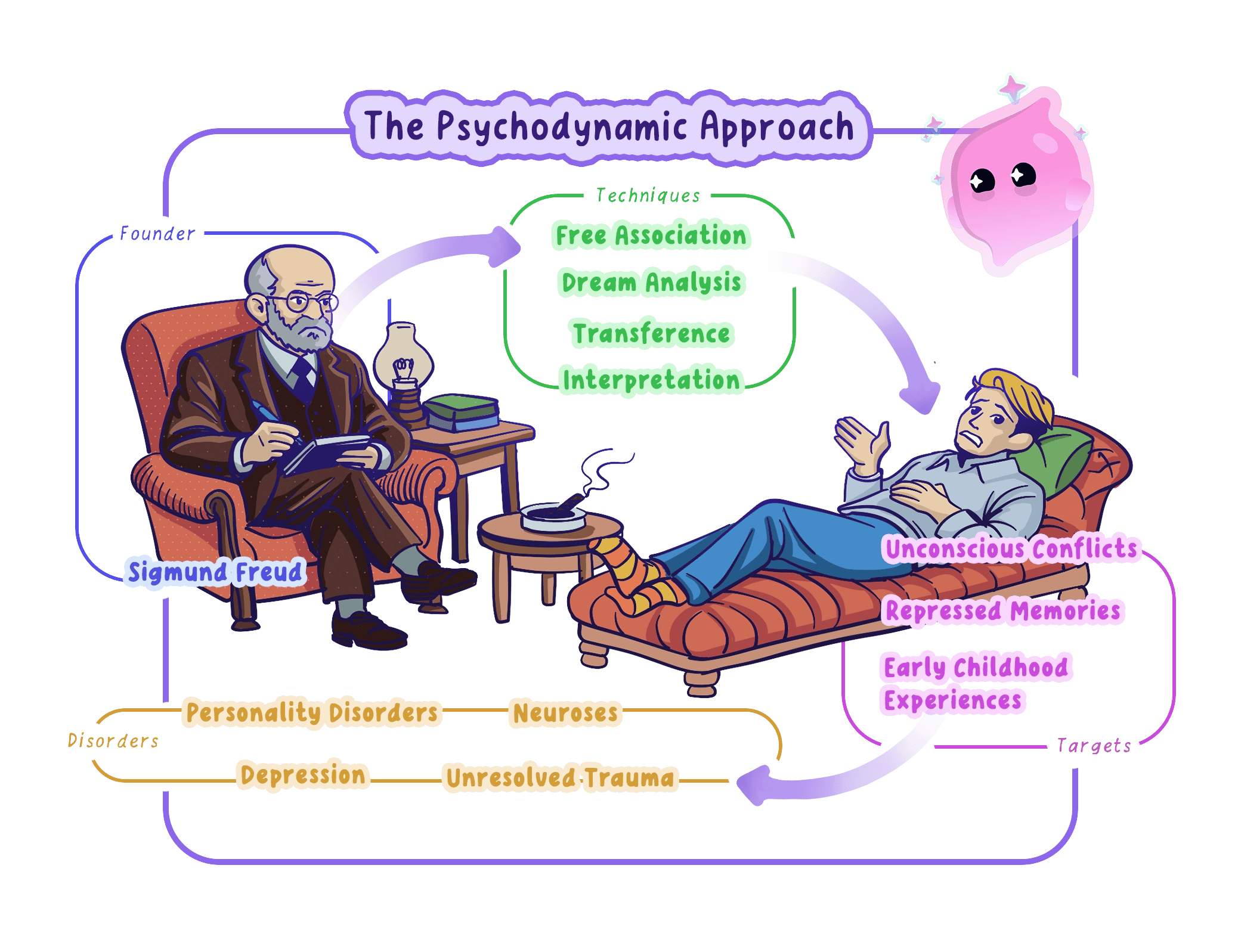
- Freud argued that most of what drives your behaviour is hidden from you, in a part of the mind you cannot reach when you want to.
- He called dreams the royal road to the unconscious, because sleep is when that hidden material comes closest to the surface.
Key Idea
- On Freud's account the unconscious holds wishes and fears a person cannot reach at will, put there by repression because facing them would cause anxiety.
- During sleep the ego has no outside world to manage, so its grip loosens and that buried material pushes up towards awareness.
- It is altered into something less alarming on the way, so the story you remember on waking is a coded version of the wish sitting underneath it.
The three levels of the mind
Definition
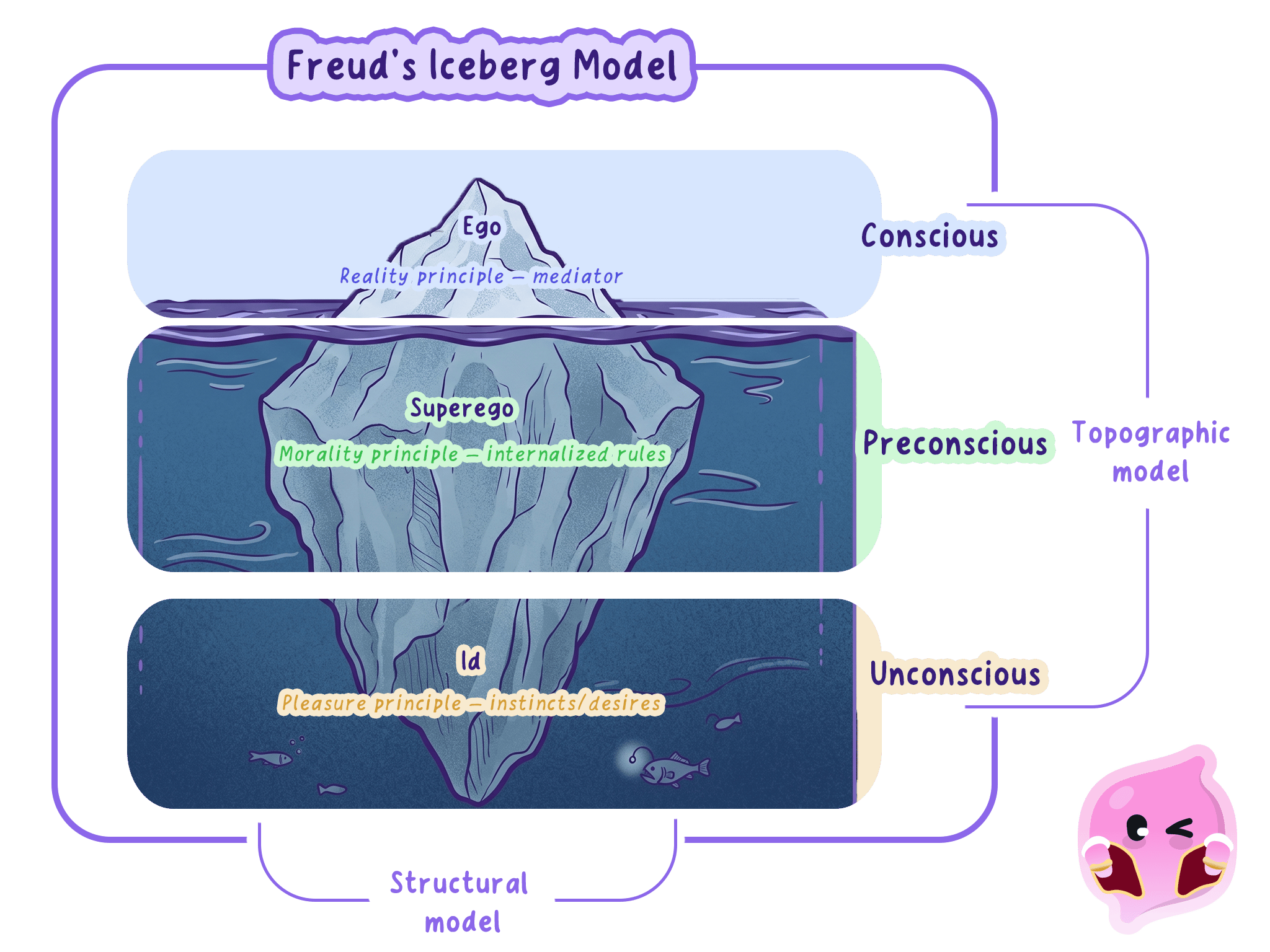
Unconscious
The level of the mind that holds thoughts and memories which cannot normally be brought to awareness, including distressing material that has been repressed.
- Conscious
- Everything you are aware of at this moment, such as the words in front of you.
- Freud put this at the tip of the iceberg, a small share of your mental life.
- Pre-conscious
- Thoughts that are out of mind but come back the moment you go looking for them, like your address or a friend's birthday.
- Unconscious
- Wishes, fears and painful memories you cannot reach at will, however hard you try.
- This is by far the largest part of the mind in Freud's model, and the part he says your dreams come from.
Example
- Picture your mind as your phone.
- The conscious is the app open on the screen right now.
- The pre-conscious is the apps sitting in the background that one tap brings forward.
- The unconscious is storage you have no way of opening, and it still shapes what the phone does.
The id, the ego and the superego
- The id is the primitive part of personality, present from birth, and it demands what it wants immediately.
- The superego is the moral part, built out of what you were taught is right, and it judges what the id wants.
- The ego is the realistic part, and it has to keep the peace between the other two while dealing with the outside world.
- Demands from the id that the superego finds unacceptable would cause real anxiety if they reached awareness, so the ego keeps them out of it.
- Repression does that pushing down, and it is how the unconscious fills with material the person never chose to bury.
Note
- The ego works as a doorkeeper on awareness, and repression is that door being held shut on a demand the superego would condemn.
- The id, the ego and the superego are not places in the brain, and Freud arrived at them from what his patients told him rather than from anything he could measure.
- Repression is one defence mechanism among several in Freud's account, and it is the one that does the work in his explanation of dreaming.
Repression
Definition
Repression
A defence mechanism in which the mind pushes a distressing memory into the unconscious without the person choosing to, so it cannot normally be recalled.
- Repression is a defence mechanism, one of the ways the ego protects a person from anxiety.
- It happens without the person deciding to do it.
- The material pushed down is the most distressing kind, such as frightening memories, shameful wishes and fears from early childhood.
- Repressed material carries on shaping how the person feels and behaves while they have no idea why.
- In Freud's case study of the Wolfman, a fear repressed in early childhood surfaced years later inside a dream.
Common Mistake
- Repressed material does not appear openly in a dream, because Freud insists it is always disguised first.
- The pre-conscious is the level that can be reached whenever a person goes looking, and the unconscious is the level that cannot be reached at all.
- Repression is not a choice to forget, because it happens without the person deciding anything.
Why the unconscious reaches a dream in disguise
- During sleep the ego's grip on the unconscious weakens, because it is no longer busy managing the outside world.
- Repressed wishes and fears then push upwards towards awareness.
- If they arrived plainly they would cause so much anxiety that the sleeper would wake.
- The mind alters the material into something less alarming, and only that altered version appears in the dream.
- The dream can then run to the end without waking the sleeper, so Freud treated dreaming as protecting sleep.
- Every dream therefore has two layers, the story you remember on waking and the wish sitting underneath it.
- Freud read the surface story as a coded version of the wish, so he held that a dream had to be interpreted.
Example
- You fall out badly with your best mate on the bus home and decide the whole thing is not worth thinking about.
- By the evening it is out of mind altogether, and on Freud's account the anxiety attached to it has been repressed rather than dealt with.
- That night you dream of running for a train you keep missing, and you wake up uneasy without knowing why.
- The row itself never appears in the dream, because the disguise keeps it out of sight.
Turning this into marks
- When the unconscious and repression are both asked for, make them genuinely separate rather than defining one of them twice.
- Name repression as a defence mechanism carried out by the ego, because writing that the mind forgets does not secure the knowledge mark.
- The mark most often lost is describing the unconscious without saying that its content has to be disguised before it reaches a dream.
Self review
- Name Freud's three levels of the mind.
- What is the difference between the pre-conscious and the unconscious?
- Which part of the personality carries out repression, and why?
- What happens to the ego during sleep?
- Why must repressed material be disguised before it appears in a dream?
