This article covers 3.2.1 Social influence of the AQA GCSE Psychology specification.
Why You Follow Orders
- Obedience means doing what an authority figure directly tells you to do.
- It differs from conformity, where you copy a group even though nobody has ordered you to.
- Milgram's Agency theory explains obedience and frames the social factors that push it up or down.
Key Idea
- In the agentic state you see yourself as acting for an authority, so you hand them the responsibility and obey.
- In the autonomous state you feel responsible for your own actions, so you are more willing to refuse.
Agency and Authority
- Agency
- When an authority takes charge, you shift into the agentic state and pass responsibility up to them, so you obey more; left to yourself you stay autonomous and obey less.
- Authority
- The more legitimate the figure seems, the more you obey, because you accept their right to give the order.
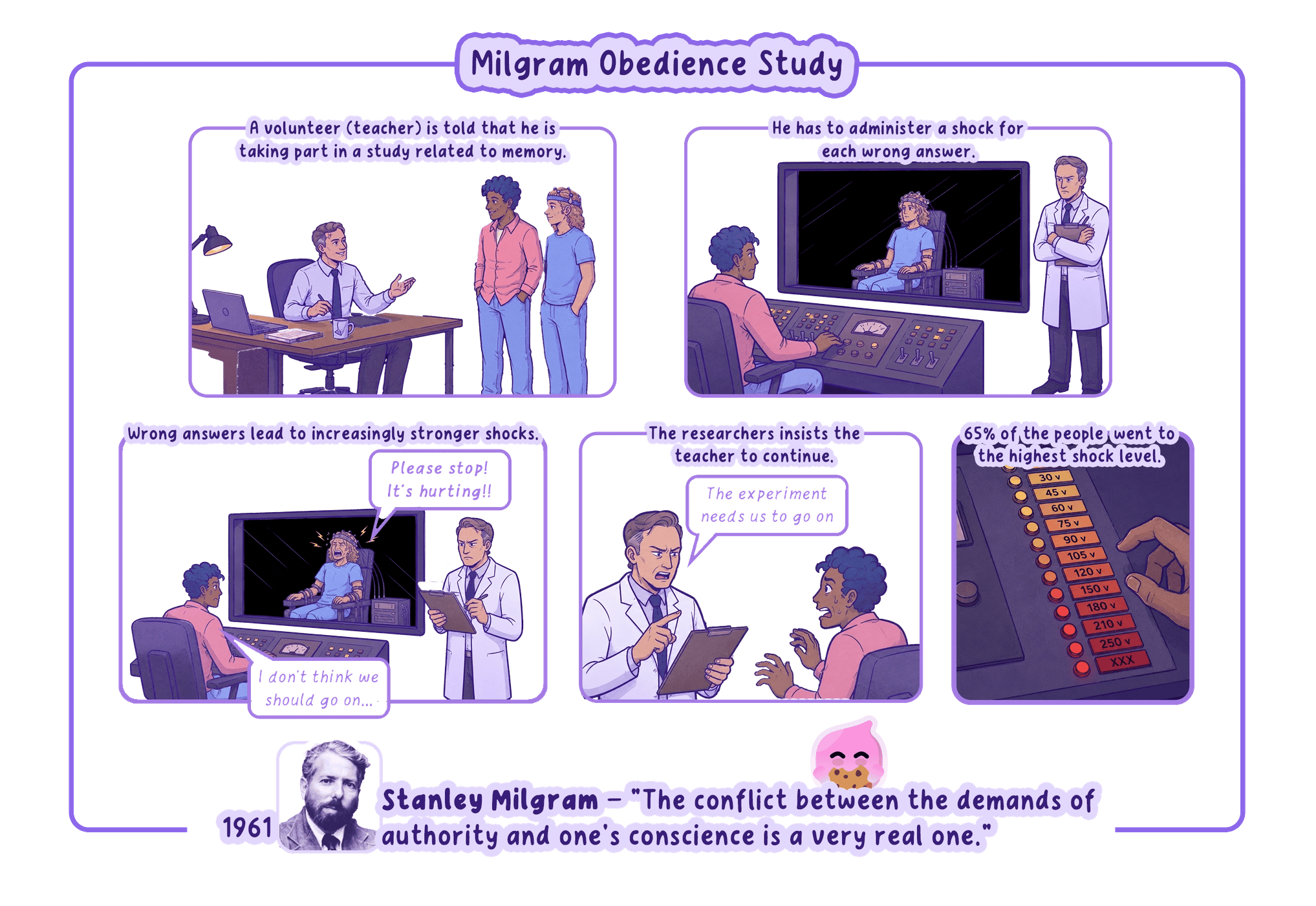
Example
- In Milgram's study an experimenter in a grey lab coat calmly told participants to continue; because he looked like a legitimate scientist, most kept going and felt that he, not they, was responsible.
- You feel the same pull at school: when a teacher tells the class to hand in their phones, most people obey at once, because a teacher holds legitimate authority in the classroom.
Culture and Proximity
- Culture
- Some cultures raise people to respect authority more strongly, so average obedience is higher there than in cultures that prize independence.
- Proximity
- The closer the authority figure is, the more you obey, because their presence keeps the pressure on you; when orders come from another room or over the phone, obedience drops.
Common Mistake
- Do not confuse obedience with conformity: obedience follows a direct order from above, while conformity copies a group beside you.
- For each factor, say clearly whether it raises or lowers obedience and link it back to the agentic state.
Answering 'How Does X Affect Obedience?'
- Work out which factor the question names and which way it moves obedience. Agency, authority, culture and proximity each push it clearly up or down.
- Explain the effect through the agentic shift, the link most answers leave out. A close, legitimate authority makes you feel they carry the responsibility, so you stay agentic and obey; distance or a doubtful authority lets you feel responsible again and refuse.
- Back it with a Milgram variation where one fits. Obedience fell sharply when the experimenter gave orders by telephone rather than in the room, which shows proximity at work.
Self review
- What is obedience?
- What is the agentic state?
- How does proximity affect obedience?
- How does the legitimacy of an authority figure affect obedience?