A student uses a digital camera mounted on a tripod to photograph the parallel wave pattern in an elevated ripple tank. To calibrate the scale of the photograph, they place a 1 m ruler on the desk surface directly beneath the glass bottom of the tank.
By comparing the spacing of the wave crests directly to the ruler markings in the same photograph, the student estimates the wavelength of the waves to be λ=3.6 cm\lambda = 3.6\text{ cm}λ=3.6 cm. Knowing the wave generator frequency is 12 Hz, they calculate a wave speed of 43.2 cm s-1.
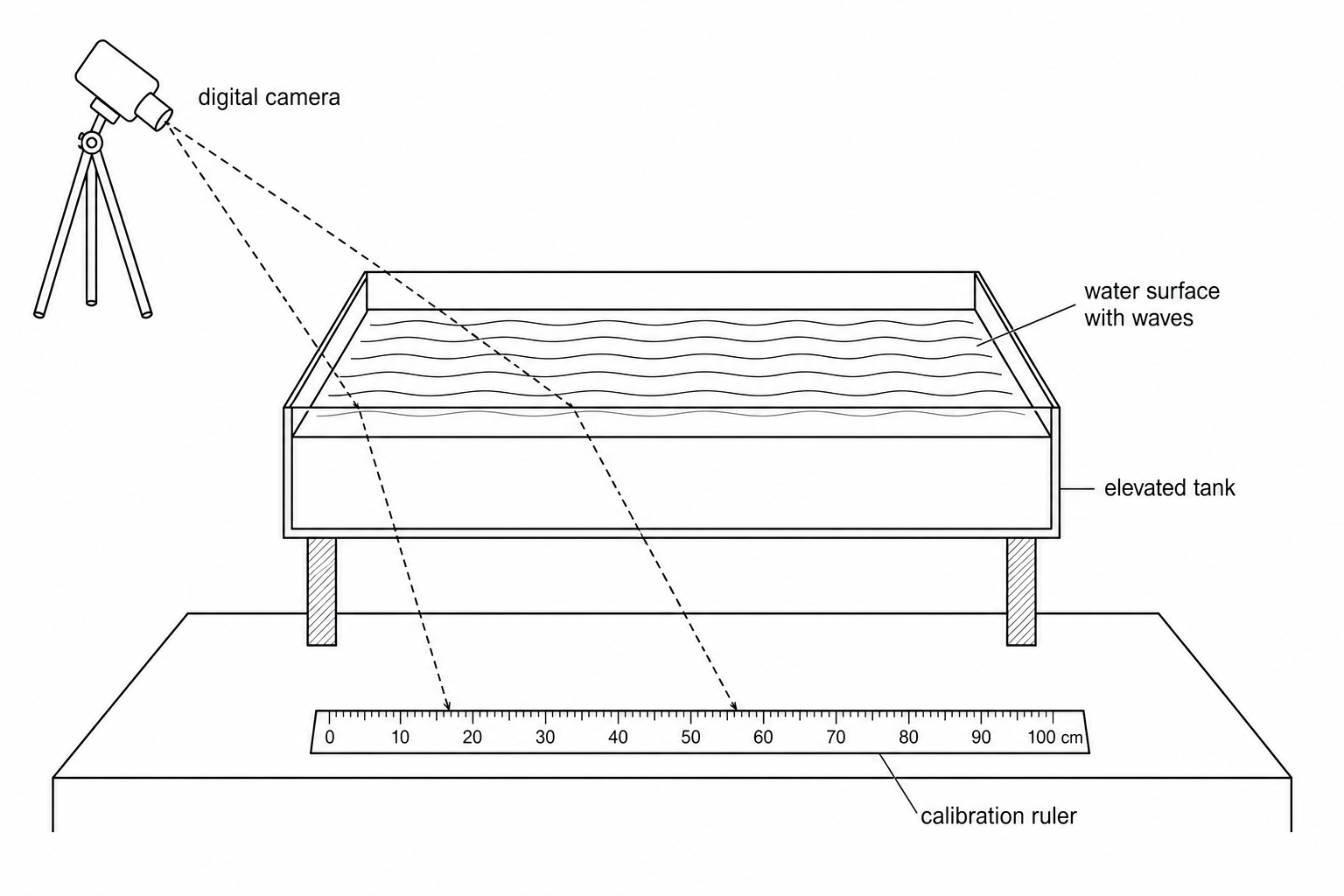
Which of the following describes why the calculated wave speed is systematically incorrect, and what the effect is on the calculated value?
Refraction of the light at the air-water interface causes the wave pattern to appear demagnified relative to the ruler scale, leading to an underestimate of the wave speed.
The water surface is closer to the camera than the calibration ruler is, making the wave crests appear magnified relative to the ruler scale. This leads to an overestimate of the wave speed.
Parallax causes the wave crests to align with ruler markings that are closer together in the photograph, leading to an underestimate of the wave speed.
The ruler on the desk is further from the camera than the waves are, causing the ruler markings to appear magnified relative to the waves, leading to an underestimate of the wave speed.