4.2.4 Radioactive contamination and irradiation
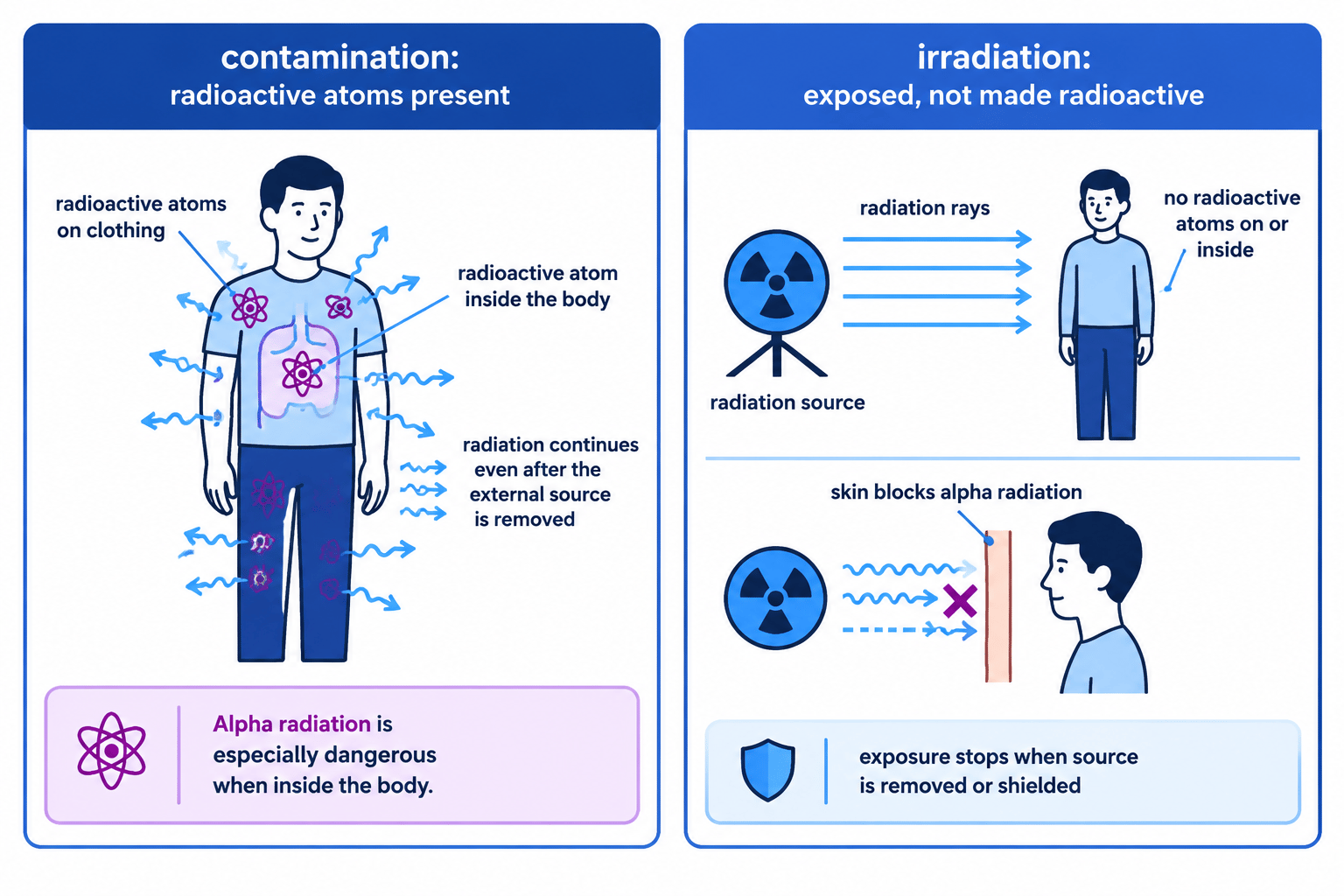
Contamination puts radioactive atoms where they should not be
Definition
Radioactive contamination
The unwanted presence of materials containing radioactive atoms on or in other materials.
- Contamination is when unwanted radioactive atoms get onto or into an object or a person.
- The hazard comes from the decay of those contaminating atoms, which carries on while they are present.
- The type of radiation given out affects how dangerous it is: an alpha emitter is especially harmful if it gets inside the body.
Irradiation exposes an object to radiation without making it radioactive
Definition
Irradiation
The process of exposing an object to nuclear radiation; the irradiated object does not become radioactive.
- Irradiation is when an object is exposed to radiation from an outside source.
- The object does not become radioactive, so once the source is removed or shielded the exposure stops.
- The hazard lasts only while the object is actually being exposed.
Comparing the hazards of contamination and irradiation
- Contamination keeps exposing you for as long as the radioactive atoms are present, and is most dangerous when they get inside the body.
- Irradiation stops as soon as the source is taken away and leaves nothing radioactive behind.
- An alpha source is the most dangerous as contamination inside the body, but the least dangerous as outside irradiation because the skin stops it.
Common Mistake
- An irradiated object does not become radioactive, so do not confuse irradiation with contamination.
- Contamination is the radioactive atoms themselves being present; irradiation is only the exposure to radiation.
Handling sources safely and checking findings by peer review
Definition
Peer review
The checking of a scientist's findings by other scientists before they are accepted, which helps make sure the conclusions are reliable.
- Precautions against irradiation include keeping your distance from the source, limiting the time of exposure, using shielding, and handling sources with tongs.
- When scientists study the effects of radiation on people, they publish their findings so that other scientists can check them by peer review.
- Sharing and checking results this way makes conclusions about radiation risks more reliable.
Self review
- What is radioactive contamination?
- What is irradiation, and does the irradiated object become radioactive?
- Why is contamination by an alpha source especially dangerous inside the body?
- Give two precautions that reduce the hazard from irradiation.
- Why are findings about the effects of radiation shared and checked by peer review?