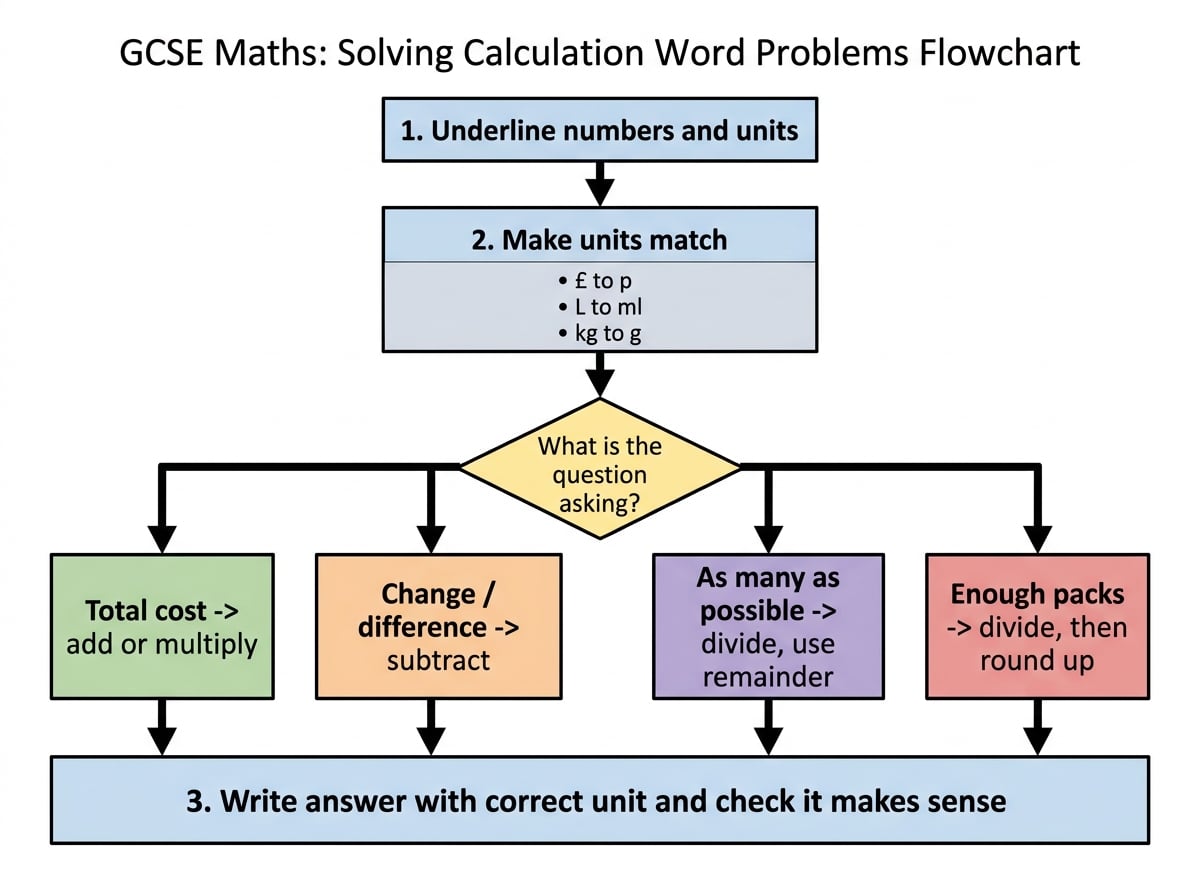
In these problems we are using the four operations (addition, subtraction, multiplication and division) in the context of money questions.
We need to work out which operation to use for each question.
Example 1:
You buy 7 bananas for 23p each. Work out the total cost.
Here we have a multiplication question.
Each banana costs 23p and we have 7 bananas.
We need to work out 7 × 23
We can use long multiplication.
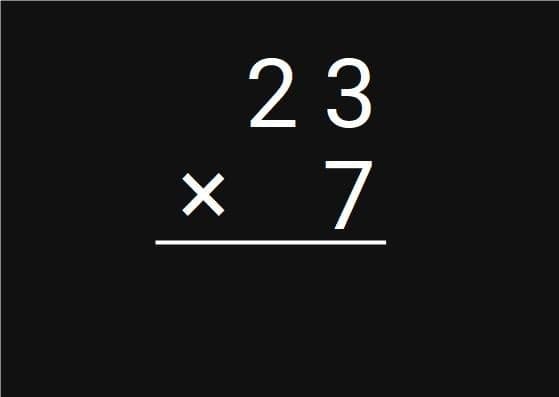 We start with 7 × 3
7 × 3 = 21
The one goes in the ones column and the 2 is carried over to the tens.
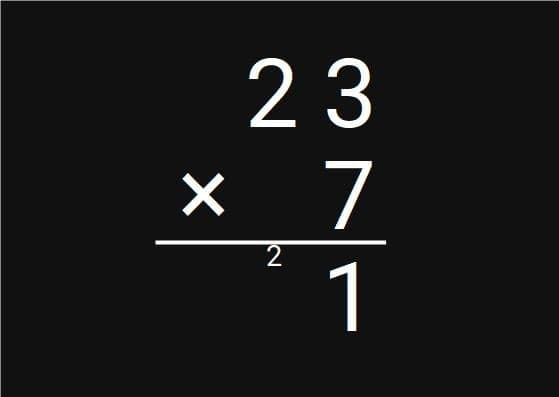 Next is 7 × 2
7 × 2 = 14
We add on the 2 we carried over
14 + 2 = 16
The 6 goes in the tens and the 1 is carried over to the hundreds
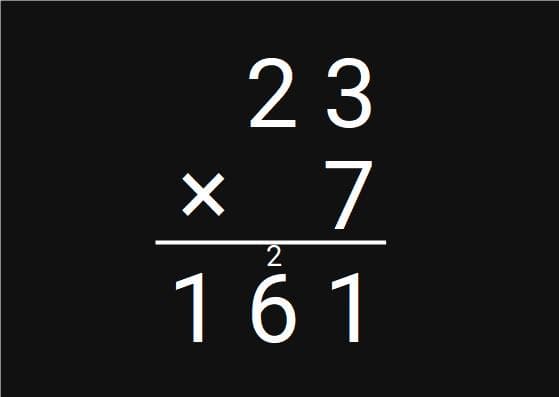 The total cost is 161p
We can convert pence to pounds and pence by dividing by 100
161p = £1.61
Example 2:
You buy 8 oranges for 29p each. You pay with a £10 note. Work out how much change you should get.
Each orange costs 29p and we have 8 oranges.
We need to work out 8 × 29
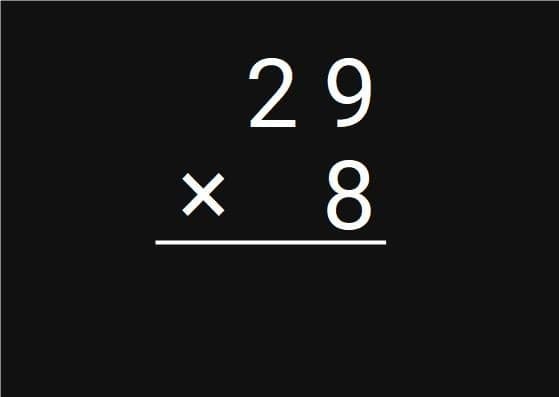 We start with 8 × 9
8 × 9 = 72
The 2 goes in the ones column and the 7 is carried over to the tens.
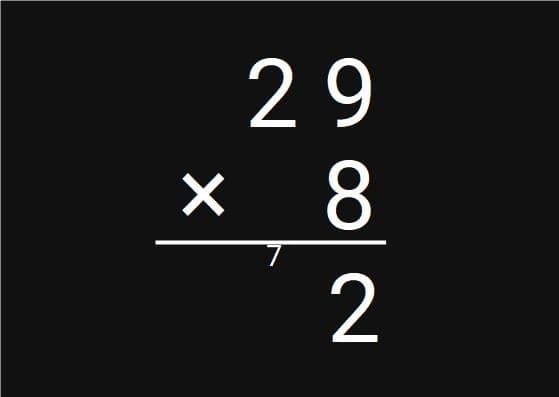 Next is 8 × 2
8 × 2 = 16
We add on the 7 we carried over
16 + 7 = 23
The 3 goes in the tens and the 2 is carried over to the hundreds
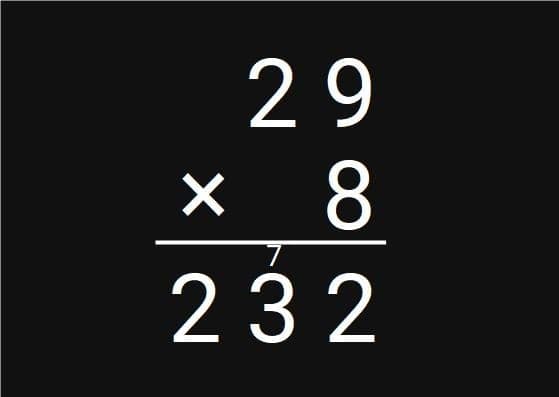 The total cost is 232p
To find the change we need to take 232p away from £10
£10 = 1000p
The change will be 1000 - 232
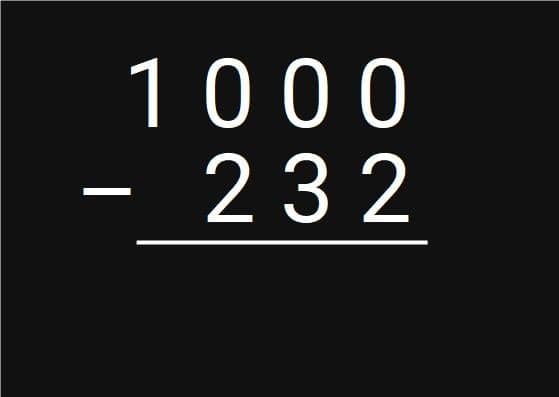 We start with the column on the right, the ones.
We do not want to take 2 away from 0 so we need to take a ten and move it to the ones
We do not have any tens or hundreds
We can take one thousand and move it to the hundreds, the take one hundred and move it to the tens, then take a ten and move it to the ones.
1000 = 900 + 90 + 10
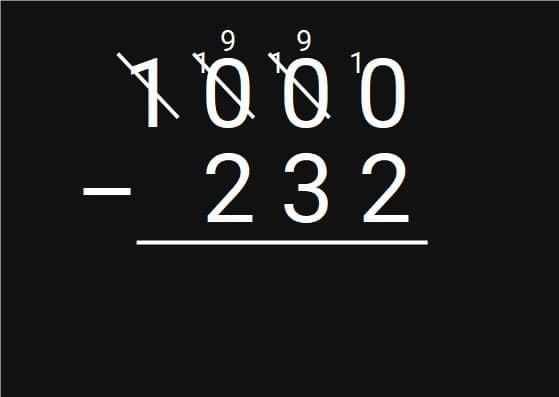 We can now subtract each column, starting with the ones
10 - 2 = 8
In the tens we have 9 - 3
9 - 3 = 6
In the hundreds we have 9 - 2
9 - 2 = 7
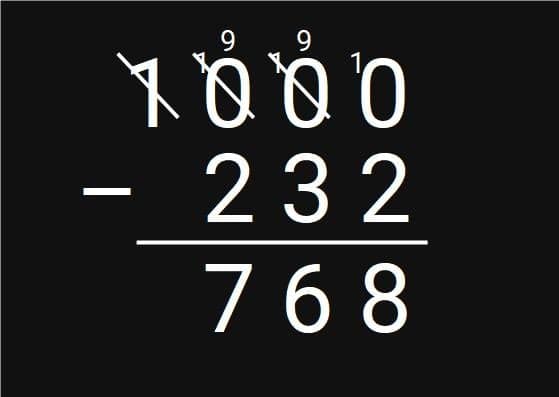 We can convert pence to pounds and pence by dividing by 100
768p = £7.68
Try these:
Example 3:
You buy:
2 burgers for 1.49p each.
3 portions of chips for £1.15 each
5 drinks for £1.28 each
Work out the total cost.
We need to work out the cost of the burgers, the cost of the chips and the cost of the drinks. We can then add them all together.
For the burgers we have 2 × 149 (I will do the working out in pence and convert back to pounds at the end).
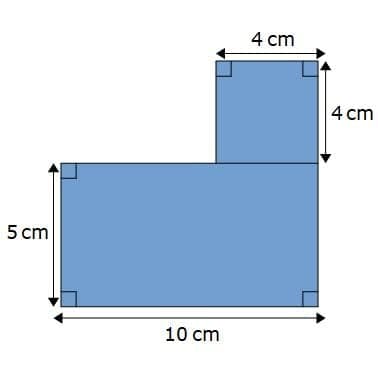 We start with the ones.
2 × 9 = 18
The 8 goes in the ones and we carry the 1 over to the tens.
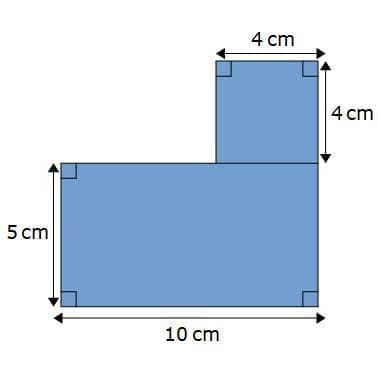 Next is the tens.
2 × 4 = 8
We add on the 1 we carried over
8 + 1 = 9
 The final column is the hundreds.
2 × 1 = 2
 2 × 149 = 298
For the chips we have 3 × 115
 The first column is the ones.
3 × 5 = 15
The 5 goes in the ones and we carry the 1 over to the tens.
 The next column is the tens.
3 × 1 = 3
We add the 1 we carried over
3 + 1 = 4
 The last column is the hundreds.
3 × 1 = 3
 3 × 115 = 345
For the drinks we have 5 × 128
 The first column is the ones.
5 × 8 = 40
The 0 goes in the ones and we carry the 4 over to the tens.
 The next column is the tens.
5 × 2 = 10
We add the 4 we carried over
10 + 4 = 14
The 4 goes in the tens and we carry the 1 over to the hundreds.
 The next column is the hundreds.
5 × 1 = 5
We add the 1 we carried over
5 + 1 = 6
 5 × 128 = 640
We can now add together the cost of the burgers, chips and drinks to find the total cost.
We need to work out 298 + 345 + 640.
We can use column addition
 The first column is the ones.
8 + 5 + 0 = 13
The 3 goes in the ones and we carry the 1 over to the tens.
 The next column is the tens.
9 + 4 + 4 + 1 = 18
The 8 goes in the tens and we carry the 1 over to the hundreds.
 The next column is the hundreds.
2 + 3 + 6 + 1 = 12
The 2 goes in the hundreds and the 1 goes in the thousands.
 298 + 345 + 640 = 1283
1283 ÷ 100 = 12.83
The total cost is £12.83
Try these:
Example 4:
You buy a car for £9000
You pay a deposit of £3200 and the rest in 25 monthly installments.
Work out the amount of each installment.
The first step in this question is to subtract the deposit of £3200 from the price to see how much is left to pay.
We need to work out 9000 - 3200
 We start with the ones.
0 - 0 = 0
In the tens we also have 0 - 0 = 0
 In the hundreds we have 0 - 2
We need to take one thousand and move it to the hundreds.
9000 is the same as 8000 + 1000
 We now have 10 - 2 in the hundreds
10 - 2 = 8
 In the thousands we have 8 - 3
8 - 3 = 5
 9000 - 3200 = 5800
We have 5800 left to pay.
We need to divide 5800 by 25 to work out the monthly payment.
5800 ÷ 25
We can use short division. We can write the 25 times table down the side to make the division easier.
 We start with the biggest column, the thousands. 25 does not go into 5 so we carry the 5 over to the hundreds where it is worth 50.
 Next is the hundreds. 25 goes into 58 twice.
25 × 2 = 50
58 - 50 = 8
We carry the 8 over to the tens (where it is worth 80).
 Next is the tens. 25 goes into 80 three times.
25 × 3 = 75
80 - 75 = 5
We have 5 left over to carry over to the ones.
 In the ones we have 50
25 × 2 = 50
5800 ÷ 25 = 232
 The monthly installments are £232
Try these: