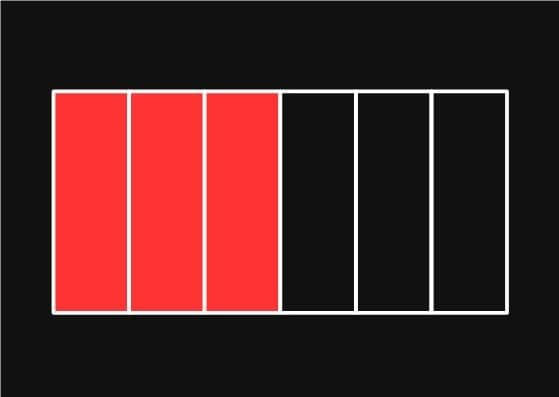
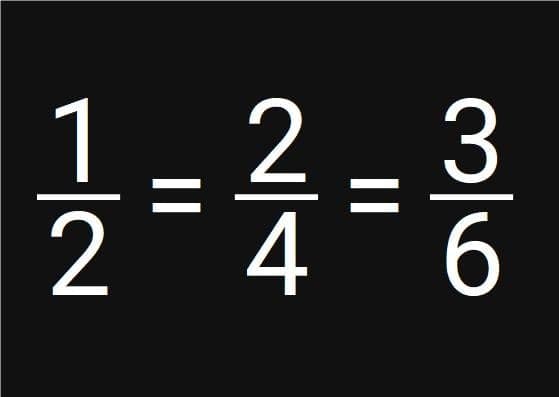
Writing, Simplifying and Ordering Fractions
x

Revision notes for Edexcel GCSE Maths Writing, Simplifying and Ordering Fractions. Open the guide for explanations and worked examples. Written against the Edexcel GCSE Maths (1MA1) specification, so the content matches what's examinable rather than general Maths background.

Writing, Simplifying and Ordering Fractions

What you'll learn

  • What the top and bottom numbers in a fraction mean.
  • How to write fractions from simple word problems.
  • How to simplify fractions and spot equivalent fractions.
  • How to order fractions and decide which fraction is closer to a target.

1. What a fraction means

A fraction is used when you have part of a whole or part of a group.

Definition

Fraction

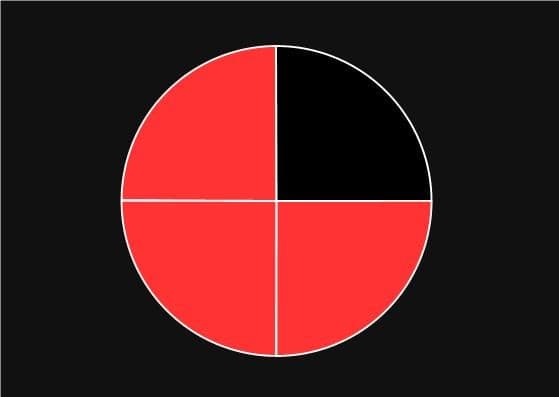
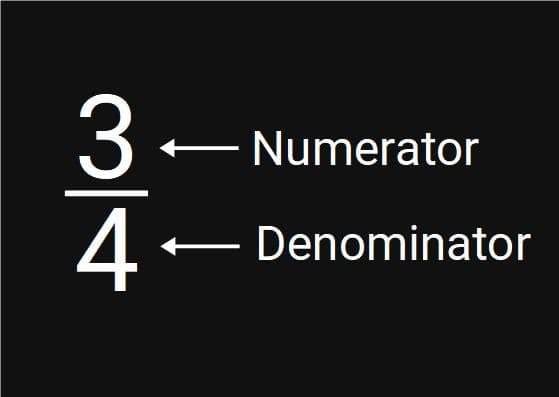
A fraction shows a part out of a total. In 38\frac{3}{8}83​, the numerator is the top number, and the denominator is the bottom number.

The fraction \frac{3}{8} means 3 equal parts selected out of 8 equal parts altogether.

For GCSE questions, the denominator is usually the total number of items, and the numerator is the number of items you are interested in.

Key Idea

Part over total

When writing a fraction from a word problem, use:

parttotal\frac{\text{part}}{\text{total}}totalpart​
Example

Writing a fraction from counters

There are 20 counters in a bag. 6 counters are yellow. What fraction of the counters are yellow?

A group of 20 counters with 6 yellow counters shows the fraction \frac{6}{20}, which simplifies to \frac{3}{10}.

  1. Identify the total number of counters. The total is 20.

  2. Identify the part you want. The yellow counters are 6.

  3. Write the part over the total:

    620\frac{6}{20}206​
  4. Simplify by dividing the top and bottom by 2:

    620=310\frac{6}{20}=\frac{3}{10}206​=103​
Common Mistake

Using the wrong denominator

The denominator is the total number of items, not the number left over and not just the number in one category.

2. When the question says “the rest”

Sometimes you are told how many are one colour, and “the rest” are another colour. First, subtract to find the missing amount.

Example

Finding the fraction for the rest

There are 15 pens in a box. 6 pens are red. The rest are green. What fraction of the pens are green?

Subtracting the 6 red pens from the 15 pens leaves 9 green pens, so the green pens are the part over the total.

  1. Work out how many pens are green:

    15−6=915-6=915−6=9
  2. Put the number of green pens over the total number of pens:

    915\frac{9}{15}159​
  3. Simplify by dividing the top and bottom by 3:

    915=35\frac{9}{15}=\frac{3}{5}159​=53​

3. Simplifying fractions

To simplify a fraction, you make it smaller-looking but keep the same value.

Definition

Equivalent fractions and simplest form

Equivalent fractions have the same value. A fraction is in simplest form when the numerator and denominator have no common factor except 1. A common factor is a number that divides exactly into both numbers.

Key Idea

Divide both parts

To simplify a fraction, divide the numerator and denominator by the same number.

Example

Simplifying a fraction

Write 2432\frac{24}{32}3224​ in its simplest form.

Dividing a 24-out-of-32 fraction model into groups of 8 shows why it simplifies to \frac{3}{4}.

  1. Look for a number that divides into both 24 and 32. Both numbers can be divided by 8.

  2. Divide the numerator and denominator by 8:

    2432=24÷832÷8\frac{24}{32}=\frac{24\div 8}{32\div 8}3224​=32÷824÷8​
  3. Work out the new fraction:

    2432=34\frac{24}{32}=\frac{3}{4}3224​=43​
Tip

Easy numbers to try

If both numbers are even, try dividing by 2. If both end in 0 or 5, try dividing by 5.

4. Fractions in money increase questions

An increase means how much something has gone up by.

If a question asks for the increase “as a fraction of last year’s cost”, then:

  • the numerator is the increase
  • the denominator is last year’s cost
Example

Writing an increase as a fraction

Last year a bus pass cost £30. This year it costs £42. Write the increase as a fraction of last year’s cost.

A comparison bar makes clear that the increase is £12 and the fraction is taken over last year’s £30 cost.

  1. Find the increase:

    42−30=1242-30=1242−30=12
  2. Put the increase over last year’s cost:

    1230\frac{12}{30}3012​
  3. Simplify by dividing the top and bottom by 6:

    1230=25\frac{12}{30}=\frac{2}{5}3012​=52​

5. Spotting equivalent fractions

Equivalent fractions simplify to the same fraction.

For example, 68\frac{6}{8}86​ and 912\frac{9}{12}129​ are equivalent because both simplify to 34\frac{3}{4}43​.

Example

Finding the fraction that is not equivalent

Four of these fractions are equivalent to 23\frac{2}{3}32​. Find the one that is not:

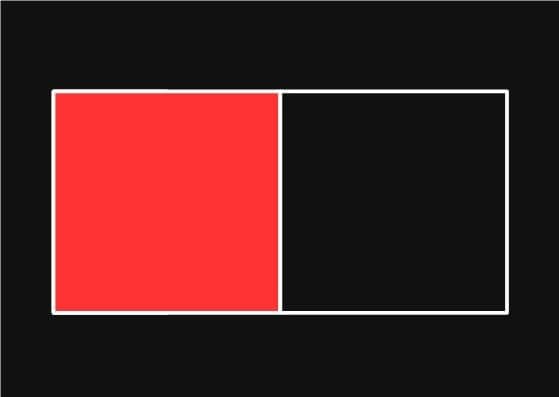
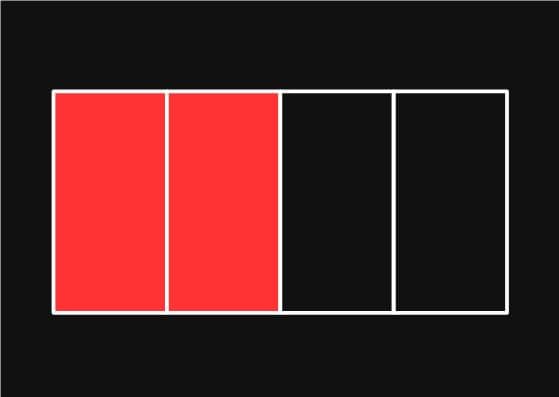
Equivalent fractions cover the same amount of a whole, while \frac{15}{24} covers a different amount.

8121015142115241827\frac{8}{12}\quad \frac{10}{15}\quad \frac{14}{21}\quad \frac{15}{24}\quad \frac{18}{27}128​1510​2114​2415​2718​
  1. Simplify each fraction where possible:

    812=23,1015=23,1421=23\frac{8}{12}=\frac{2}{3},\quad \frac{10}{15}=\frac{2}{3},\quad \frac{14}{21}=\frac{2}{3}128​=32​,1510​=32​,2114​=32​
  2. Continue checking the remaining fractions:

    1524=58,1827=23\frac{15}{24}=\frac{5}{8},\quad \frac{18}{27}=\frac{2}{3}2415​=85​,2718​=32​
  3. The fraction that is not equivalent to 23\frac{2}{3}32​ is:

    1524\frac{15}{24}2415​
Common Mistake

Changing only one number

To make an equivalent fraction, you must multiply or divide the numerator and denominator by the same number.

6. Ordering fractions

Ordering fractions means putting them from smallest to largest, or largest to smallest.

Definition

Common denominator

A common denominator is a bottom number that all the fractions can be changed to.

When fractions have the same denominator, the one with the smaller numerator is smaller.

For example, 320\frac{3}{20}203​ is smaller than 720\frac{7}{20}207​.

Example

Ordering fractions from smallest

Put these fractions in order, starting with the smallest:

Changing each fraction into twentieths lets the marked lengths be compared directly.

143102512\frac{1}{4}\quad \frac{3}{10}\quad \frac{2}{5}\quad \frac{1}{2}41​103​52​21​
  1. Choose a common denominator. A good choice for 4, 10, 5 and 2 is 20.

  2. Change each fraction into twentieths:

    14=520,310=620,25=820,12=1020\frac{1}{4}=\frac{5}{20},\quad \frac{3}{10}=\frac{6}{20},\quad \frac{2}{5}=\frac{8}{20},\quad \frac{1}{2}=\frac{10}{20}41​=205​,103​=206​,52​=208​,21​=2010​
  3. Order the numerators from smallest to largest: 5, 6, 8, 10.

  4. Write the original fractions in that order:

    143102512\frac{1}{4}\quad \frac{3}{10}\quad \frac{2}{5}\quad \frac{1}{2}41​103​52​21​
Common Mistake

Comparing only denominators

A bigger denominator does not always mean a bigger fraction. Always compare using a common denominator.

7. Which fraction is closer?

To decide which fraction is closer to a number, find the distance from that number. The smaller distance means closer.

Closer to 1

Example

Which fraction is closer to 1?

Which fraction is closer to 1?

5445\frac{5}{4}\quad \frac{4}{5}45​54​
  1. Find how far 54\frac{5}{4}45​ is from 1:

    54−1=14\frac{5}{4}-1=\frac{1}{4}45​−1=41​
  2. Find how far 45\frac{4}{5}54​ is from 1:

    1−45=151-\frac{4}{5}=\frac{1}{5}1−54​=51​
  3. Compare the distances. Since 15\frac{1}{5}51​ is smaller than 14\frac{1}{4}41​, 45\frac{4}{5}54​ is closer to 1.

Closer to one half

Example

Which fraction is closer to one half?

Which fraction is closer to 12\frac{1}{2}21​?

A number line shows that \frac{2}{5} is nearer to \frac{1}{2} than \frac{5}{8} is.

2558\frac{2}{5}\quad \frac{5}{8}52​85​
  1. Find the distance from 25\frac{2}{5}52​ to 12\frac{1}{2}21​:

    12−25=510−410=110\frac{1}{2}-\frac{2}{5}=\frac{5}{10}-\frac{4}{10}=\frac{1}{10}21​−52​=105​−104​=101​
  2. Find the distance from 58\frac{5}{8}85​ to 12\frac{1}{2}21​:

    58−12=58−48=18\frac{5}{8}-\frac{1}{2}=\frac{5}{8}-\frac{4}{8}=\frac{1}{8}85​−21​=85​−84​=81​
  3. Compare the distances. Since 110\frac{1}{10}101​ is smaller than 18\frac{1}{8}81​, 25\frac{2}{5}52​ is closer to 12\frac{1}{2}21​.

Exam technique

In the exam

  1. For “what fraction…?”, write part over total, then simplify if possible.

  2. For ordering fractions, use a common denominator and put the original fractions in your final answer.

  3. For “closer to” questions, subtract each fraction from the target number and compare the gaps.

Self review

Check yourself

  • Can you simplify 1824\frac{18}{24}2418​ into its simplest form?

  • If there are 14 beads and 5 are red, can you write the fraction that are not red?

  • Can you order 13\frac{1}{3}31​, 16\frac{1}{6}61​ and 14\frac{1}{4}41​ from smallest to largest?

Recap questions

Test yourself with 5 quick questions on this guide. Answer them all correctly to complete it.

You've reached the end

Test yourself on this topic, or move on to the next guide.

Practice questionsTake a quick quiz on this topicFlashcardsSelf-test with active recall
Place ValueUp next

How was this guide?

Writing, Simplifying and Ordering Fractions Revision Guide

  1. GCSE
  2. /Maths
  3. /Writing, Simplifying and Ordering Fractions