Figure 1 illustrates the atmospheric and oceanic anomalies across the equatorial Pacific during a specific phase of the El Niño-Southern Oscillation (ENSO) cycle.
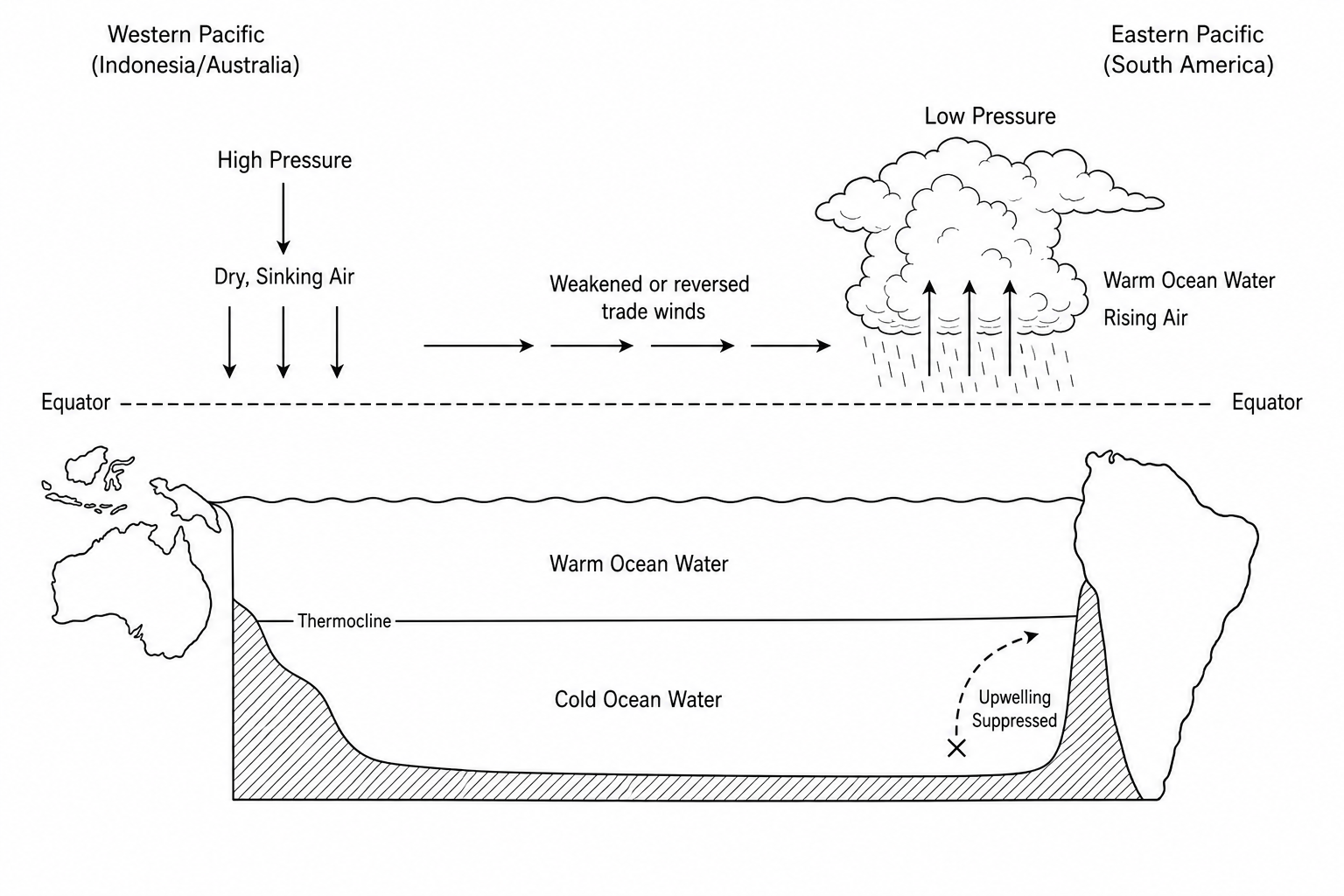
With reference to Figure 1, identify the correct assessment of the extreme weather hazards typically experienced in the Western Pacific (e.g., eastern Australia and Indonesia) compared to the Eastern Pacific (e.g., coastal Peru and Ecuador) during this phase.
The Western Pacific experiences severe drought, desiccated vegetation, and elevated wildfire risks, whereas the Eastern Pacific suffers from torrential rainfall, destructive flash floods, and landslides.
The Western Pacific experiences high-intensity tropical cyclones and storm surges due to rising air, whereas the Eastern Pacific is subjected to extreme drought and prolonged water scarcity.
Both the Western and Eastern Pacific experience a significant reduction in extreme weather events as atmospheric pressure gradients stabilize across the entire basin.
The Western Pacific experiences widespread flooding from enhanced monsoonal rainfall, whereas the Eastern Pacific faces severe drought and agricultural failure due to intense high-pressure systems.

