Costs split into fixed and variable
Definition
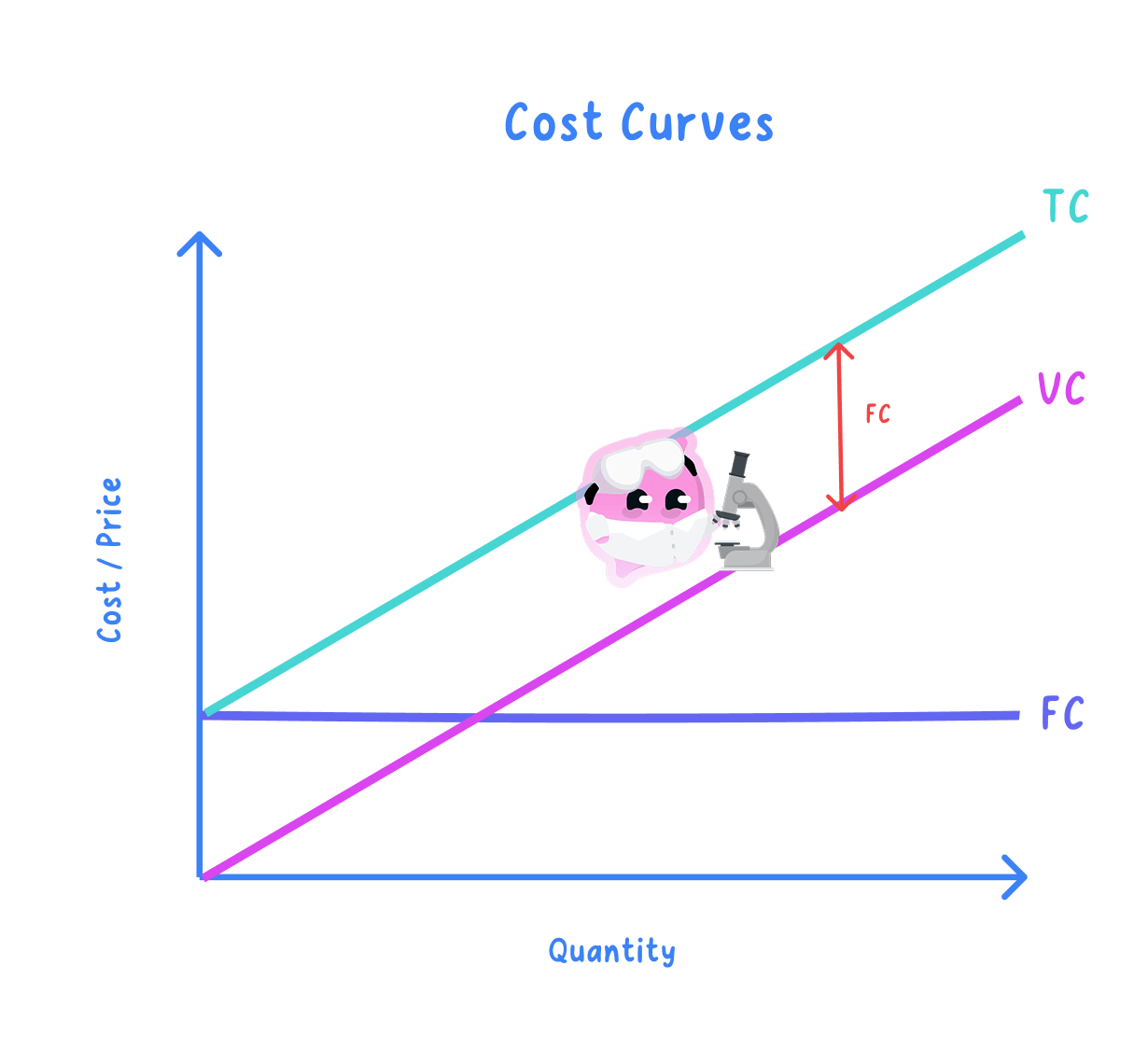
Fixed cost: a cost that does not change with output, such as rent, insurance or a manager's salary.
Variable cost: a cost that rises and falls with output, such as raw materials, packaging and hourly wages.
- The test is whether the cost changes when output changes, so rent is fixed even though the landlord can raise it.
- Fixed costs are fixed in total and not per unit, which is why spreading them over more units lowers the cost of each one.
- The split depends on the time period, because over several years almost every cost becomes variable as leases end and equipment is replaced.
Total and average cost answer different questions
Definition
Total cost: all the costs of producing a given output, found by adding fixed cost to variable cost.
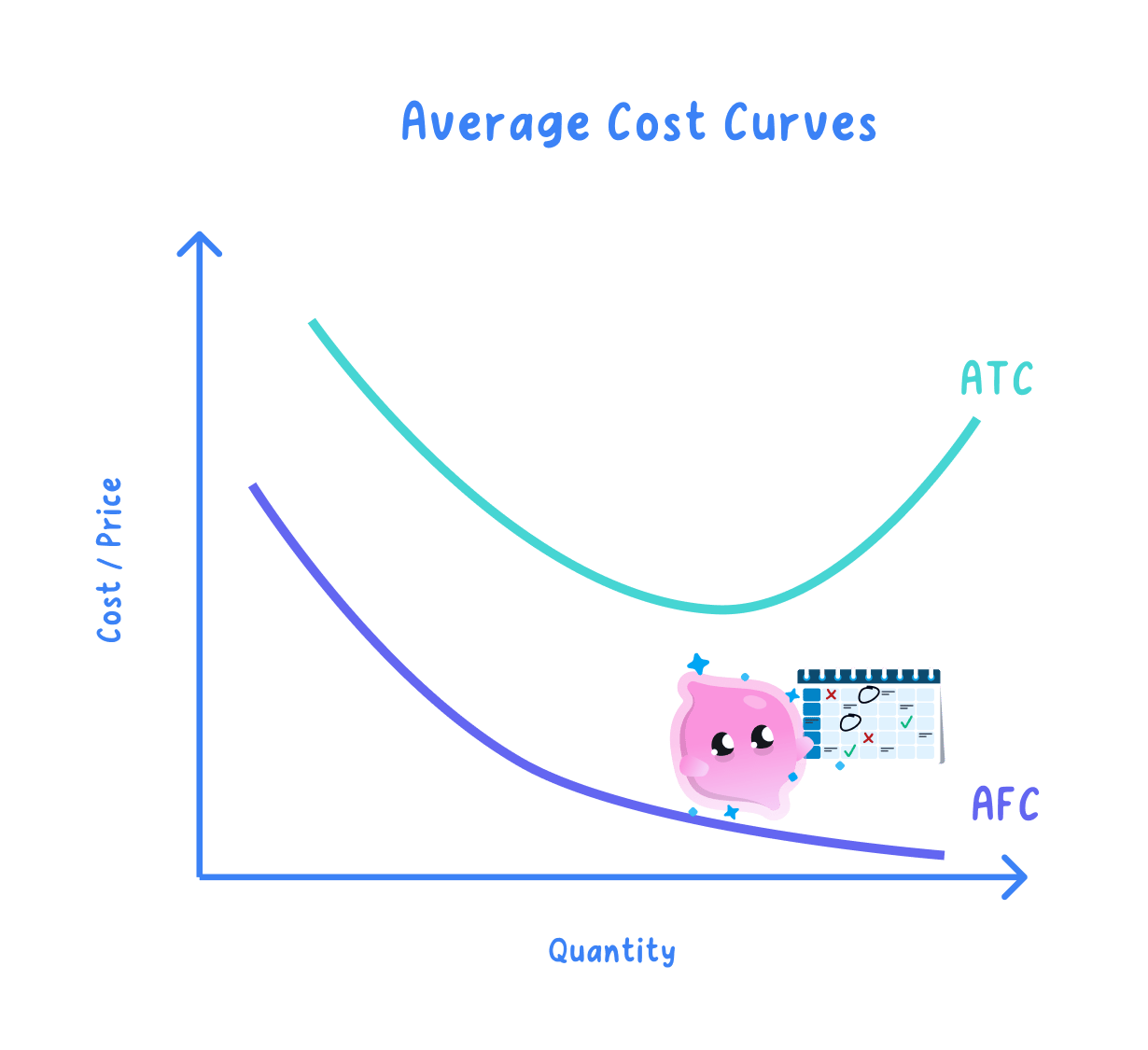
Average cost: the cost of producing one unit on average, found by dividing total cost by output.
- Total cost tells a producer what the whole run costs, which is what has to be covered by revenue.
- Average cost tells it what one unit costs, which is what has to be compared with the price.
- Total cost always rises with output, while average cost usually falls at first because the fixed cost is shared more widely.
Revenue is what comes in, not what is kept
Definition
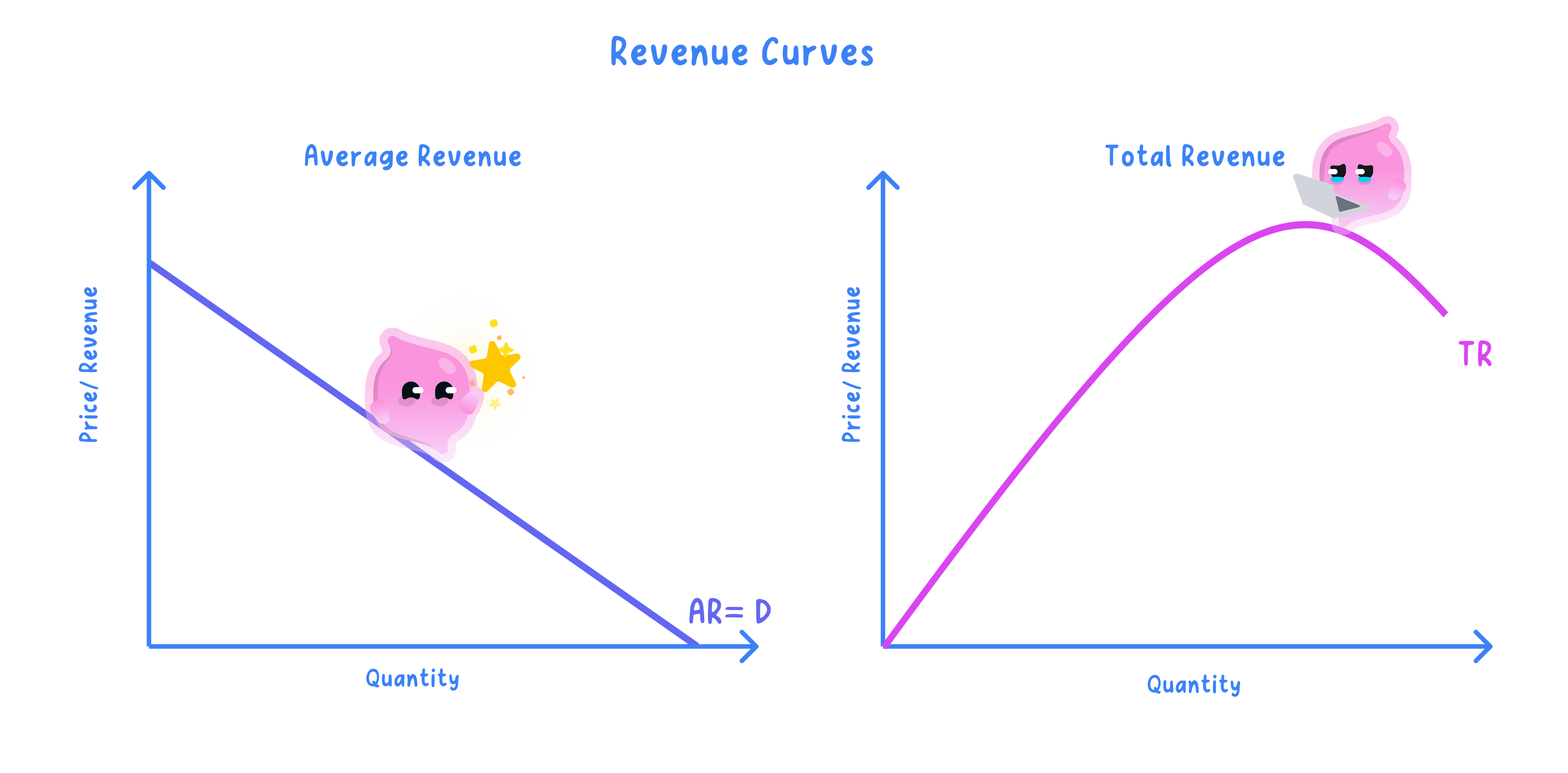
Total revenue: the money a producer receives from selling its output, found by multiplying price by quantity sold.
Average revenue: the revenue received per unit sold, found by dividing total revenue by quantity sold.
- Revenue is the money coming in before any cost is taken off, so a firm with large revenue can still be losing money.
- Average revenue equals the price when every unit sells at the same price, which is the usual case at this level.
- Revenue depends on the quantity sold rather than the quantity produced, so unsold output earns nothing.
Common Mistake
- Do not use revenue and profit as though they meant the same thing, because revenue takes no account of costs.
- Do not multiply price by output when some of it is unsold, since revenue comes only from what is actually sold.
Profit and loss are the same calculation
Definition
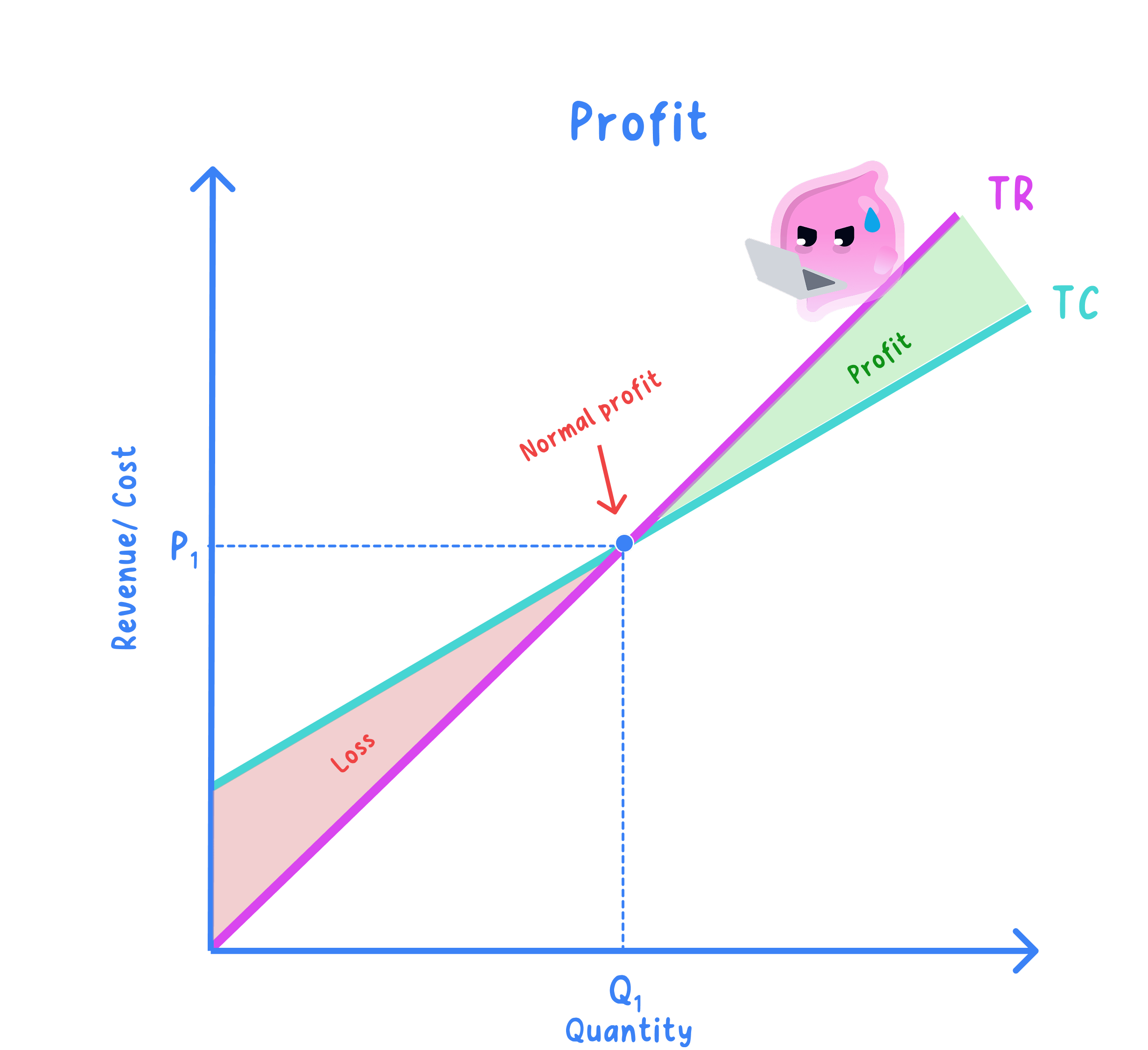
Profit: the amount by which total revenue exceeds total cost.
Loss: the amount by which total cost exceeds total revenue.
- One subtraction gives both, so profit and loss are the two possible signs of the same answer rather than two different sums.
- Profit is the reward for taking the risk of producing, and it is what enterprise earns among the factors in 1.1.2.
- A firm can be profitable on each unit and still make a loss overall, if it does not sell enough units to cover the fixed cost.
Which figure a producer actually needs
- To decide whether to stay in business, a producer compares total revenue with total cost.
- To decide what to charge, it compares average cost with the price it can get, since that is the profit on each unit.
- To decide whether to expand, it looks at what happens to average cost as output rises, which is 2.6.6.
Exam technique
- Say which cost you mean, because total and average cost lead to different conclusions from the same data.
- Define a loss as costs exceeding revenue rather than as no profit, since the two are not the same thing.
Self review
- What is the difference between a fixed cost and a variable cost?
- Why does average cost usually fall as output rises?
- Why can a firm have high revenue and still make a loss?
- How is a loss calculated?
- Which cost figure does a producer compare with the price, and why?
